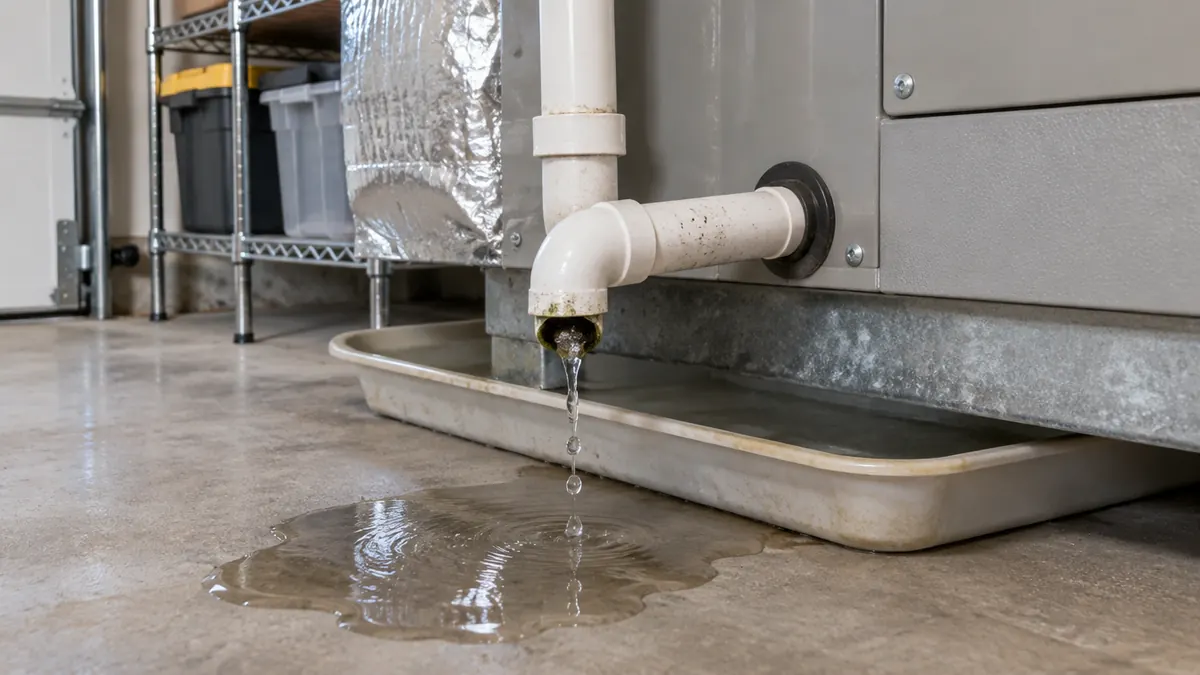
Why Are My Air Ducts Sweating? Causes and Fixes for Dripping Ductwork
Water beading on your ductwork isn’t a mystery. It’s moist air meeting a cold surface. Here’s why it happens even in a dry-summer climate like Sacramento’s, why it matters, and what actually stops it.
JM Comfort can help: ductwork repair and sealing for homes in Sacramento and nearby. Licensed C-20 HVAC contractor, CSLB #1016274.
You open the crawlspace hatch on a warm afternoon and the ductwork is dripping. Sometimes the insulation is soaked. Sometimes there’s a wet spot on the ceiling under a vent. It looks like a leak, but in most cases it’s condensation: the same thing that makes a glass of iced tea sweat on the patio. Sacramento’s dry summers make it less common here than in humid climates, but when it happens it has a short list of causes, and every one of them can be fixed. This guide walks through them, starting with what you can check yourself, and ends with when to call for ductwork repair and sealing.
Why is my ductwork sweating?
Your ductwork sweats because moist air is touching a duct surface cold enough to pull water out of it, usually because the insulation is missing, damaged or gapped, or because the duct itself is leaking.
In cooling season, the supply ducts carry air cold enough to chill the metal. One major manufacturer explains that condensation forms when warm, humid air comes into contact with a cooler surface, and that it’s more likely in basements, crawlspaces and other poorly ventilated areas where ducts run. The Department of Energy’s Building America Solution Center notes that in humid climates, duct sweating can become a significant problem.
Sacramento isn’t a humid climate in summer. NOAA’s Climate of Sacramento report (revised 2005) describes summers as virtually cloudless, with warm, dry days, and its averages put July’s 4 p.m. relative humidity at 29%. That dry air is one reason duct sweating is less common here. When ducts do drip in the Sacramento area, the moisture most often comes from somewhere close by: damp soil in a crawlspace, a bathroom or laundry room, or room air pulled in through a leak.
Here are the usual causes and what fixes each one:
| Cause | What you’ll notice | Fix |
|---|---|---|
| Missing, torn or crushed insulation | Bare metal beading water; wet spots under one section | Re-insulate with an intact vapor barrier (R-8 for new ducts here) |
| Gaps in the vapor barrier or wrap seams | Wet insulation at joints, wraps sagging with water | Repair and tape the barrier, or replace wet wrap |
| Leaky duct seams and connections | Drips near joints and at register boots | Seal with mastic, metal tape or aerosol sealant |
| Damp crawlspace | Wet soil, damp framing, musty smell, sweating on several ducts | Control moisture in the space itself |
| Low airflow | Dirty filter, closed vents, ducts colder than normal | Change the filter and open the vents |
| High indoor humidity | Wet registers, foggy windows, clammy rooms | Bring indoor humidity down |
Airflow is the one people miss. One major manufacturer notes that reduced airflow makes your ducts colder than they should be. A clogged filter or a row of closed vents can turn a borderline duct into a dripping one. Start with a fresh filter.
Why are my ducts sweating in the crawl space?
Ducts sweat in a crawl space because the air under the house picks up moisture, from outdoor air or from the ground, and cold supply ducts running through it give that moisture a place to condense at every leak or gap in the insulation.
In humid climates, the main source is outdoor air. Building America guidance explains that during warm seasons in humid climates, the outside air can hold more water vapor than the air in the crawlspace, so warm, humid air that comes in through the vents condenses on the cooler floor joists. In the Sacramento area, the ground is the more likely source. NOAA’s climate report says more than half the year’s precipitation falls during the November-through-February rainy season, and a crawlspace with bare or wet soil can stay damp after the rain stops.
That’s why fixing the duct alone sometimes isn’t enough. If the crawlspace itself is wet, the long-term fix may be treating the space. Building America describes the unvented, insulated crawlspace approach: a 6-mil polyethylene vapor retarder covering the floor and perimeter walls to keep ground moisture and soil gases out, plus a drying method such as a continuously running exhaust fan or a supply of conditioned air. It shows a dehumidifier keeping a sealed crawlspace dry. Done right, the space becomes an insulated, air-sealed place for ducts and equipment.
Signs your crawlspace ducts need attention now:
- Insulation hanging loose, sagging or dripping
- Puddles or wet soil under duct runs
- Damp or darkened floor joists near the ducts
- A musty smell in the rooms above, especially when the AC runs
The rainy season is a good time to look. Ducts rarely sweat in winter, because they carry warm air, but standing water you find in January is a sign the space may still be damp when the AC starts in late spring.
What about ducts in the attic or garage?
Attic and garage ducts sweat for the same reason, moist air on cold metal, and the weak spots are usually where things connect.
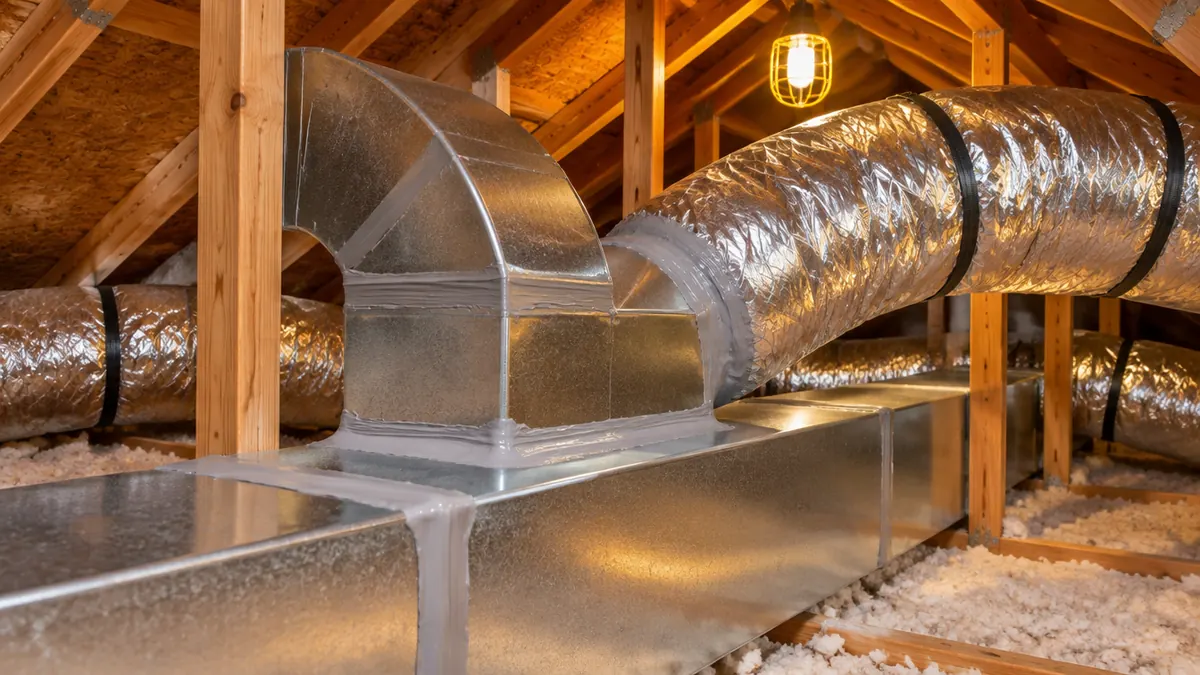
One major manufacturer points out that without a protective layer of insulation, warm air meeting cold metal can cause condensation, and it flags attics, basements and crawlspaces as unconditioned spaces that need special attention. A flexible duct pulled off its collar, a seam where the insulation was never taped, or a ceiling register boot with a gap around it can all let damp room air reach a cold surface. A wet stain on the ceiling under a supply vent can trace back to any of them.
California also holds garage ducts to a tighter leakage standard. When ducts or equipment in a garage are altered, the 2025 Energy Code calls for leakage of 6% or less of system airflow, or all accessible garage leaks sealed and smoke-tested by an ECC-Rater. Our guide to duct sealing explains the rest of those rules.
Does ductwork need to be insulated?
Yes. Any duct that runs through an unconditioned space, such as an attic, crawlspace or garage, needs insulation, and the insulation needs a vapor barrier to stop condensation.
ENERGY STAR says a professional duct job should insulate ducts in unconditioned areas like attics, crawlspaces and garages with insulation rated R-6 or higher. California sets a higher bar for new work in this area. The California Energy Commission’s 2025 compliance manual requires new ducts in unconditioned space to be insulated to at least R-8 in climate zones 1, 2, 4 and 8 through 16, and the CEC’s ZIP code table puts North Highlands (95660) and Sacramento ZIP codes such as 95814 and 95821 in zone 12. SMUD’s heat pump rebates, as of November 2026, also require any new ductwork to be insulated to at least R-8.
Building America’s duct guidance explains why the vapor barrier matters: thermal insulation with a vapor barrier is a must for ducts in unconditioned space, partly to keep condensation from forming on the ducts themselves. Two details decide whether insulation works:
- It has to be continuous. A gap, a torn facing or an untaped seam lets moist air reach the cold metal underneath.
- The duct has to be sealed first. ENERGY STAR’s guidance is to repair and seal all leaks and connections with mastic, metal tape or an aerosol-based sealant, then insulate. Insulation over a leak hides the problem; it doesn’t fix it.
Why is there condensation on my air vents?
Condensation on air vents means moist room air is meeting a cold metal register, usually because indoor humidity is high, airflow is weak, or the register isn’t sealed to the duct behind it.
One major manufacturer says moisture can condense on cool ducts when indoor humidity tops 60%, and that leaky or unsealed ductwork lets warm air meet cold duct surfaces. In a dry-summer Sacramento home, the humid spots tend to be rooms with their own moisture source: a bathroom, a laundry room or a kitchen.
Try these in order:
- Change the filter. It’s the easiest airflow fix.
- Open and clear every vent. Move furniture and curtains off the registers so supply and return vents stay clear.
- Check indoor humidity. EPA recommends keeping it below 60 percent, ideally between 30 and 50 percent. A simple humidity meter tells you where you stand. See ideal indoor humidity.
- Look at the drain. Water dripping from a vent can also come from a clogged condensate drain backing up. See why an AC leaks water.
- Have the register connection sealed. ENERGY STAR’s guidance calls for sealing registers and grilles tightly to the ducts.
Is sweating ductwork a problem?
Yes, if it keeps happening: steady condensation can soak insulation, rot wood, damage drywall and feed mold.
One major manufacturer warns that persistent moisture can lead to wood rot and drywall damage, that moisture on or around ducts creates a breeding ground for mold, and that damp, moldy ducts can circulate allergens and unpleasant odors through your home. EPA’s mold guidance is direct: the key to mold control is moisture control, and water-damaged areas should be dried within 24 to 48 hours.
Wet duct insulation is a special case. EPA says insulation that gets wet or moldy can’t be effectively cleaned and should be removed and replaced. Cleaning won’t save it, which is one reason duct cleaning isn’t the answer to a sweating problem.
Safety first: If water is dripping onto a ceiling or light fixture, or a ceiling looks stained and sagging, switch the thermostat from Cool to Off and call for service. Don’t poke holes in a sagging ceiling, and don’t cut open duct insulation or pull ducts apart to look inside. In a crawlspace or attic, watch for wiring and leave electrical connections alone.
How do you stop air ducts from sweating?
Stop the sweating by keeping moist air away from cold metal: seal the leaks, restore continuous insulation with a vapor barrier, keep airflow strong, and bring the moisture down in the space around the ducts.
What you can do
- Change the filter and open all the vents to restore airflow.
- Check indoor humidity and run exhaust fans in bathrooms, the kitchen and the laundry room. EPA recommends using air conditioners and dehumidifiers when needed.
- Look, without touching, at the ducts you can see. Note wet insulation, loose wraps, disconnected sections and wet soil under the house.
What a professional should do
- Inspect the whole duct system, including the attic and crawlspace, as ENERGY STAR recommends.
- Repair disconnected ducts and straighten crushed or tangled flexible ducts.
- Seal leaks and connections with mastic, metal tape or aerosol sealant.
- Replace wet or moldy insulation, and re-insulate with an intact vapor barrier, at least R-8 on new ducts here.
- If the crawlspace itself is wet, talk through moisture control for the space, such as a ground vapor retarder and a drying method.
If the sweating shows up as part of an equipment replacement, California’s duct sealing and testing rules apply too. The Title 24 permit guide explains what to ask any contractor, and the HVAC glossary defines the terms.
Why do Sacramento-area homeowners call JM Comfort?
JM Comfort is a locally owned heating and air conditioning contractor based in North Highlands, serving North Highlands, Sacramento and nearby communities. It’s a licensed C-20 HVAC contractor (CSLB #1016274), licensed since 2016 and bonded, with workers’ comp insurance on file; you can check the license on the CSLB website. The ductwork service covers duct repair, replacement and sealing for homes, and the same team handles AC repair, tune-ups and indoor air quality work focused on filtration and ventilation.
Call (916) 247-6358 or book a ductwork visit online and we’ll call you back.
Frequently asked questions
Is a little condensation on ductwork normal?
A cold duct can bead up briefly on a muggy day, but a well-insulated, well-sealed duct shouldn’t stay wet. Water on the outside of the insulation, wet spots under the duct, or drips that come back day after day mean moist air is reaching a cold surface somewhere. That’s worth a look before mold or rot sets in.
Can I just wrap my sweating ducts in more insulation?
Only if the duct is sealed first and the new wrap has a continuous vapor barrier with taped seams. Insulation over a leaky joint, or wrap with gaps in it, lets moist air reach the cold metal, and the sweating continues under the insulation where you can’t see it.
Will a dehumidifier stop my ducts from sweating?
It can help, because drier air has to get colder before it condenses. Building America guidance shows a dehumidifier keeping a sealed crawlspace dry, and one major manufacturer suggests whole-home or portable dehumidifiers in damp areas. It won’t fix leaks or missing insulation, though.
Do ducts sweat in winter?
Rarely, because sweating needs a cold duct and in winter your ducts carry warm air. Winter is still a good time to look in the crawlspace: NOAA’s climate report for Sacramento says more than half the year’s precipitation falls from November through February, and damp crawlspaces are where duct condensation is most likely once the AC starts.
Does JM Comfort fix sweating ductwork?
JM Comfort’s ductwork service covers duct repair, replacement and sealing for homes in North Highlands, Sacramento and nearby communities. Call (916) 247-6358 or book online.
Sources
- Condensation on Air Ducts: Causes & Solutions (Lennox)
- Sealed and Insulated Flex Ducts (Building America Solution Center, U.S. Department of Energy)
- Unvented, Insulated Crawlspaces (Building America Solution Center, U.S. Department of Energy)
- Hire a Professional Contractor for Duct Improvement Projects (ENERGY STAR)
- Should You Have the Air Ducts in Your Home Cleaned? (U.S. Environmental Protection Agency)
- A Brief Guide to Mold, Moisture and Your Home (U.S. Environmental Protection Agency)
- Climate of Sacramento, California (NOAA Technical Memorandum NWS WR-272, revised June 2005, PDF) (NOAA National Weather Service)
- 2025 Single-Family Residential Compliance Manual, Chapter 9: Additions, Alterations, and Repairs (PDF) (California Energy Commission)
- Building Climate Zones by Zip Codes (California Energy Commission)
- Heating and cooling rebates (SMUD)
Find this helpful? Add JM Comfort as a preferred source on Google.