
Cleaner indoor air for Sacramento-area homes.
Wildfire smoke, dust and stuffy rooms all come back to two things your heating and cooling system controls: filtration and ventilation. JM Comfort works on both for Sacramento-area homes under its C-20 HVAC license.
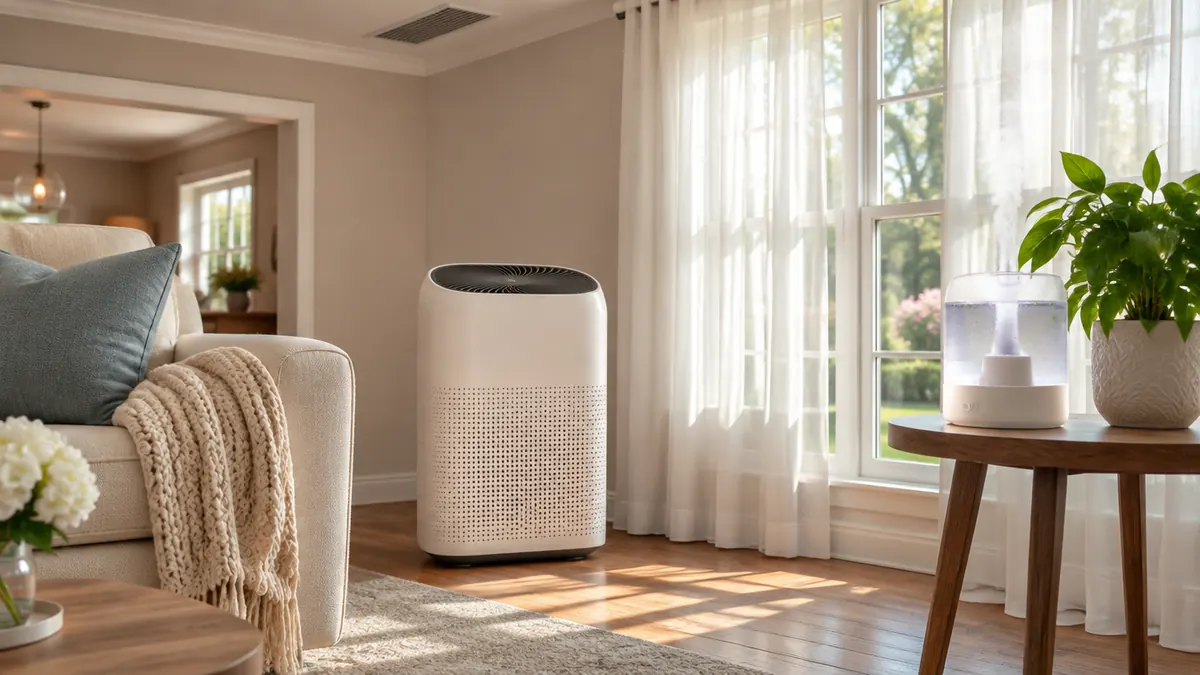
What’s included
- A look at the problem first: smoke, dust, odors or stuffiness
- A check of the filter slot, filter fit and airflow
- Advice on the highest MERV rating your system can handle
- Getting your system ready for wildfire smoke season
- Fresh-air intake and ventilation checks
- A straight answer on whether a product will help
Signs it’s time to call
- Smoke smell indoors on smoky days
- Dust that settles again soon after you clean
- Stuffy rooms or odors that linger
- A filter that doesn’t fit its slot snugly
- A musty smell when the system runs
- Someone at home is bothered by dust or smoke
How indoor air quality service works
Call or book
Call (916) 247-6358 or book online and describe the problem: smoke, dust, odors or stuffiness.
A visit to your home
A technician checks the filter, filter slot, ductwork, airflow and any fresh-air intake to find what’s causing the problem.
Diagnosis and a written estimate
You hear which fixes fit, from a better filter to sealing leaky ducts or a ventilation change, and which won’t help, with a written estimate before work starts.
The work
Once you approve, the work is done and explained, so you know how to set the system on smoke days and when to change the filter.
Where should you start with indoor air?
With the problem, not the product. EPA says the most effective ways to improve indoor air are to reduce or remove the sources of pollutants and to ventilate with clean outdoor air, and that filtration can be an effective supplement to those two. That’s why a good indoor air quality visit starts with questions: What do you notice? When is it worst? Which rooms? Is it smoke season?
Sometimes the fix is a better filter or a filter that actually fits its slot. Sometimes it’s the ductwork: ENERGY STAR notes that leaky ducts can draw dust and particles into the house from attics and crawl spaces, and that sealing them may help. In that case, duct repair and sealing does more than any gadget.
Can your HVAC system help with wildfire smoke?
Yes, if it’s set up for it. A central system recirculates your indoor air, and the filter does the cleaning, so it only helps while the system runs and only as well as the filter fits. EPA, CARB and AirNow give the same core advice for smoke days:
| On a smoke day | What to do | Who says so |
|---|---|---|
| Fresh-air intake | Set the system to recirculate, or close the outdoor intake damper | EPA, CARB |
| System fan | Use “Recirculate” and run the fan “On” rather than “Auto” | AirNow |
| Filter | MERV 13 or higher if your system can accommodate it; replace it frequently | EPA, AirNow |
| Swamp cooler or whole-house fan | Don’t run it | CARB |
| Portable air cleaner | Use a certified model that doesn’t produce ozone, on its highest setting, continuously | CARB, EPA |
EPA also says to use fans and air conditioning to stay cool during smoke. The best time to sort out the filter size, the MERV rating your system can handle and any fresh-air intake is before the first smoky day, not during it. The full guide is wildfire smoke and your HVAC.
What can a better filter do, and what can’t it?
A filter catches particles; it doesn’t fix everything. EPA describes two kinds of air cleaning: portable air cleaners, which are designed to filter the air in a single room or area, and furnace or HVAC filters, which clean air throughout the home. Both can reduce indoor air pollution, but EPA is clear that they can’t remove all pollutants from the air.
For many homes, the right filter in the HVAC system is the first upgrade to consider. CARB says to use a filter with a MERV rating as high as your system can handle, based on manufacturer recommendations, so check what your system is built for before you upgrade. Read the best air filter MERV rating and how often to change your air filter before you buy. If you’re weighing a whole-house air cleaner or a UV light, read do UV lights and air purifiers work first.
When does a home need more ventilation?
When stale air, cooking odors and moisture hang around. Ventilation trades some indoor air for outdoor air in a controlled way, and EPA lists ventilating with clean outdoor air as one of the most effective ways to improve indoor air. The catch in the Sacramento area is smoke: on smoky days, the advice flips, and any fresh-air intake should be closed or set to recirculate. Ventilating systems, along with the ducts, controls and air filters connected to heating and cooling equipment, fall under California’s C-20 license class.
What about dry winter air?
Check the number before you buy anything. EPA recommends keeping indoor relative humidity below 60 percent, and ideally between 30 and 50 percent. An inexpensive humidity meter from a hardware store tells you whether your home is actually dry. Ideal indoor humidity covers what the numbers mean and what to do about them.
Why do Sacramento-area homeowners call JM Comfort about indoor air?
JM Comfort is a locally owned heating and air conditioning contractor based in North Highlands, serving North Highlands, Sacramento and nearby communities. It’s a licensed C-20 HVAC contractor (CSLB #1016274), licensed since 2016 and bonded, with workers’ comp insurance on file; you can check the license on the CSLB website. The indoor air quality service covers filtration and ventilation, and because the same team works on the heating, cooling and ductwork behind them, you hear when the real fix is somewhere else.
Call (916) 247-6358 or book an indoor air quality visit online and we’ll call you back.
Frequently asked questions
Does my HVAC system filter wildfire smoke?
Only through its filter, and only while the system runs. EPA suggests a MERV 13 or higher filter if your system can accommodate it, and AirNow advises using the Recirculate setting and running the fan On rather than Auto during smoke. See wildfire smoke and your HVAC.
What MERV rating should my air filter be?
As high as your system can handle. CARB says to use a filter with a MERV rating as high as your system can handle, based on manufacturer recommendations. A technician can check what your system is built for. Read the best air filter MERV rating.
Should I run my swamp cooler or whole-house fan when it’s smoky?
No. CARB’s Smoke Ready California advice is not to run swamp coolers or whole-house fans during smoke. EPA says to use fans and air conditioning to stay cool, with any fresh-air intake set to recirculate or closed.
Should I use a portable air cleaner during wildfire smoke?
It can help in the room where you spend the most time. CARB says to use a certified portable air cleaner and run it continuously on the highest setting, and EPA says to make sure it doesn’t produce ozone.
Are whole-house air purifiers or UV lights worth it?
They aren’t the first step. EPA says the most effective ways to improve indoor air are reducing pollutant sources and ventilating with clean outdoor air, that filtration is a useful supplement, and that air cleaners can’t remove all pollutants. Read do UV lights and air purifiers work.
What is the ideal indoor humidity?
EPA recommends keeping indoor relative humidity below 60 percent, ideally between 30 and 50 percent. An inexpensive humidity meter from a hardware store will tell you where your home stands. See ideal indoor humidity.
Sources
- Wildfires and Indoor Air Quality (IAQ) (U.S. Environmental Protection Agency)
- Smoke Ready California (California Air Resources Board)
- When Smoke is in the Air (AirNow.gov)
- Air Cleaners and Air Filters in the Home (U.S. Environmental Protection Agency)
- A Brief Guide to Mold, Moisture and Your Home (U.S. Environmental Protection Agency)
- When is it time to replace? (ENERGY STAR)
- C-20 - Warm-Air Heating, Ventilating and Air-Conditioning Contractor (Licensing Classifications Detail) (Contractors State License Board)
Learn more
Do HVAC UV Lights Work? And What About Air Purifiers?
Air purifiers with good filters cut indoor particles; HVAC UV lights do far less. See what EPA and CARB say about UV, ionizers and ozone, and what pays off.
What Is the Ideal Indoor Humidity for a Sacramento Home?
EPA says keep indoor humidity at 30% to 50%. See how Sacramento’s dry summers and damp winters affect it, when a dehumidifier helps, and signs of HVAC mold.
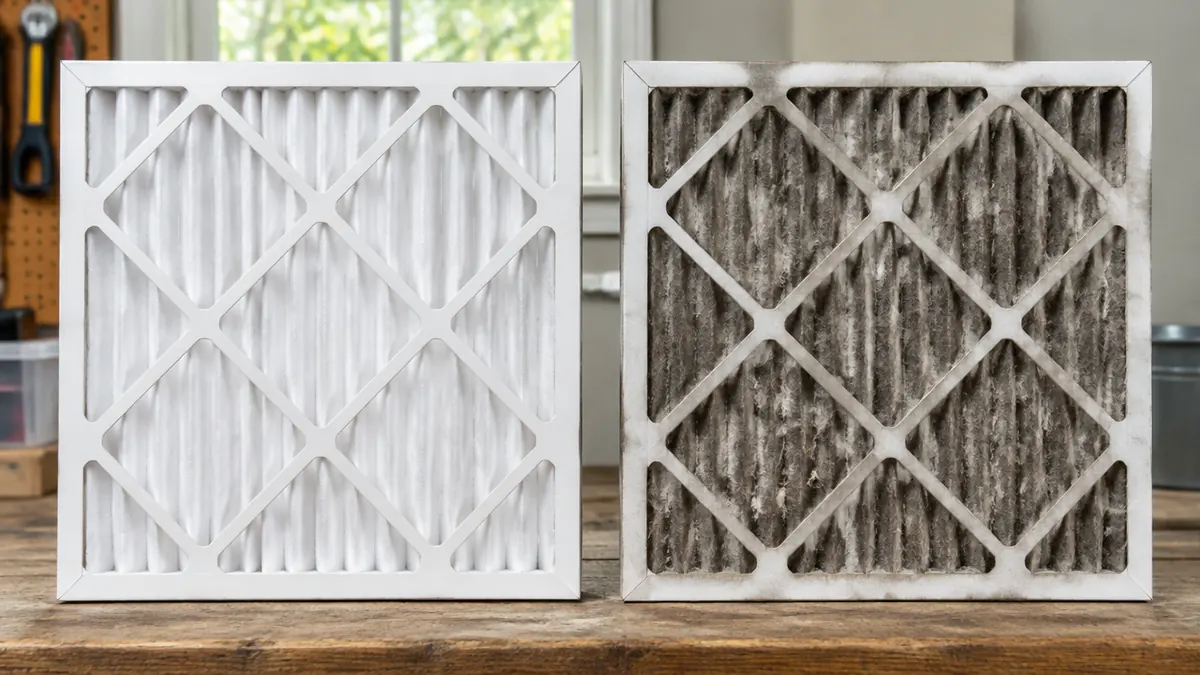
What MERV Rating Should You Use? How to Pick the Best Air Filter
EPA suggests MERV 13 or the highest your system can handle. Compare MERV 8, 11 and 13, see when a high-MERV filter strains your HVAC, and what to use for smoke.
Need a hand with your heating or cooling?
JM Comfort is a locally owned, licensed heating and air conditioning contractor (CSLB #1016274) serving the Sacramento area. Open 24/7: call or text any time, or book online and we’ll call you back.
Open 24/7 · Licensed C-20 HVAC contractor · CSLB #1016274 · (916) 247-6358