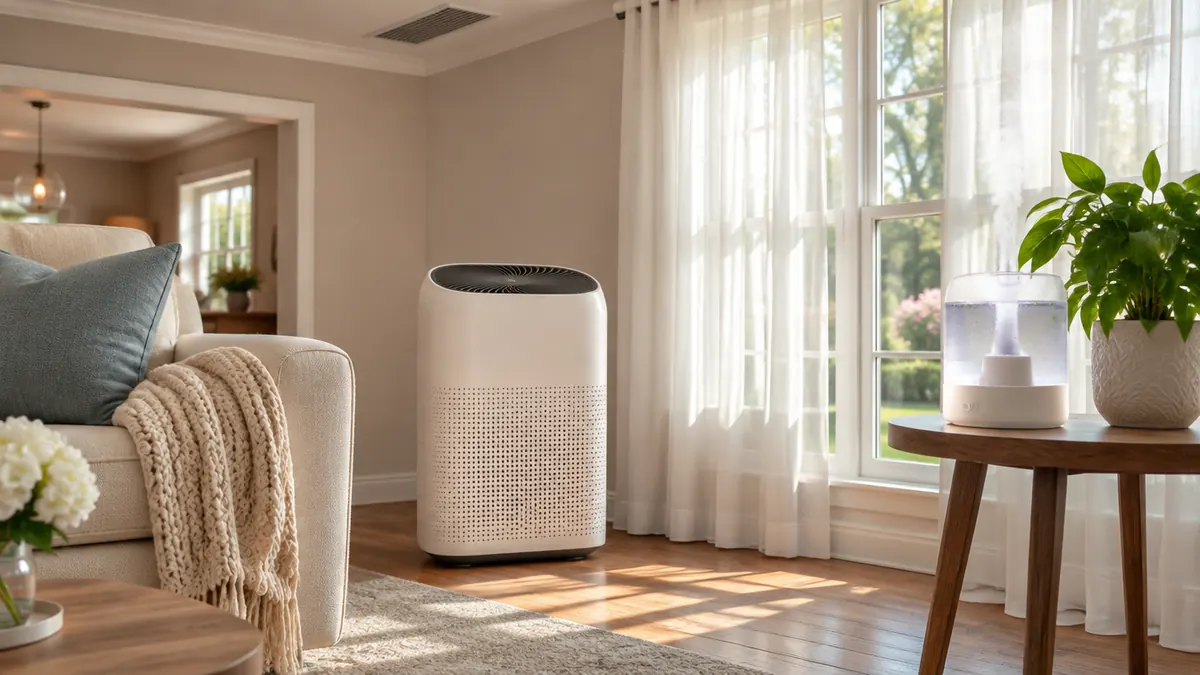
What MERV Rating Should You Use? How to Pick the Best Air Filter
A higher MERV rating catches more of what you breathe, but your system still has to pull air through it. Here’s how to pick the rating that fits your home and your equipment.
JM Comfort can help: indoor air quality for homes in Sacramento and nearby. Licensed C-20 HVAC contractor, CSLB #1016274.
The filter aisle is a wall of numbers, and the biggest number isn’t always the best buy. A higher MERV rating catches more of the fine particles in your air, but every filter also adds resistance your blower has to push against. Pick well and you get cleaner air with no downside. Pick a filter your system can’t handle and you can end up with weak airflow, a frozen coil or an overheated furnace. Here’s how to choose, and when to bring in help with indoor air quality.
What MERV rating should you use?
Use a MERV 13 filter if your system can handle it, and if it can’t, use the highest MERV your system fan and filter slot can accommodate. That’s EPA’s advice for homes with central heating and air.
The good news: EPA says most furnaces and HVAC systems can accommodate a MERV 13 filter without creating equipment problems, provided the filter is replaced frequently. The catch: EPA also admits it can be hard to tell whether a system can use a higher-efficiency filter, because HVAC equipment usually isn’t labeled with filter recommendations. When in doubt, it suggests asking a professional HVAC technician.
Manufacturer guidance lines up with that. One major manufacturer points to MERV 8 pleated filters for standard residential use and MERV 11 to 13 for homeowners who want more filtration. It warns that a higher MERV isn’t automatically right for every system, because a more restrictive filter can reduce airflow if the system wasn’t designed for it, and it says MERV 14 and up may need a compatible system or dedicated filtration equipment.
Put together, a simple rule works for most Sacramento-area homes:
- MERV 8: the everyday baseline.
- MERV 11 to 13: the upgrade most systems can take, if you change the filter on time.
- MERV 14 and up: check with a technician before you buy.
What does a MERV rating mean?
MERV stands for Minimum Efficiency Reporting Value, a score that reports how well a filter captures particles between 0.3 and 10 microns. The higher the number, the better the filter traps particles of specific sizes.
The rating comes from a test method developed by ASHRAE, the engineering society for heating and air conditioning. EPA’s MERV table runs from 1 to 16, and it’s the most useful number for comparing filters for a furnace or central HVAC system.
At the low end, one manufacturer describes MERV 1 to 4 filters as basic filtration for larger particles such as dust and lint. Those filters mostly protect the equipment. As the rating climbs, the filter starts catching smaller and smaller particles, the kind that stay in the air you breathe. You’ll find MERV and other HVAC terms defined in our glossary.
MERV 8 vs 11 vs 13: what’s the difference?
The big difference is in the smallest particles: a MERV 13 filter must catch at least 50% of particles from 0.3 to 1 micron, a MERV 11 at least 20%, and a MERV 8 has no minimum for that size at all.
Here are the minimum average capture rates from EPA’s MERV table, with MERV 16 for comparison:
| Rating | Particles 0.3–1 micron | Particles 1–3 microns | Particles 3–10 microns |
|---|---|---|---|
| MERV 8 | No minimum listed | At least 20% | At least 70% |
| MERV 11 | At least 20% | At least 65% | At least 85% |
| MERV 13 | At least 50% | At least 85% | At least 90% |
| MERV 16 | At least 95% | At least 95% | At least 95% |
Read across the table and the pattern is clear. All three common ratings do a decent job on the larger particles. The gap opens up at the small end, where MERV 8 isn’t required to catch anything and MERV 13 has to catch at least half. EPA sets 50% removal of the smallest particles tested as the bar for MERV 13 and above.
That’s why MERV 13 is EPA’s target. If your goal is cleaner air to breathe, not just a cleaner blower, the smallest size range is where the upgrade earns its keep.
Which air filter is best for your home?
The best filter for your home is the highest-MERV pleated filter your system handles comfortably, in the exact size and thickness your filter slot was built for.
Start from your situation:
- A typical home with no special concerns: a MERV 8 pleated filter protects the equipment. Step up to MERV 11 to 13 if your system allows it.
- Pets, pollen or a lot of cooking: MERV 11 to 13, checked every month, because these filters load up faster in a busy house.
- Allergies or asthma in the home: one major manufacturer suggests checking filters monthly and using a higher-MERV filter. Aim for MERV 13 if your system can take it.
- A 4- or 5-inch filter cabinet: you’re in luck. Deeper filters have more surface area, which makes MERV 13 easier on your blower.
Two rules apply to every home. First, the filter has to fit: EPA says it should sit snugly so air doesn’t leak around the edges, because air that bypasses the filter isn’t filtered. Second, skip anything that makes ozone. EPA advises avoiding furnace and HVAC filters that intentionally produce ozone.
Are air filters worth it?
Yes: a good filter protects your equipment and cuts the particles in your air, but it can’t clean your air by itself.
On the equipment side, ENERGY STAR says a clean filter keeps dust and dirt from building up in the system, buildup that can lead to expensive maintenance or early failure. On the air side, EPA says HVAC filters and portable air cleaners can reduce indoor air pollution, but they can’t remove all pollutants, and most filters are designed for either particles or gases, not both.
Know the limits before you spend:
- Filters only work while air is moving. EPA notes that a furnace or HVAC filter cleans the air only when the system is running. More filtration means more run time.
- Sources and fresh air come first. EPA says the most effective ways to improve indoor air are to reduce or remove the sources of pollutants and to ventilate with clean outdoor air. Filtration doesn’t replace either one.
- Moisture is its own problem. Damp air and musty smells call for moisture control, not a tighter filter. See ideal indoor humidity.
If a filter alone isn’t enough, read whether UV lights and air purifiers work before you buy an add-on.
Can a high MERV filter hurt your HVAC system?
It can if your system wasn’t designed for it: a restrictive filter cuts airflow, and too little airflow can overheat a furnace, freeze an AC coil and drive up energy use.
The Department of Energy’s Building America Solution Center explains why. The filter typically accounts for 20% to 50% of a system’s total resistance to airflow, depending on the setup, the filter’s efficiency and how dirty it is. Push that resistance too high and the blower can’t keep up:
- Standard blower motors (called PSC motors) work up to about 0.5 inches of water column of resistance, then “fall off”: the fan keeps turning but stops pushing air.
- Variable-speed blowers (called BPM motors) speed up and draw more power to hold airflow, which increases energy use.
- The equipment pays. The same guidance says excessive resistance can damage furnaces by overheating, freeze the coils in air conditioners, burn out blower motors, and lower the system’s overall efficiency.
Here’s the part most people miss: a high MERV rating doesn’t automatically mean high resistance. Building America says filter design matters more. Deeper or more numerous pleats add surface area and lower the resistance without changing the MERV rating. A filter with 4-inch-deep pleats has twice the surface area of one with 2-inch pleats. And a dirty filter of any rating is a problem, because dirt buildup greatly increases the resistance across a filter.
If ice shows up after a filter change, read why an AC freezes up. If the furnace starts shutting itself off, see why a furnace stops working.
How do you know if your system can handle a higher MERV filter?
Check your equipment documentation, watch how the system behaves after you switch, and if you’re unsure, have a technician measure the system’s static pressure.
Safety first: If you see ice on the refrigerant lines, switch the thermostat from Cool to Off and let it melt before running cooling again. If ice returns or the furnace keeps shutting off after a filter upgrade, go back to the filter you used before and call a technician. Don’t open the furnace’s burner or electrical compartments, and don’t disable or override any safety switch.
What filter should you use for wildfire smoke?
Use a MERV 13 filter, or the highest rating your system can handle, and set the system to keep outdoor air out. EPA, the California Air Resources Board (CARB) and AirNow all give that advice for smoke days.
- The filter. EPA says to consider upgrading to a MERV 13 or higher filter if your system can accommodate it. CARB says to use a MERV rating as high as your system can handle.
- Outdoor air. If your system has a fresh-air intake, EPA says to set it to recirculate or close the outdoor intake damper.
- The fan. AirNow advises the “Recirculate” and “On” settings rather than “Auto,” so the filter keeps working between cooling cycles.
- Change it sooner. AirNow says to replace high-efficiency filters frequently while smoke lingers.
- No swamp cooler or whole-house fan. CARB says not to run either one during smoke.
A filter that’s too restrictive for your system is still a problem in smoke season, so the airflow checks above apply. For portable air cleaners, clean rooms and air quality alerts, see wildfire smoke and your HVAC.
How often should you change a high-MERV filter?
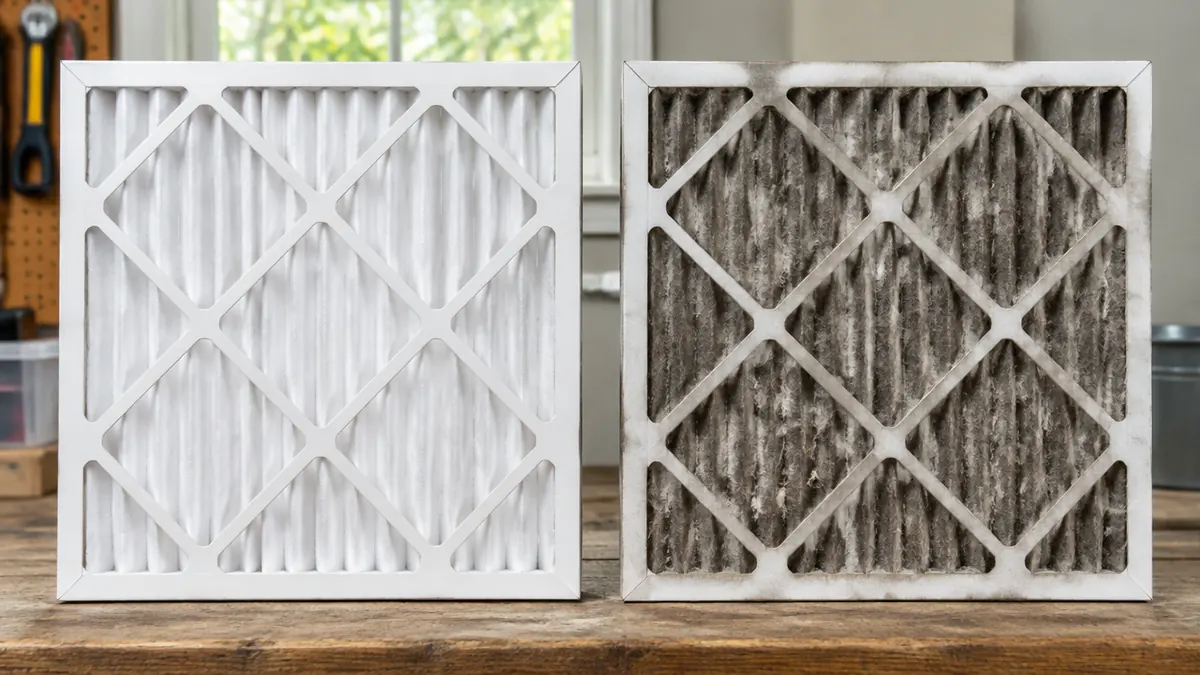
Check it every month and change it at least every 3 months, or sooner when it looks dirty.
EPA’s okay for MERV 13 comes with a condition: the filter has to be replaced frequently. Building America guidance says filters should be replaced every 3 months or sooner if needed, especially when the equipment runs continually, and right away if they’re clogged. ENERGY STAR’s rule is the same: check monthly, change when dirty, and at a minimum every 3 months.
A high-efficiency filter is doing more work, so it fills up. Treat the monthly check as part of owning one. Our guide to how often to change your air filter has a schedule by filter type and a step-by-step swap.
Why do Sacramento-area homeowners call JM Comfort?
JM Comfort is a locally owned heating and air conditioning contractor based in North Highlands, serving North Highlands, Sacramento and nearby communities. It’s a licensed C-20 HVAC contractor (CSLB #1016274), licensed since 2016 and bonded, with workers’ comp insurance on file; you can check the license on the CSLB website. The indoor air quality service covers filtration and ventilation, and the same team handles AC repair, furnace repair, tune-ups and ductwork repair and sealing for homes, so the filter question and the system behind it get looked at together.
Call (916) 247-6358 or book an indoor air quality visit online and we’ll call you back.
Frequently asked questions
Is a MERV 16 or HEPA filter better for my home system?
Usually not in a standard system. One major manufacturer says filters rated MERV 14 and up may need a compatible system or dedicated filtration equipment, and EPA notes that HEPA filters are common in portable air cleaners. If you want that level of filtration, ask a technician about separate filtration equipment instead of forcing it through your furnace.
Do higher MERV filters help with allergies?
They can help by trapping more small particles, and one major manufacturer suggests checking filters monthly in homes with allergies or asthma. But EPA is clear that no filter removes every pollutant, and that reducing the sources and ventilating come first. For medical questions, talk with your doctor.
Are filters that produce ozone safe?
EPA advises avoiding furnace and HVAC filters, and portable air cleaners, that intentionally produce ozone. Stick with plain mechanical filters rated by MERV. The guide to UV lights and air purifiers covers the other add-ons.
Does a 4-inch filter restrict airflow less than a 1-inch filter?
Often, yes. The Department of Energy’s Building America guidance says deeper or more numerous pleats add filter area and lower the resistance to airflow without changing the MERV rating. A 4-inch filter only fits a cabinet built for it, though, so a technician has to add one if your system doesn’t have it.
Does running the fan on On clean the air better?
It filters more air, because EPA notes that HVAC filters only work while the system is running. The tradeoff is that the filter loads faster, so check it more often if you leave the fan on.
Does JM Comfort help with indoor air quality?
Yes. JM Comfort’s indoor air quality service covers filtration and ventilation for homes in North Highlands, Sacramento and nearby communities. A technician can look at your filter slot and airflow before you move up to a MERV 13 filter. Call (916) 247-6358 or book online.
Sources
- What is a MERV rating? (U.S. Environmental Protection Agency)
- Guide to Air Cleaners in the Home (U.S. Environmental Protection Agency)
- High-MERV Filters (Building America Solution Center, U.S. Department of Energy)
- Heat & Cool Efficiently (ENERGY STAR)
- Furnace Filters: Types, MERV Ratings & Replacement Guide (Bryant)
- How Often to Change Air Filters in Your Home (Carrier)
- Wildfires and Indoor Air Quality (IAQ) (U.S. Environmental Protection Agency)
- Smoke Ready California (California Air Resources Board)
- When Smoke is in the Air (AirNow.gov (U.S. EPA))
Find this helpful? Add JM Comfort as a preferred source on Google.