Why Is My AC Freezing Up? Causes, Fixes and Prevention
Ice on an air conditioner in the middle of a Sacramento summer means something is wrong. Here’s what causes it, how to thaw the system without damaging it, and when the ice is a sign of a refrigerant leak.
JM Comfort can help: AC repair for homes in Sacramento and nearby. Licensed C-20 HVAC contractor, CSLB #1016274.
Ice on an air conditioner in July looks backward, but it happens, and it’s a warning worth taking seriously. A frozen coil blocks airflow, stops cooling, and can hurt the outdoor unit if the system keeps running. Often the cause is a clogged filter you can swap yourself. Sometimes it’s a refrigerant leak. This guide shows you how to tell which, how to thaw the system safely, and when it’s time for AC repair.
Why is my AC freezing up?
Your AC freezes up when its indoor coil gets so cold that the moisture on it turns to ice, which happens when too little warm air flows across the coil or the system is low on refrigerant. One major manufacturer calls restricted airflow the biggest reason an evaporator coil freezes.
Here’s what’s going on inside. The evaporator coil sits in or on top of your indoor unit. The blower pushes house air across it, the cold refrigerant inside the coil absorbs the heat, and moisture from the air condenses on the coil and drains away. Cut the airflow and the refrigerant has less heat to absorb, so the coil keeps getting colder until that moisture freezes. Ice then blocks even more air, and the problem feeds itself.
You’ll usually spot one of these first:
- Ice on the copper refrigerant lines at the outdoor unit, or on the indoor coil and its cabinet
- An AC that runs but blows warm air, or barely moves air at the vents
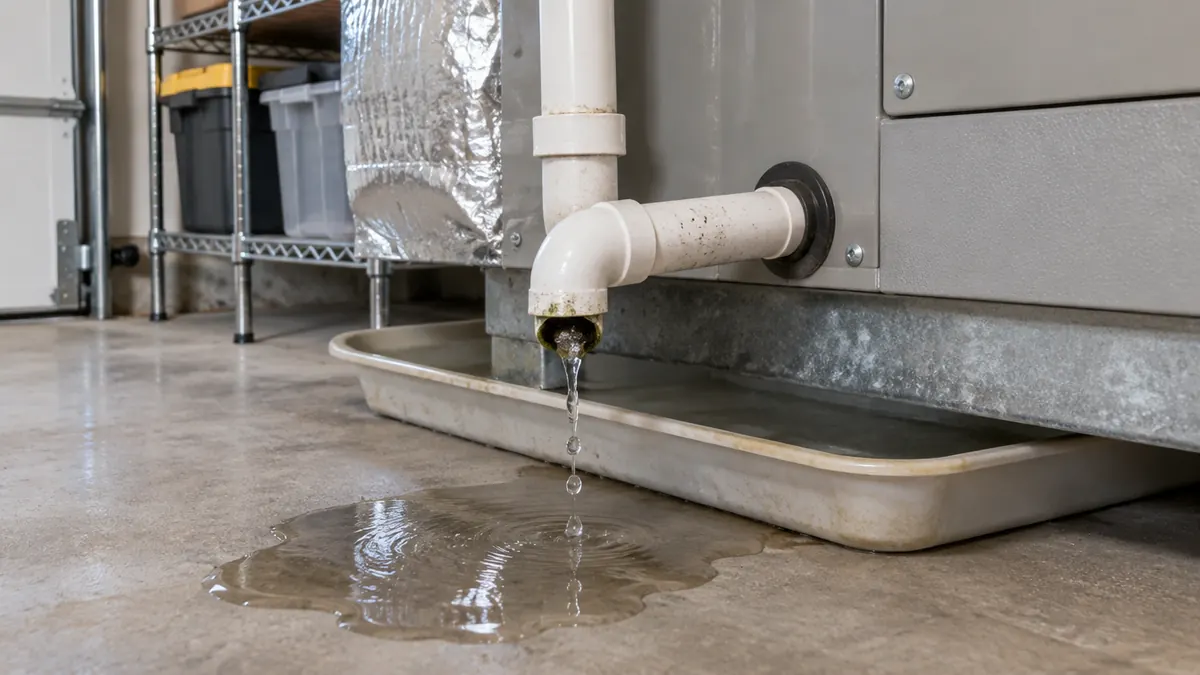
- Puddles on the floor around the indoor unit as ice thaws
Warm air from the vents has other causes too. If you don’t see ice, start with our guide to an AC blowing warm air.
Why is my AC coil freezing up?
An AC coil freezes because of a clogged filter, blocked vents, a dirty coil, a weak blower, low refrigerant, or cooling that runs when it’s too cool outside. Match what you see to the likely cause:
| Cause | What you’ll notice | DIY or pro |
|---|---|---|
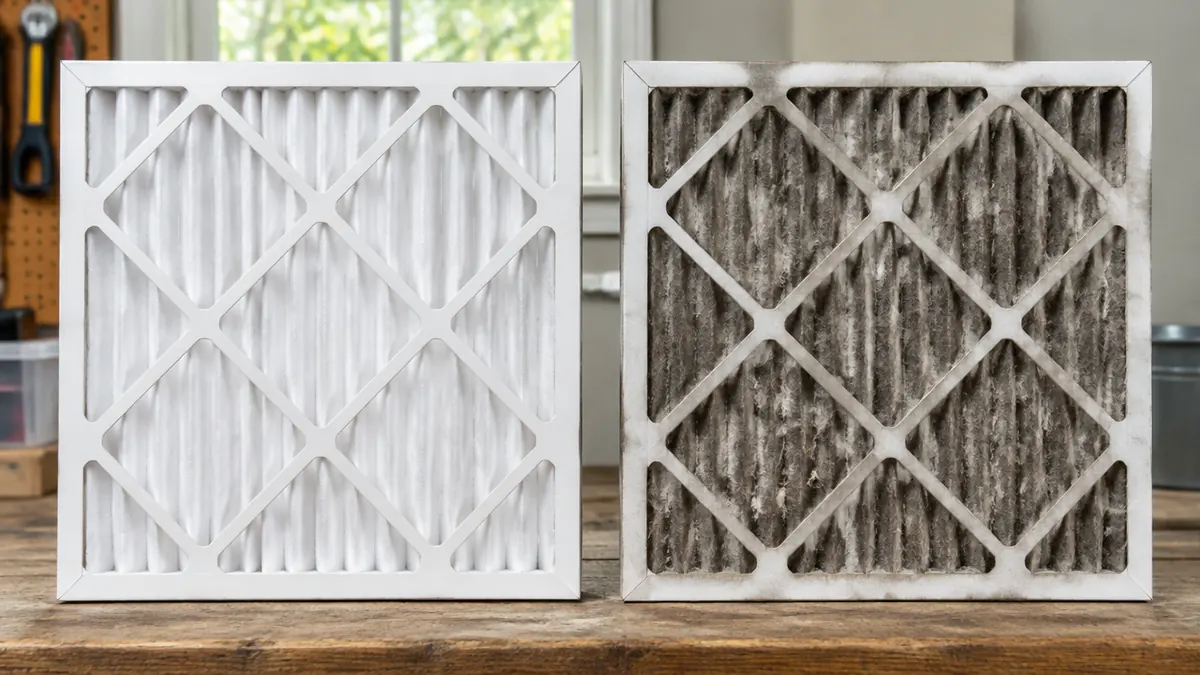
| Dirty or clogged air filter | Gray, dusty filter; weak airflow at the vents | DIY: replace the filter |
| Closed or blocked vents and returns | Shut registers; furniture, rugs or curtains over grilles | DIY: open and clear them |
| Cooling on a cool night | Ice after the AC ran with temperatures below about 60°F outside | DIY: turn cooling off on cool nights |
| Thermostat not shutting the system off | Ice that shows up overnight, system running nonstop | DIY check; pro if the thermostat is faulty |
| Dirty evaporator coil | Freeze-ups continue even with a clean filter | Pro: coil cleaning |
| Blower motor problem | Little or no air at the vents | Pro |
| Low refrigerant (a leak) | Hissing, oily residue near the coil, ice that keeps coming back | Pro |
Airflow problems you can fix
Start with the filter. A clogged filter is one of the most common reasons air can’t reach the coil, and ENERGY STAR recommends checking yours every month, noting that a dirty filter can raise energy costs and damage your equipment. Then walk the house. Closed supply registers, a sofa pushed against a return grille, or a rug over a floor vent all starve the coil. One manufacturer’s advice is simple: keep every vent open, clean and clear of furniture, rugs and curtains.
Problems that need a technician
Dust that slips past the filter builds up on the coil and acts like insulation, which blocks the air the coil needs. One major manufacturer recommends having a professional clean the coil rather than trying it yourself. A failing blower motor also cuts airflow, and that’s a repair for a pro.
Cool nights and thermostat trouble
One manufacturer says running your AC when it’s below 60°F outside can make it freeze up. That matters in Sacramento more than you might expect. NOAA’s 1991–2020 normals put the average July low at 59.2°F, and NOAA’s Climate of Sacramento report says summer nights here are usually pleasant, thanks to breezes blowing up from the San Francisco Bay through the Delta. So if you leave cooling on through a cool night, in spring, fall or even midsummer, that’s a likely suspect. And if the coil freezes only overnight, another manufacturer points to a thermostat that isn’t shutting the system off as the temperature drops.
Will an AC freeze up if it’s low on Freon?
Yes. Low refrigerant (most people still call it Freon) drops the pressure and temperature inside the indoor coil, and the coil can get cold enough to freeze. Refrigerant doesn’t get used up, either: one major manufacturer says a system only runs low when it has a leak or was undercharged when it was installed.
That’s why “just add Freon” isn’t a repair. Another manufacturer calls adding refrigerant without fixing the leak a temporary and costly band-aid. The right fix is to find the leak, repair it, and then restore the correct charge. Federal rules require technicians who service equipment that could release refrigerant to be EPA certified, so refrigerant work is a job for a certified technician.
Signs that point to a leak rather than a dirty filter:
- Ice that comes back after a new filter and a complete thaw
- A hissing sound near the indoor or outdoor coil
- Oily residue around the indoor coil
If your system is older, our guide to refrigerant types explains what R-22, R-410A and the newer refrigerants mean for a repair.
What should you do when your air conditioner freezes up?
Turn cooling off right away and let the ice melt on its own. A frozen coil can’t cool, and one major manufacturer warns that running the system with a frozen evaporator coil can cause irreparable damage to the outdoor unit.
Safety first: Don’t chip, scrape or pry at the ice. That can puncture the coil or the refrigerant tubing. Let it melt on its own instead of using tools or heat. Don’t open sealed panels or touch wiring on either unit. If the system’s breaker has tripped, reset it once; if it trips again, leave it off and call a technician.
How to thaw a frozen AC: 6 steps
- Switch the thermostat from Cool to Off. That shuts down cooling so the coil can warm up.
- Run the fan if your system allows it. If your system and its manufacturer’s instructions allow it, set the fan to On. Moving air across the coil speeds the thaw.
- Protect the floor. Lay towels around the indoor unit. Melting ice can overflow the drain pan. If water keeps coming after the ice is gone, read why an AC leaks water.
- Fix the airflow while you wait. Replace a dirty filter and open every closed or blocked vent and return.
- Wait for a complete thaw. It can take several hours, and longer with heavy ice. Don’t restart cooling while any ice remains on the coil or lines.
- Restart and watch. Set the thermostat to Cool with the fan on Auto. Check the copper lines over the next day. If the ice comes back, turn the system off and call.
Hours without cooling can be rough on a Sacramento July afternoon. If anyone in the house is struggling with the heat during the thaw, read how to stay safe when your AC goes out in a heat wave.
Why is my heat pump freezing up in summer?
In summer a heat pump cools exactly the way an air conditioner does, so it freezes up for the same reasons: weak airflow over the indoor coil or a refrigerant leak. One manufacturer’s troubleshooting guide says that during summer, low refrigerant is probably the reason an indoor coil has frozen.
Where the ice shows up tells you a lot:
- Ice at the indoor unit, or on the refrigerant lines at the outdoor unit, in summer means a frozen indoor coil. It can make a heat pump blow warm air in cooling mode. Follow the thaw steps above and replace the filter if it’s dirty.
- Frost on the outdoor coil in winter is normal, and the heat pump clears it with a defrost cycle. One manufacturer says ice thicker than 1/4 inch, a solid coat of ice, or ice that won’t clear during defrost is not normal. See how heat pump defrost mode works.
Two heat pump cautions. Defrost mode only clears ice from the outdoor coil during heating, so it won’t fix an indoor coil that froze while cooling. Turn the system off instead. And if a heat pump’s breaker has tripped, don’t reset it and restart the unit: one major manufacturer warns that can cause damage. Call for service. A heat pump only runs low on refrigerant when it leaks, so recurring ice needs a technician. For that, see JM Comfort’s heat pump service.
How do you prevent your AC from freezing up?
Keep plenty of warm air moving across the coil and keep refrigerant sealed inside the system. In practice, that comes down to 5 habits:
- Check the filter every month. Manufacturers generally call for a new filter every 1 to 3 months, and sooner with pets, smokers or a lot of dust. Our guide to how often to change your air filter has the details.
- Pick a filter your system can breathe through. If you’re moving to a thicker or higher-efficiency filter, read how to choose a MERV rating first.
- Keep vents and returns open. Keep furniture, rugs and curtains off the registers, and leave the vents in unused rooms open.
- Turn cooling off on cool nights. When it drops below about 60°F outside, which happens on many Sacramento summer nights once the delta breeze arrives, switch the system off and open a window instead of running the AC. If wildfire smoke is in the air, keep the windows shut; see wildfire smoke and your HVAC.
- Get a spring tune-up. ENERGY STAR recommends checking the cooling system each spring. It notes that airflow problems can cut a system’s efficiency by up to 15% and that too much or too little refrigerant makes a system less efficient. Coil cleaning and a refrigerant check belong in that visit. Here’s what an HVAC tune-up includes.
When is a frozen AC a job for a technician?
Call a technician when the ice comes back after a fresh filter and a full thaw, when you see signs of a refrigerant leak, or when the vents barely move air even with a clean filter.
- Ice that returns. A coil that keeps refreezing has a problem you can’t see, such as low refrigerant, a dirty coil or a blower fault.
- Leak signs. Hissing, or oily residue near the coil.
- Weak airflow with a clean filter. That points to the blower or a coil packed with dirt.
- Repeated water on the floor. Melting ice that keeps overflowing the pan can cause water damage. Leave the system off and get it checked.
A good technician finds the cause, not just the ice. Ask what failed and what the repair involves before any work starts. If your system is older and the fix is a big one, the repair-or-replace calculator and the AC repair cost guide can help you decide. If the system has also been running nonstop or turning on and off every few minutes, mention that too. When you’re ready, schedule AC repair.
Who can fix a frozen AC in the Sacramento area?
JM Comfort is a locally owned heating and air conditioning contractor based in North Highlands, serving North Highlands, Sacramento and nearby communities. It’s a licensed C-20 HVAC contractor (CSLB #1016274), licensed since 2016 and bonded, with workers’ comp insurance on file; you can check the license on the CSLB website. The same team repairs air conditioners and heat pumps in homes and handles AC tune-ups, new cooling installations, ductwork and indoor air quality.
To get a frozen system looked at, call (916) 247-6358 or book AC repair online, and we’ll call you back.
Frequently asked questions
How long does it take a frozen AC to thaw?
Usually several hours, and longer when the ice is heavy. Leave cooling off until every bit of ice is gone from the coil and the copper lines. Restarting while ice remains just refreezes the coil.
Should I run the fan to thaw a frozen AC?
If your system and its manufacturer’s instructions allow it, yes. With cooling off and the fan set to On, indoor air moves across the coil and speeds the thaw. Switch the fan back to Auto once the system is cooling normally again.
Is it bad to keep running an AC that’s frozen?
Yes. A frozen coil blocks airflow, so the system can’t cool, and one major manufacturer warns that running it frozen can cause irreparable damage to the outdoor unit. Turn cooling off as soon as you see ice.
Why does my AC freeze up at night?
Two common reasons: the system is running while it’s too cool outside, or the thermostat isn’t shutting the system off as the house cools. One manufacturer says running an AC when it’s below 60°F outside can make it freeze, and NOAA’s normals put Sacramento’s average July low at 59.2°F. If the thermostat seems to be the problem, the thermostat troubleshooting guide can help.
Why is there water on the floor after my AC thaws?
Melting ice can overflow the drain pan under the indoor coil. Lay towels down while it thaws. If water keeps showing up after the ice is gone, the drain line may be clogged; see why an AC leaks water.
Does JM Comfort repair frozen air conditioners?
Yes. A JM Comfort technician can track down why the coil froze, whether it’s airflow, a dirty coil or a refrigerant leak, and explain the repair before starting. JM Comfort handles AC repair for homes in North Highlands, Sacramento and nearby communities. Call (916) 247-6358 or book online.
Sources
- Why Does My AC Keep Freezing? Causes & How to Fix It (Bryant)
- Why is My AC Unit Freezing Up? Find Out? (Lennox)
- What To Do If the AC Evaporator Coil Is Frozen (Trane)
- Top 5 Causes of Frozen AC Coils and How to Fix Them (Trane)
- Why Is My Heat Pump Not Cooling? Troubleshooting Tips (Trane)
- Heat Pump Troubleshooting Guide: Is Your Heat Pump Not Working? (Carrier)
- Maintenance Checklist (ENERGY STAR)
- Section 608 Technician Certification Requirements (U.S. Environmental Protection Agency)
- 1991–2020 U.S. Climate Normals, monthly data: Sacramento Executive Airport, CA (USW00023232) (NOAA National Centers for Environmental Information)
- Climate of Sacramento, California (NOAA Technical Memorandum NWS WR-272, revised June 2005) (National Weather Service, NOAA)
Find this helpful? Add JM Comfort as a preferred source on Google.