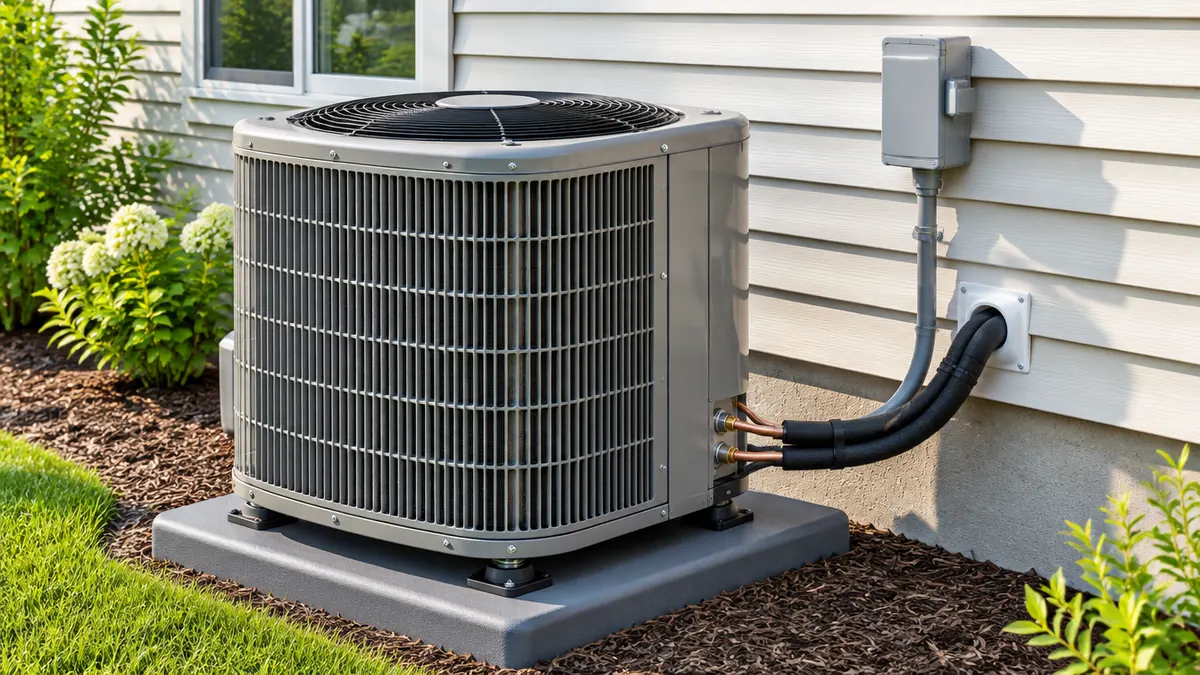
Do New HVAC Systems Use Freon? R-22, R-410A and R-454B Explained
Refrigerant rules have changed twice in a few years, and California has its own on top of the federal ones. Here’s what your system uses, what new systems use, and what the EPA and California Air Resources Board rules mean for you as of November 2026.
JM Comfort can help: AC installation for homes in Sacramento and nearby. Licensed C-20 HVAC contractor, CSLB #1016274.
If a technician has told you your system “uses the old Freon,” or you’ve read that R-410A is “banned,” you’re not alone in being confused. The rules really have changed, twice in a few years, and California layers its own rules on top of the federal ones. The short version: you can keep using and repairing the system you have, new systems use different refrigerants, and refrigerant work belongs to a certified technician either way. This guide explains each refrigerant, what the EPA and California rules say as of November 2026, and what that means when you’re choosing between a repair and a new AC installation.
What is refrigerant?
Refrigerant is the fluid that moves heat out of your house: it absorbs heat at the indoor coil and releases it outside, over and over, in a sealed loop.
Your AC or heat pump doesn’t make cold air. It moves heat. Indoors, refrigerant soaks up heat from the air passing over the evaporator coil. The compressor pumps it to the outdoor unit, where the heat is released, and the refrigerant comes back for more. A heat pump can run the same loop in reverse to heat your home in winter.
Because the loop is sealed, a healthy system doesn’t use refrigerant up. If yours is low, the EPA advises asking the technician to find and repair the leak instead of just “topping off” the system. If your compressor is struggling, see what to do when an AC compressor isn’t working.
Do new HVAC systems use Freon?
No. “Freon” is a brand name commonly used for R-22, and no new R-22 has been made in or imported into the United States since January 1, 2020; new central AC systems use other refrigerants.
The EPA says you can no longer purchase a new central AC unit that uses R-22. New systems moved to R-410A, which one major manufacturer calls the R-22 replacement the HVAC industry transitioned to. Now R-410A is being phased down too, and new home systems use refrigerants with a lower global warming potential (GWP), mainly R-454B and R-32. One major manufacturer describes R-454B as the newest refrigerant, which will gradually replace R-410A.
If your system was installed many years ago, it may still use R-22. That’s legal. The EPA says people can continue to use R-22 equipment and does not require homeowners to replace it.
What refrigerant replaces R-22?
R-410A replaced R-22 in new systems, and R-410A is now being replaced in turn by lower-GWP refrigerants such as R-454B and R-32.
Here’s how they compare. The safety classes and GWP figures come from the EPA’s list of acceptable substitutes for home air conditioning and heat pumps.
| Refrigerant | Where you’ll find it | Status as of November 2026 | Safety class | GWP |
|---|---|---|---|---|
| R-22 (HCFC-22, “Freon”) | Older systems | Ozone-depleting; no new production or import since 2020; service relies on reclaimed and pre-2020 supply | Not on the EPA substitutes list | Not listed |
| R-410A | Many existing systems | New products not made or imported since 2025; existing systems can be repaired | A1 | 2,090 |
| R-454B | New systems | Acceptable with use conditions | A2L | 470 |
| R-32 | New systems | Acceptable with use conditions | A2L | 675 |
One major manufacturer notes that R-454B is a blend of R-32 and another refrigerant, R-1234yf, and another says that, like R-410A, R-454B poses no danger to the ozone layer.
Can you still buy R-22?
Not as a homeowner: the EPA says refrigerant for home systems is sold only to certified technicians or the companies that employ them, and the R-22 still in circulation is recovered, reclaimed or made before 2020.
That reclaimed supply is what keeps existing R-22 systems running. The EPA says R-22 that is recovered and reclaimed, along with R-22 produced before 2020, will help meet the needs of owners.
Safety first: Refrigerant work is a job for a certified technician. It is illegal to intentionally release refrigerant while servicing or repairing AC equipment. Watch out for “R-22a”: the EPA says it has been falsely marketed as R-22 or an R-22 replacement, that it is a flammable hydrocarbon blend, and that it is not an acceptable alternative for a home AC system.
When you hire anyone to work on refrigerant, ask whether the technicians hold EPA Section 608 certification, as the EPA recommends. Federal rules require certification for technicians who maintain, service, repair or dispose of equipment that could release refrigerant, and Type II certification covers high-pressure appliances.
R-410A vs. R-454B: what’s the difference?
R-454B has a far lower global warming potential than R-410A (470 vs. 2,090 on the EPA’s list) and is classed A2L, mildly flammable, where R-410A is A1; you can’t put R-454B into a system built for R-410A.
What that means for you:
- Different equipment. R-454B systems are designed for that refrigerant. One major manufacturer says existing systems can’t be modified or retrofitted to work with R-454B, and another says plainly that R-454B is not compatible with older systems.
- Built-in safety features. R-454B is slightly more flammable than R-410A. One major manufacturer says its R-454B systems come pre-equipped with leak detection, and that technicians are trained on compound-specific safety and handling.
- Same job, cleaner number. Both move heat the same basic way. The change is mostly about climate impact, driven by federal and California rules on hydrofluorocarbons (HFCs).
- Service for what you have. If your system runs on R-410A, it can still be serviced for the life of the equipment.
Efficiency is a separate question from refrigerant. For that, compare SEER2 and EER2 ratings; our guide to SEER2 ratings explains what the numbers mean in California.
What do the AIM Act and the EPA rules mean for your system?
They limit what new equipment can be made, imported and installed; they don’t force you to replace a working system, and you can keep maintaining and repairing what you have.
The American Innovation and Manufacturing (AIM) Act, enacted December 27, 2020, requires the EPA to phase down HFCs by 85 percent from historic baseline levels by 2036. Here’s the timeline that matters for home systems in California:
| Date | What changed |
|---|---|
| January 1, 2020 | No new R-22 made in or imported into the U.S. |
| December 27, 2020 | AIM Act enacted, starting the federal HFC phasedown |
| January 1, 2025 | Federal: making or importing R-410A home and light commercial AC products is prohibited. California: CARB prohibits refrigerants with a GWP of 750 or more in new home and business central AC and heat pumps |
| January 1, 2026 | Original federal deadline: new split systems installed after this date had to use refrigerant with a GWP under 700 |
| May 21, 2026 | EPA final rule removes that installation deadline for equipment made or imported before January 1, 2025; that older stock can be installed until supply runs out |
| 2036 | Federal HFC phasedown reaches 85 percent below the historic baseline |
One note on sources: as of November 2026, the EPA’s own frequently asked questions page still carries the original wording that any new split system installed after January 1, 2026 must use refrigerant under 700 GWP. The May 2026 final rule carved out equipment built or imported before 2025, so read that older wording with the new rule in mind.
Two more points from the EPA that affect real decisions. First, replacing both the outdoor condensing unit and the indoor coil together counts as installing a new system. Second, the availability of HFCs and components may lessen over time as the phasedown continues.
Does California have its own refrigerant rules?
Yes. The California Air Resources Board (CARB) prohibits refrigerants with a GWP of 750 or greater in new residential and non-residential central air conditioning equipment, including heat pumps, as of January 1, 2025.
CARB’s table sets different dates for different equipment: room, wall and window units were covered as of January 1, 2023, and variable refrigerant flow (VRF) systems as of January 1, 2026. R-410A, at 2,090 GWP on the EPA’s list, is far over CARB’s limit. R-454B (470) and R-32 (675) are under it.
Two details in CARB’s regulation text matter for homeowners:
- A new outdoor unit counts as new equipment. CARB defines “new air-conditioning equipment” to include an existing system with a single condenser and single evaporator that gets a new exterior condenser or condensing unit. That’s stricter than the federal rule, where a new system means both the outdoor unit and the indoor coil are replaced.
- The ban is tied to manufacture date. The regulation applies to equipment “manufactured after the effective date.”
Here’s what’s uncertain, stated plainly. The EPA now allows R-410A equipment made before 2025 to be installed until supply runs out. CARB’s web page says nothing about older stock, and the copy of CARB’s regulation checked for this guide comes from its 2020 rulemaking; later amendments weren’t reviewed. Neither page clearly says whether a pre-2025 R-410A unit can still be installed in California. If a contractor offers you an R-410A outdoor unit, ask in writing when it was made and how it meets CARB’s rule, or ask CARB directly.
Is refrigerant toxic?
The refrigerants in new home systems are rated low toxicity, but refrigerant is still hazardous to handle: the EPA lists toxicity, flammability, asphyxiation and physical hazards among refrigerant risks.
R-454B and R-32, the refrigerants in new systems, carry an A2L safety class, which one major manufacturer explains as low toxicity and low flammability. R-410A carries A1. The EPA lists the A2L refrigerants as acceptable only with use conditions, and it prohibits mildly flammable refrigerants such as R-32 and R-454B in systems that weren’t designed for them.
For a homeowner, the practical rules are simple. One major manufacturer puts it bluntly: as a homeowner, you should never handle HVAC refrigerants. If you suspect a leak, such as hissing at the refrigerant lines, ice on the lines or a system that suddenly won’t cool, turn the system off and call for AC repair. Ice is covered in why an AC freezes up.
Should you replace your system because of its refrigerant?
Not because of the refrigerant alone; refrigerant becomes a deciding factor when a big repair, like a leak or a compressor, hits an older system.
- R-22 systems. New R-22 central AC units can no longer be bought, so these systems are getting older every year, and every refrigerant repair depends on reclaimed or pre-2020 supply. When an R-22 system needs a major refrigerant or compressor repair, it’s a good time to price a replacement alongside it.
- R-410A systems. You can keep maintaining and repairing them for their useful life. Weigh age, repair history and efficiency the way you would with any system.
- Partial replacements. Under CARB’s definition, a new outdoor unit on a single split system counts as new equipment, and under EPA rules, replacing both the outdoor unit and the indoor coil counts as a new system. Ask any contractor which refrigerant a partial replacement would use and how it meets both rules.
Our guide to repairing or replacing your AC and the repair-or-replace calculator can help you weigh it. If replacement wins, see what a new HVAC system costs and what a new system should include, then talk to a contractor about AC installation.
Why do Sacramento-area homeowners call JM Comfort?
JM Comfort is a locally owned heating and air conditioning contractor based in North Highlands, serving North Highlands, Sacramento and nearby communities. It’s a licensed C-20 HVAC contractor (CSLB #1016274), licensed since 2016 and bonded, with workers’ comp insurance on file; you can check the license on the CSLB website. JM Comfort handles AC repair, AC installation and heat pump repair and installation for homes, so you can weigh a repair against a replacement with one local contractor.
Call (916) 247-6358 or request an AC installation estimate online and we’ll call you back.
Frequently asked questions
Can R-410A or R-454B go into an R-22 system?
Not as a simple swap. The EPA says there are no drop-in replacements for R-22. It also prohibits mildly flammable refrigerants such as R-454B and R-32 in systems that weren’t designed to use them.
What is R-22a, and is it safe?
The EPA warns that R-22a has been falsely marketed as R-22 or an R-22 replacement. It is a flammable hydrocarbon blend and, according to the EPA, not an acceptable alternative for a home AC system. Don’t let anyone put it in your system.
Will R-410A be banned for repairs?
No. The EPA says homeowners can maintain and repair their systems throughout the useful life of the equipment. The EPA also notes that the availability of HFCs and components may lessen over time as HFCs are phased down.
How do I find out which refrigerant my system uses?
Look for the rating plate on the outdoor unit. It lists the refrigerant type along with the model and serial numbers. If the label is faded or missing, a technician can tell you during a service visit or tune-up.
Can JM Comfort help me decide whether to repair or replace an older system?
Yes. JM Comfort, a licensed C-20 HVAC contractor (CSLB #1016274) based in North Highlands, repairs and installs air conditioners and heat pumps for homes in North Highlands, Sacramento and nearby communities. Call (916) 247-6358 or book online.
Sources
- Homeowners and Consumers: Frequently Asked Questions (U.S. Environmental Protection Agency)
- Frequent Questions on the Phasedown of Hydrofluorocarbons (U.S. Environmental Protection Agency)
- Fact Sheet: Final Rule: Phasedown of Hydrofluorocarbons: Reconsideration of Certain Regulatory Requirements Promulgated under the Technology Transitions Provisions of the American Innovation and Manufacturing Act of 2020 (U.S. Environmental Protection Agency)
- Substitutes in Residential and Light Commercial Air Conditioning and Heat Pumps (U.S. Environmental Protection Agency)
- Refrigerant Safety (U.S. Environmental Protection Agency)
- Section 608 Technician Certification Requirements (U.S. Environmental Protection Agency)
- Air-conditioning Equipment (California Air Resources Board)
- Final Regulation Order: Prohibitions on Use of Certain Hydrofluorocarbons in Stationary Refrigeration, Stationary Air-conditioning, Chillers, Aerosols-Propellants, and Foam End-Uses (17 CCR Article 4, Subarticle 5; 2020 rulemaking) (California Air Resources Board)
- A Complete Guide to HVAC Refrigerants (Trane)
- R454B Refrigerant (Lennox)
Find this helpful? Add JM Comfort as a preferred source on Google.