What Does a New HVAC System Include? Equipment, Install and Paperwork
Two quotes for “a new system” can cover very different work. Here’s every piece a complete California installation should account for, from the outdoor unit to the permit, the Title 24 testing and the paperwork, so you can compare bids line by line.
JM Comfort can help: AC installation for homes in Sacramento and nearby. Licensed C-20 HVAC contractor, CSLB #1016274.
A quote that says “new 3-ton system, installed” tells you the size and the total. It doesn’t tell you whether the price includes new refrigerant lines, a thermostat, the permit, the Title 24 testing or hauling away the old unit. Those items are where bids that look alike turn out to be different. This guide lists everything a complete installation should cover, explains the permit, the testing and the paperwork California requires, and tells you what to check before the installer leaves. Use it to compare quotes from any AC installation company, line by line.
What does a new HVAC system include?
A new HVAC system includes the main equipment (the outdoor unit, a matching indoor coil, and a furnace or air handler if it’s being replaced) plus the installation work that connects it: refrigerant lines, electrical work, controls, a permit, Title 24 duct sealing and testing, removal of the old equipment, and startup testing.
The definition matters for refrigerant rules. EPA says replacing both the outdoor condensing unit and the indoor coil together counts as installing a new system, even if the refrigerant lines stay. That’s why a full replacement quote should name both pieces, not just the box outside.
Use this table to check a quote:
| Item | What it does | What to ask |
|---|---|---|
| Outdoor unit | The air conditioner or heat pump that moves heat outside | Model number, size and SEER2 rating? |
| Indoor coil | The evaporator coil that absorbs heat indoors | Is a new coil included with the outdoor unit? |
| Furnace or air handler | Heats (furnace) and moves air through the ducts | Is it being replaced or reused? |
| Refrigerant line set | Copper lines that carry refrigerant between the units | Will the lines be flushed or replaced? |
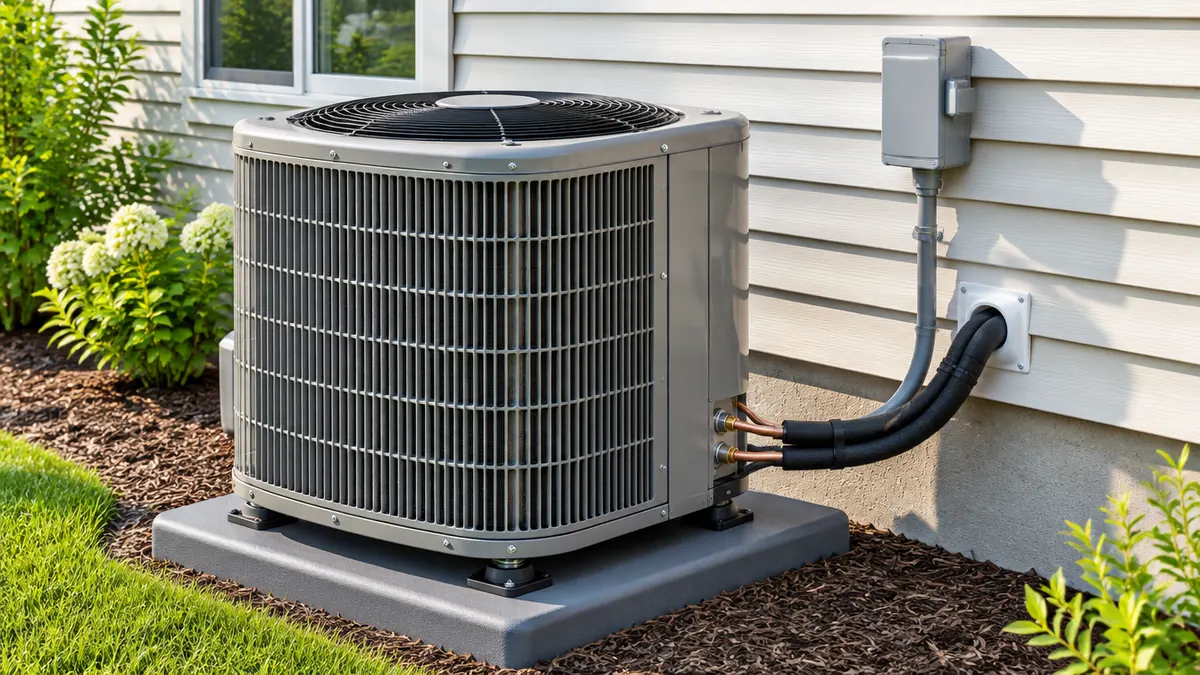
| Equipment pad | Keeps the outdoor unit level and off the ground | Is the old pad reused or replaced? |
| Electrical work | Power and control wiring for the new equipment | Is any electrical work needed, and is it in the price? |
| Thermostat | Controls the system | Is a new digital setback thermostat included and compatible? |
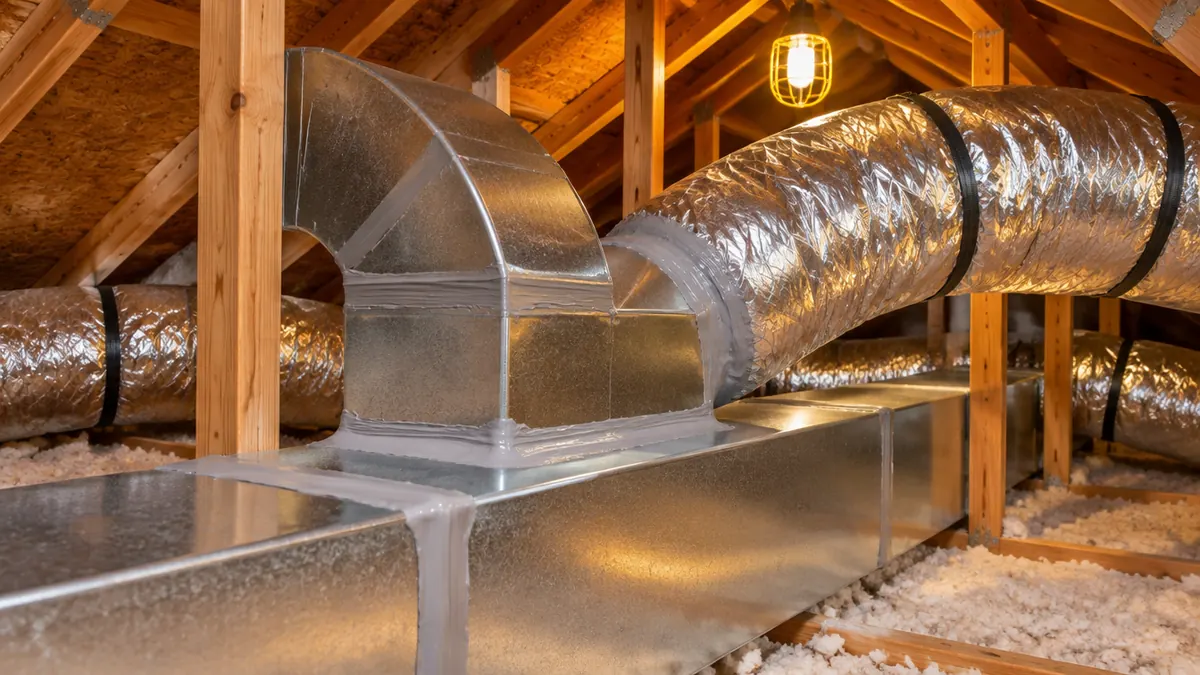
| Ductwork | Carries air to and from every room | Will the ducts be sealed, repaired or replaced? |
| Permit and inspection | Code review of the installation | Who pulls the permit and schedules the final inspection? |
| Title 24 duct test | An ECC-Rater verifies the ducts were sealed to code | Is the sealing and the rater’s test in the price? |
| Charge and airflow check | Field verification of refrigerant charge and airflow where required | Will the charge be verified, and will I see the readings? |
| CF2R and CF3R certificates | The installer’s and the rater’s code paperwork for the inspector | Who files each one, and will I get copies? |
| Removal and disposal | Takes the old equipment away and recovers its refrigerant | Is haul-away included? |
| Warranty registration | Activates the longest manufacturer coverage | Who registers it, and by when? |
What comes with a new HVAC system besides the equipment?
A complete installation comes with the labor and parts that connect the equipment: removal of the old system, refrigerant lines, electrical work, a thermostat, testing and a final inspection.
One major manufacturer’s installation guide lists these as part of a standard installation: removing old equipment and disposing of it responsibly, electrical work as needed, installing the new outdoor unit, evaporator coil and furnace or air handler, flushing or replacing the refrigerant lines, a new thermostat, system testing and a final inspection, all to state and local codes. Fixr’s 2026 guide says installation labor covers setting the unit, running any needed wiring, running new refrigerant lines and testing the system.
Line set and pad
EPA notes that refrigerant lines are generally not removed when the other parts of a system are replaced, while some installers flush or replace them. Either can be right; what matters is that the quote says which. The outdoor unit should sit level on a solid pad. If yours is cracked, sinking or too small for the new unit, ask whether a new one is in the price.
Haul-away
Don’t assume it’s included. Fixr says some installers include removing and hauling away the old unit and many don’t. It isn’t curbside trash, either: EPA lists central residential air conditioning among equipment that’s typically dismantled on site, and its refrigerant has to be recovered before disposal.
Do you need a permit to replace HVAC?
Yes. In California, the Energy Commission says installing a space-conditioning appliance (other than a plug-in room unit) requires a building permit, and that covers replacing a central air conditioner, furnace or heat pump.
Permits are issued by your local building department, CSLB’s consumer guide notes, and it says your contract should state who will pull the necessary permits. Make sure yours does. Nationally, Fixr puts AC permit fees at $50 to $1,500 depending on the local fee schedule. For the local steps, see HVAC permits and Title 24 in Sacramento. A contractor who offers to skip the permit is offering to skip the inspection that protects you; how to choose an HVAC company lists more red flags.
What Title 24 adds to a changeout
California’s energy code, Title 24, makes a changeout more than a box swap. The Energy Commission’s 2025 compliance manual says the duct system connected to the new equipment must be sealed by the installer and verified by an ECC-Rater when any of these happens:
- An air handler is replaced.
- The outdoor unit of a split air conditioner or heat pump is installed or replaced.
- A packaged system is completely replaced.
- A cooling or heating coil is installed or replaced.
The measured leakage must be 10 percent or less of system airflow, or 7 percent or less to the outside. If neither target can be met, all accessible leaks must be sealed and checked with a visual inspection and a smoke test. The exceptions are ducts an ECC-Rater has already sealed, tested and certified, systems with less than 40 feet of duct, and ducts that contain asbestos.
The Energy Commission’s ZIP code table puts North Highlands (95660) and central Sacramento ZIP codes such as 95814 in building climate zone 12. In that zone, replacing a refrigerant-containing part of an air conditioner means its refrigerant charge must be field verified; heat pumps need that check in every zone. When charge verification is required, airflow must reach at least 300 cfm per ton on standard systems. In every zone, adding or replacing a refrigerant-containing part also means upgrading to a digital setback thermostat.
The CF2R and CF3R paperwork
Two forms show the work was done to code. California’s utility-run Energy Code Ace site says CF2R certificates of installation demonstrate the installation complies and should be submitted by the installer to the inspector, while CF3R certificates of verification demonstrate the field verification and diagnostic testing comply and should be submitted by the ECC rater. When a project needs that verification, the Energy Commission says the certificate of compliance (CF1R) must be registered online with an approved ECC provider. Ask any contractor who prepares each form, when the rater will test, and whether you’ll get copies for your records.
How long does HVAC installation take?
Installation day usually takes a few hours to a full day: one major manufacturer’s installation guide says to expect 2 to 8 hours once the crew arrives, with longer jobs when the work is complex or new ductwork is involved.
The calendar time is longer than the install itself. Getting quotes, choosing equipment, pulling the permit, scheduling the crew, the ECC-Rater’s testing and the final inspection all add days. Fixr notes that limited access, such as an attic installation, can stretch installation time. If you’re replacing a furnace or air handler along with the outdoor unit, expect a longer day than an outdoor-unit-only swap.
Plan around the season if you can. Replacing a system in spring or fall, before it fails, gives you time to compare bids instead of taking the first open slot in a heat wave. Our guide to signs you need a new HVAC system helps you see it coming.
Should you replace ductwork with a new HVAC system?
Replace ductwork only when it’s damaged, badly leaking or the wrong size, but expect it to be sealed and tested either way, because California’s code ties duct sealing to most equipment changeouts.
New ducts bring their own rules. The Energy Commission’s compliance manual says installing more than 25 feet of new duct triggers extra insulation, sealing and leakage testing, that an entirely new duct system must test at 5 percent leakage or less, and that new ducts in unconditioned space in climate zone 12 need at least R-8 insulation. One major manufacturer says its dealers assess ductwork during planning and may recommend replacing some or all of it.
Ask whether sealing and repair will do the job before you pay for new ducts, because new ductwork adds real cost; Fixr puts it at $1,400 to $6,000 on a central AC installation. Our guides to leaky ductwork, sweating ducts and new HVAC system costs cover the details.
How do you register a new HVAC system’s manufacturer warranty?
Register the equipment with the manufacturer, online or through your installer, before the deadline in the warranty terms, which is often 60 days after installation.
One major manufacturer says registering within 60 days lengthens the term of its limited warranty, and that units registered late fall under a shorter base warranty. Its limited warranties cover parts that fail from a manufacturer defect, not the labor to replace them. It also notes that dealers often register products for their customers, so confirm who is doing it.
Keep the model and serial numbers, the installation date, the invoice and your CF2R and CF3R copies together. You’ll need them for registration and for any claim later.
What should you check before the installer leaves?
Before the crew packs up, walk through these 6 checks so you know the job is complete.
- Feel the air. Run the system in cooling (or heating, in winter) and confirm air is coming out of every vent.
- Ask what was tested. Ask for the duct leakage result and, where required, the refrigerant charge and airflow readings, and when the ECC-Rater will verify them.
- Learn the thermostat. Have the installer show you the settings, including Auto versus On for the fan.
- Look outside. The outdoor unit should sit level on its pad, with the refrigerant lines insulated and the area cleaned up.
- Check the permit. Ask when the final inspection is scheduled and who is submitting the CF2R and CF3R.
- Get the paperwork. Model and serial numbers, the invoice, and who is registering the warranty, and by what date.
Then set a reminder for the first filter change; our guide to how often to change your air filter covers the schedule.
When should you get an installation estimate?
Get an estimate when your current system is aging, needs a major repair, or no longer keeps up, and get it before it fails if you can.
If you’re weighing one more repair against a new system, the repair-or-replace calculator and our repair-or-replace guide help you decide. When you’re ready, request an AC installation estimate, or ask about furnace and heat pump installation, and compare every quote against the table above.
What should you look for in an HVAC company?
Look for a licensed contractor that inspects your home before it quotes, writes down everything the price includes, and explains the code steps in plain language.
Why do Sacramento-area homeowners call JM Comfort?
JM Comfort is a locally owned heating and air conditioning contractor based in North Highlands, serving North Highlands, Sacramento and nearby communities. It’s a licensed C-20 HVAC contractor (CSLB #1016274), licensed since 2016 and bonded, with workers’ comp insurance on file; you can check the license on the CSLB website. The same team installs air conditioners, furnaces and heat pumps, handles ductwork repair, replacement and sealing, and covers indoor air quality (filtration and ventilation) for homes, and it repairs and tunes up those systems down the road.
Call (916) 247-6358 or request an installation estimate online and we’ll call you back.
Frequently asked questions
Does a new HVAC system come with a new thermostat?
Often. One major manufacturer lists a new thermostat as part of its standard installation, and in California the Energy Commission’s compliance manual says that when a refrigerant-containing part is added or replaced, the thermostat must be upgraded to a digital setback type. Ask whether one is included and whether it works with your new equipment. Our guide to thermostat settings helps once it’s in.
Will the installer haul away my old unit?
Ask before you sign. Fixr’s 2026 guide says some installers include removing and hauling away the old unit and many don’t. EPA requires the refrigerant in central air conditioning equipment to be recovered before the equipment is disposed of, so removal is a job for the installer, not the curb.
Can my old refrigerant lines be reused?
Sometimes. EPA notes that refrigerant lines are generally not removed when the other components of a system are replaced, and one major manufacturer says its installers flush or replace them. Ask your contractor which they plan to do and why.
Do I need a new indoor coil if I replace the outdoor unit?
For a full replacement, plan on it. EPA says replacing both the outdoor condensing unit and the indoor coil together counts as installing a new system. For a repair on an existing R-410A system, EPA allows replacing just a faulty outdoor unit or coil with a similar R-410A part, but in California either swap still triggers Title 24 duct sealing.
Who does the Title 24 testing on a new HVAC system?
An ECC-Rater. The Energy Commission’s compliance manual says the ducts connected to replaced equipment must be sealed by the installer and verified by an ECC-Rater, and California’s Energy Code Ace site says the rater submits the CF3R certificate of verification to the inspector. Ask the contractor who schedules the rater and when.
Does JM Comfort handle ductwork with a new system?
Yes. JM Comfort installs heating and cooling systems for homes and also does ductwork repair, replacement and sealing, so duct problems can be handled in the same project. It’s a licensed C-20 HVAC contractor (CSLB #1016274). Call (916) 247-6358 or request an estimate online.
Sources
- The Ultimate HVAC Installation Guide for Homeowners (Trane)
- How Much Does AC Installation Cost in 2026? (Fixr)
- Frequent Questions on the Phasedown of Hydrofluorocarbons (US EPA)
- Stationary Refrigeration Safe Disposal Requirements (US EPA)
- HVAC Warranty: Types, Terms, and What's Covered (Trane)
- 2025 Single-Family Heating, Ventilation, and Air Conditioning (HVAC) (California Energy Commission)
- 2025 Single-Family Residential Compliance Manual, Chapter 9: Additions, Alterations, and Repairs (California Energy Commission)
- Energy Code Ace - Residential Compliance Documents (Energy Code Ace (California statewide utility program))
- Building Climate Zones by Zip Codes (California Energy Commission)
- Terms of Agreement: A Consumer Guide to Home Improvement Contracts (Contractors State License Board (CSLB))
Find this helpful? Add JM Comfort as a preferred source on Google.