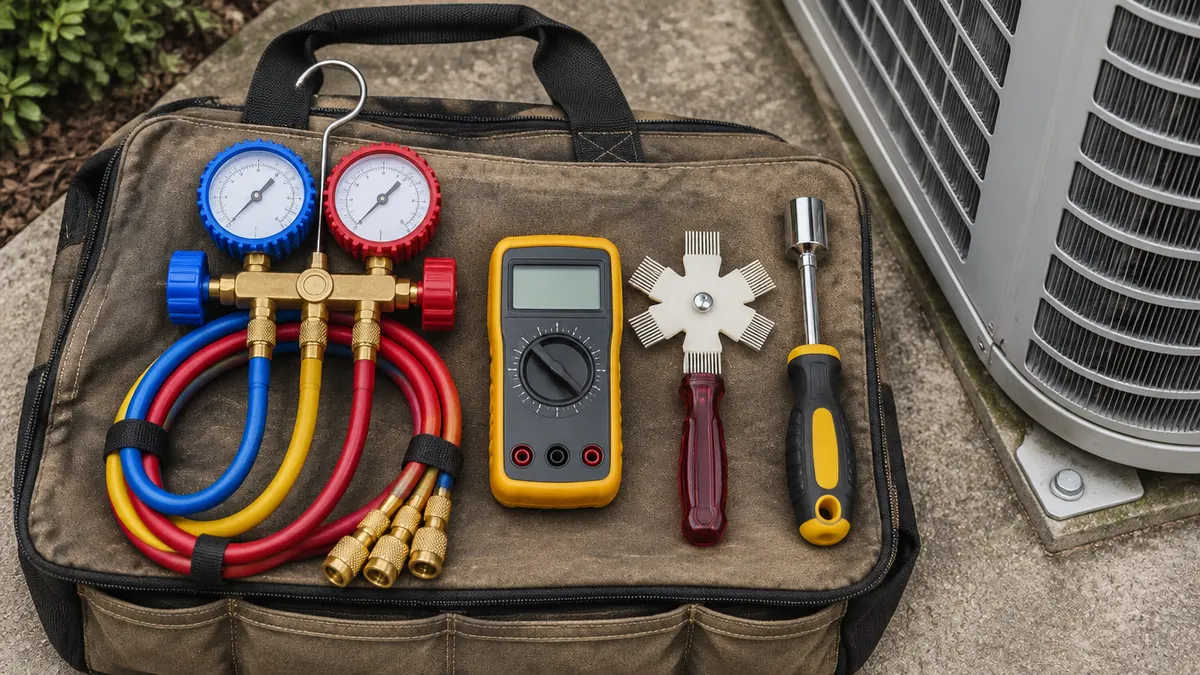
Should You Repair or Replace Your AC or Furnace?
Age, the size of the repair and how often it breaks decide most repair-or-replace calls. Here’s how to weigh them for an air conditioner, heat pump or furnace, what California’s rules add, and how to run your own numbers.
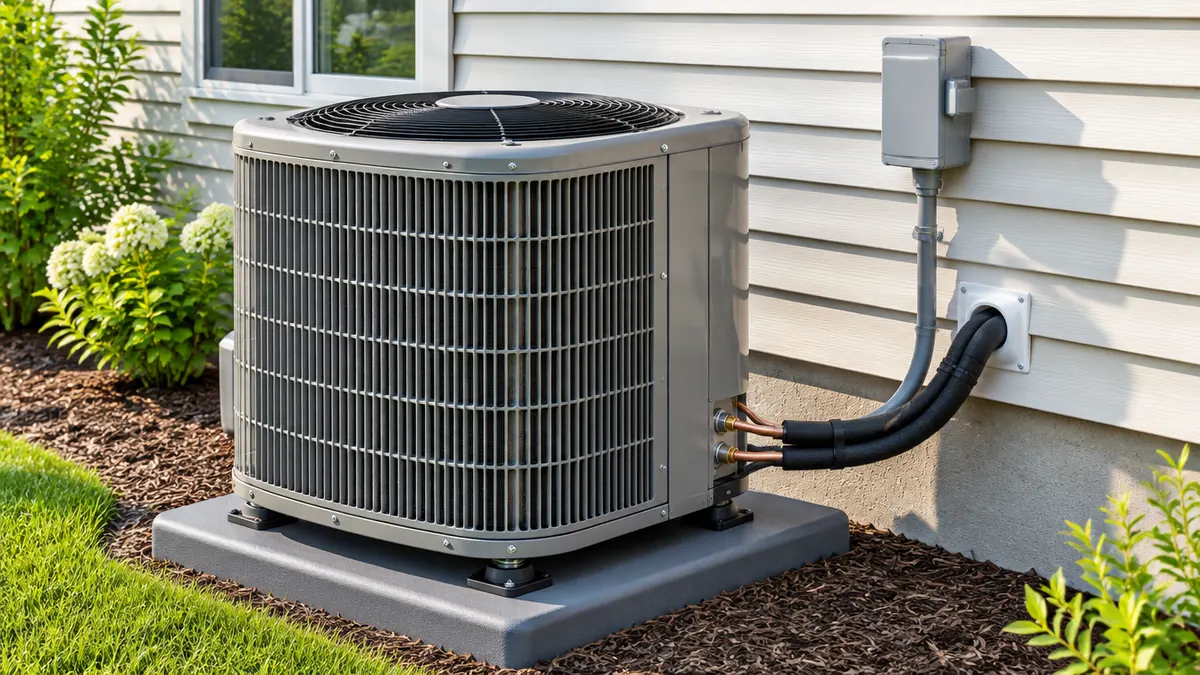
JM Comfort can help: AC installation for homes in Sacramento and nearby. Licensed C-20 HVAC contractor, CSLB #1016274.
Every repair bill on an aging system raises the same question: fix it again, or put that money toward something new? There’s no single right answer, but there is a sensible way to decide. Start with the system’s age, the size of the repair and how often it’s been breaking down. Then factor in refrigerant, efficiency, comfort and, in California, the permit and testing rules that apply to equipment changes. This guide walks through each one for air conditioners, heat pumps and furnaces, and shows you when a replacement estimate from an AC installation team is worth getting.
Run your own numbers: The repair-or-replace calculator asks which system you have, its age and your repair quote, then applies ENERGY STAR’s age guidance and the $5,000 rule and flags R-22, repeat repairs, rising bills and comfort problems. It takes about a minute.
Should I repair or replace my AC?
Repair your AC when it’s under about 10 years old and the fix is modest; start pricing a replacement when it’s more than 10 years old and the repair is big or the breakdowns keep coming.
That 10-year line comes from ENERGY STAR, which suggests considering a replacement once a heat pump or air conditioner is more than 10 years old. One major manufacturer gives similar advice: under 10 years with minor repairs, stick with repair; approaching 15 years, replacement might be the better option. Between those two marks, the size of the repair decides most cases.
Age alone doesn’t condemn a system. A well-kept 12-year-old AC that needs a $300 capacitor should usually get the capacitor. The same AC with a failed compressor is a different conversation. Our AC repair cost guide shows national price ranges for common repairs so you can tell which kind of bill you’re looking at.
When should you replace your HVAC system?
Consider replacing your HVAC system when it’s past ENERGY STAR’s age marks and it needs frequent repairs, your bills keep climbing, or your home is no longer comfortable.
ENERGY STAR lists these signs. Use the table to see which way each one points.
| What you’re seeing | What it suggests | Leans toward |
|---|---|---|
| Heat pump or AC more than 10 years old | Past ENERGY STAR’s age mark for cooling equipment | Price a replacement |
| Furnace more than 15 years old | Past ENERGY STAR’s age mark for furnaces and boilers | Price a replacement |
| Frequent repairs and rising energy bills | Equipment may have become less efficient | Replace |
| Some rooms too hot or too cold | Equipment, duct or insulation problems | Diagnose first |
| Humidity problems, summer or winter | Poor equipment operation, wrong-size equipment or leaky ducts | Diagnose first |
| Excessive dust | Leaky ducts pulling air from attics and crawl spaces | Fix the ducts |
| A noisy system | Undersized ducts or an indoor coil problem | Diagnose first |
| Young system, one modest repair | Normal wear | Repair |
Notice how many of those signs point at ducts, not equipment. A new system connected to leaky ducts can inherit the old system’s problems, so ask for the ducts to be checked before you replace anything. Our guide to leaky ductwork covers the signs, and signs you need a new HVAC system goes deeper on each warning.
California’s code changes the math on partial replacements
In California, a big repair and a replacement can look more alike than you’d expect. The California Energy Commission says installing a space-conditioning appliance requires a building permit, and that replacing the outdoor unit (or indoor unit) of a split system by itself triggers duct sealing. It also says field verification and diagnostic testing by a third-party ECC-Rater is required for most HVAC alterations. A condenser-only swap still brings the permit, the duct work and the testing, so price it against a full replacement before you decide. Our guide to HVAC permits and Title 24 in Sacramento walks through the steps.
What is the $5,000 rule for HVAC?
The $5,000 rule is an industry rule of thumb: multiply your system’s age in years by the repair cost, and if the result is more than $5,000, replacement usually makes more sense than repair.
One major manufacturer’s 2026 repair guide describes it this way, and This Old House’s 2026 cost guide uses the same math for systems over 10 years old. Here’s how it plays out:
- $300 repair × 8 years = $2,400. Well under $5,000. Repair it.
- $600 repair × 9 years = $5,400. Just over the line. Get a replacement estimate before you decide, but a repair can still be reasonable on a well-kept system.
- $2,000 repair × 13 years = $26,000. Far over. Put that money toward a new system.
This Old House also lists a second shortcut: replace when the repair costs more than 50% of the unit’s purchase price. Neither rule is set by any agency, and neither one counts efficiency, refrigerant type or comfort. Use them as one signal, not the final word. The repair-or-replace calculator applies the $5,000 rule for you and adds the other factors.
Is it worth repairing a 15-year-old AC?
Usually only for a small, inexpensive repair: at 15 years an air conditioner is well past ENERGY STAR’s 10-year mark, and a major repair almost always fails the $5,000 rule.
Run it: even a $400 repair on a 15-year-old AC scores $6,000. This Old House lists a system more than 12 years old as one of its signs to replace rather than repair, and one major manufacturer says that as a unit approaches 15 years, replacement might be the better option. It also warns that the manufacturer might discontinue certain parts over time.
A cheap fix to get through the rest of a season can still make sense, especially if you’re planning a replacement anyway. What you want to avoid is a big repair on a system that’s likely to need another one soon. Our guide to how long HVAC systems last explains what wears out first.
What if it uses R-22?
Many older systems use R-22, and that changes the math on any refrigerant repair. EPA says no new R-22 has been made in or imported into the U.S. since January 1, 2020, so service now relies on recovered and reclaimed R-22 and R-22 produced before 2020. EPA doesn’t require you to replace a working R-22 system, but there are no “drop in” replacement refrigerants, and alternatives won’t work well without changes to system components. Check the label on the outdoor unit. If it says R-22 and the repair involves a leak, price a replacement before you approve the repair.
And newer R-410A systems?
EPA says homeowners can maintain and repair R-410A systems throughout the useful life of the equipment, including replacing a faulty outdoor unit or indoor coil with a similar R-410A part. Manufacturing new R-410A home AC products has been prohibited since January 1, 2025, and replacing the outdoor unit and the indoor coil together counts as installing a new system.
California adds its own layer. CARB’s refrigerant regulation prohibits refrigerants with a global warming potential (GWP) of 750 or greater in new residential air-conditioning equipment as of January 1, 2025, and it counts an existing single split system that gets a new outdoor condensing unit as new equipment. Before you approve a condenser-only swap on an R-410A system, ask the contractor what refrigerant the replacement uses and how it meets both the federal and California rules. See R-22, R-410A and R-454B explained.
Should you repair or replace your furnace?
Repair a furnace that’s under 15 years old and needs a routine fix; consider replacing one that’s more than 15 years old and needs frequent or expensive repairs, or one with a cracked heat exchanger.
ENERGY STAR sets the furnace mark at 15 years and says an ENERGY STAR qualified furnace is 15% more efficient than a conventional one. Furnaces can run longer than air conditioners: This Old House’s 2026 furnace guide says most last 20 to 30 years, but suggests considering replacement after about 15 years if the furnace needs significant or frequent repairs.
The same guide lists warning signs that point toward replacement: frequent repairs with rising costs, rising heating bills without more use, uneven heat from room to room, short cycling, rust or cracks around the unit, dust or soot around the registers, and a cracked heat exchanger.
Safety first: EPA lists leaking furnaces among the sources of carbon monoxide in homes, and the gas is odorless and colorless. If a carbon monoxide alarm sounds or you suspect CO poisoning, get everyone outside to fresh air right away and call 911 from outside. Don’t use the furnace again until a technician has inspected it. EPA also recommends having a trained professional inspect, clean and tune up your central heating system every year. Read more about cracked heat exchangers and carbon monoxide safety.
If you’re replacing a furnace, it’s also a good moment to ask whether a heat pump fits your home. The heat pump vs. furnace guide compares them, do heat pumps work in Sacramento covers the local climate, and HVAC rebates and tax credits in the Sacramento area lists what’s available as of November 2026. JM Comfort handles furnace installation too.
What can you check before you decide?
Gather four facts before you call anyone: the system’s age, its repair history, your energy bills and your comfort problems.
- Find the age. Look for the installation date on your paperwork or a sticker on the equipment. The data label on the outdoor unit also lists the refrigerant type.
- List recent repairs. Write down what was fixed and when. Frequent repairs are one of the replacement signs ENERGY STAR lists.
- Compare your bills. Look at the same months from last year. Bills that climb while your habits stay the same can mean the equipment is losing efficiency.
- Note comfort problems. Write down rooms that run hot or cold, extra dust or new noises. A technician can tell you whether they come from the equipment or the ducts.
- Check your warranty. Find the installation paperwork. One major manufacturer notes that most warranties last 5 to 10 years, and a covered part can change the math.
Then put those facts into the repair-or-replace calculator to see which way your system leans.
When should you call a pro to help decide?
Call when you have a repair quote you’re unsure about, a system near or past its age mark, or a comfort problem you can’t explain, and ask for a repair price and a replacement estimate side by side.
A good technician will tell you what failed, what the repair costs, and what replacement would cost, and won’t pressure you either way. If the answer is replacement, our guides to what a new HVAC system costs and what a new system includes help you compare bids. Ask each contractor to show you the efficiency rating of what they’re quoting, and read the SEER2 guide so you can compare those numbers fairly.
Ready to compare? Request an AC installation estimate, or start with AC repair if the system is young.
What should you look for in an HVAC company?
Look for a licensed contractor that will price the repair and the replacement honestly, put both in writing, and let you decide without pressure.
For license checks, questions to ask and red flags, see how to choose an HVAC company.
Why do Sacramento-area homeowners call JM Comfort?
JM Comfort is a locally owned heating and air conditioning contractor based in North Highlands, serving North Highlands, Sacramento and nearby communities. It’s a licensed C-20 HVAC contractor (CSLB #1016274), licensed since 2016 and bonded, with workers’ comp insurance on file; you can check the license on the CSLB website. The same team repairs and installs air conditioners, furnaces and heat pumps for homes, so you can see both options from one contractor before you decide.
Call (916) 247-6358 or request a replacement estimate online and we’ll call you back.
Frequently asked questions
Can I replace just the outdoor AC unit?
Sometimes. EPA says homeowners can keep repairing R-410A systems for the life of the equipment, including replacing a faulty condensing unit or indoor coil with a similar R-410A part. In California, the Energy Commission says replacing the outdoor unit by itself triggers duct sealing, and CARB’s rules treat a new outdoor unit on a single split system as new equipment. Ask a technician which route your system allows.
If I replace my AC, do I have to replace my furnace too?
Not always. A younger furnace that’s working well can often stay while the cooling side is replaced. If the furnace is near or past 15 years, the age ENERGY STAR flags for furnaces, it’s worth pricing both so you can compare. See what a new HVAC system includes.
Will a new system lower my energy bills?
It can. ENERGY STAR says high-efficiency heat pumps and air conditioners, installed correctly, can save up to 20 percent on heating and cooling costs, and that an ENERGY STAR furnace is 15% more efficient than a conventional one. Your savings depend on how old and inefficient the current system is. The SEER2 guide explains the ratings.
Is it better to replace an HVAC system before it fails?
Often, yes. A planned replacement in spring or fall gives you time to compare estimates, check current rebates and get the permit lined up, instead of deciding in a heat wave or a cold snap. Start with the signs you need a new HVAC system.
Does EPA require me to replace my R-22 air conditioner?
No. EPA says people can continue to use AC equipment that uses R-22, and it does not require homeowners to replace existing equipment. Service depends on reclaimed R-22 and R-22 made before 2020, and there are no drop-in replacement refrigerants.
Does JM Comfort repair systems as well as replace them?
Yes. JM Comfort repairs and installs air conditioners, furnaces and heat pumps for homes in North Highlands, Sacramento and nearby communities, so you can get both options from one licensed C-20 HVAC contractor (CSLB #1016274). Call (916) 247-6358 or request an estimate online.
Sources
- When is it time to replace? (ENERGY STAR)
- Air Conditioner Repair Guide | DIY Tips & Professional AC Services (Carrier)
- Air Conditioner Repair Cost (2026 Pricing) (This Old House)
- Air Conditioning Replacement or Repair: What’s Right for You? (Trane)
- All About Furnace Replacement: Cost and When to Do It (This Old House)
- Homeowners and Consumers: Frequently Asked Questions (US EPA)
- Frequent Questions on the Phasedown of Hydrofluorocarbons (US EPA)
- Carbon Monoxide's Impact on Indoor Air Quality (US EPA)
- 2025 Single-Family Heating, Ventilation, and Air Conditioning (HVAC) (California Energy Commission)
- Final Regulation Order: Prohibitions on Use of Certain Hydrofluorocarbons in Stationary Refrigeration, Chillers, Aerosols-Propellants, and Foam End-Uses (California Air Resources Board)
Find this helpful? Add JM Comfort as a preferred source on Google.