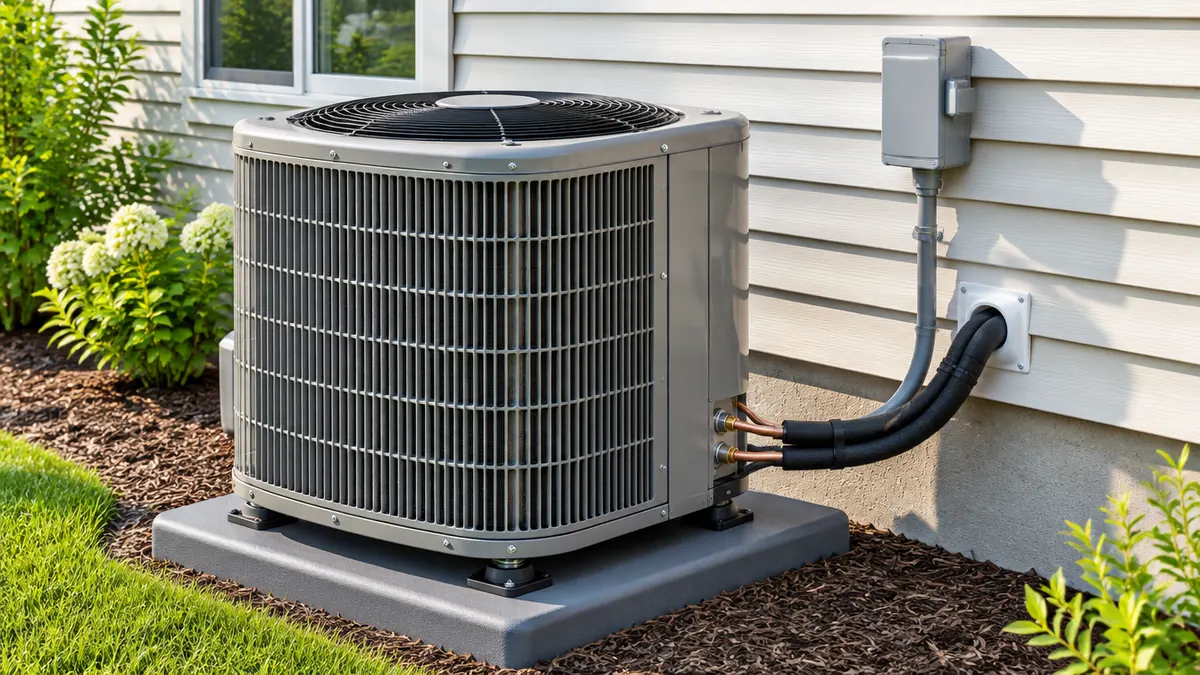
Cracked Heat Exchanger: Signs, Real Risks and What to Do
A cracked heat exchanger is a real safety problem, and it’s also one of the most expensive things a technician can tell you. Here’s how to take it seriously without getting talked into a furnace you don’t need.
JM Comfort can help: furnace repair for homes in Sacramento and nearby. Licensed C-20 HVAC contractor, CSLB #1016274.
Few furnace diagnoses carry more weight than “your heat exchanger is cracked.” It can mean a real carbon monoxide risk. It has also been used as a sales line to sell new furnaces people didn’t need. This guide covers what the heat exchanger does, the signs of a crack, how a technician confirms one, and how to protect both your family and your wallet. If you need someone to look at your furnace, start with furnace repair.
Safety first: If your carbon monoxide alarm goes off, or people in the house have symptoms like headache, dizziness, weakness, upset stomach or confusion, get everyone outside to fresh air now and call 911. Don’t stop to check the furnace. Once emergency responders say it’s safe to go back in, leave the furnace off until a technician has inspected it.
What is a cracked heat exchanger?
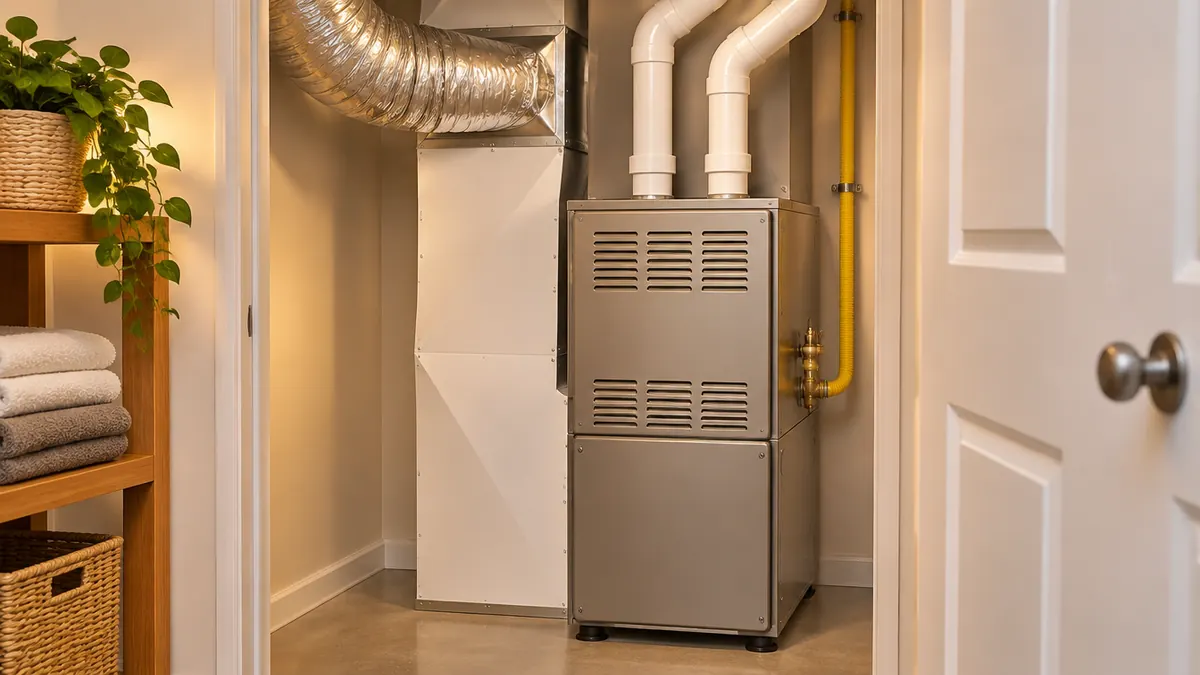
A cracked heat exchanger is a crack or hole in the metal chamber that sits between your furnace’s burner flames and the air it blows through your house. Its job is to pass heat from the hot combustion gases to your air while keeping the two apart.
When the furnace runs, the burners heat the inside of the heat exchanger, and the exhaust travels through it to the vent. The blower pushes house air across the outside, which picks up heat without touching the flame or the exhaust. As one major manufacturer puts it, the metal walls keep harmful gases such as carbon monoxide separated from your indoor air. See how a furnace works for the full sequence.
Is a cracked heat exchanger dangerous?
Yes. A crack can let carbon monoxide escape into the air your furnace circulates, and CO can cause serious illness or death. The same manufacturer warns that in extreme cases, heat exchanger damage can also lead to overheating or a fire risk.
CO is dangerous because you can’t sense it. EPA describes it as an odorless, colorless and toxic gas. CDC lists the most common symptoms of CO poisoning as headache, dizziness, weakness, upset stomach, vomiting, chest pain and confusion, and warns that people who are sleeping can die from CO poisoning before they have symptoms.
That’s why a confirmed crack is serious, and why a home with a gas furnace needs working CO alarms. CPSC recommends battery-operated or battery-backup CO alarms on every level of the home and outside sleeping areas. CDC adds: check the batteries when you change your clocks each spring and fall, and replace the detector every 5 years or as the manufacturer directs. California law also requires CO detectors in homes with any fuel-burning appliance or an attached garage, the California Air Resources Board notes, and they must be approved by the State Fire Marshal. More in our guide to carbon monoxide safety.
What are the signs of a cracked heat exchanger?
The signs of a cracked heat exchanger include a CO alarm or high CO reading, soot around the burners or vents, rust or corrosion, yellow or dancing burner flames, burning or metallic smells, and short heating cycles. None of them proves a crack on its own.
| Sign | What it can mean | What to do |
|---|---|---|
| CO alarm sounds | CO in the home; a cracked heat exchanger is one possible source | Get outside and call 911 |
| Headaches, nausea, dizziness or fatigue at home | Possible CO exposure | Get outside and call 911 |
| Soot around the burners or vents | A combustion problem | Turn the furnace off; call a technician |
| Yellow or dancing flames instead of steady blue | A combustion problem; flames that waver when the blower starts can point to a crack | Call a technician |
| Rust or corrosion on the furnace or flue pipe | Moisture damage | Have it inspected |
| Burning, metallic or chemical smells | Overheating or a combustion problem | Turn it off and call |
| Short heating cycles or uneven temperatures | Overheating, among several other causes | Check the filter; then call |
Many of these have more ordinary explanations. Short cycling, for example, has several common causes, starting with a clogged filter; see why a furnace keeps shutting off. Even a high CO reading can come from other combustion problems. That’s why a crack has to be confirmed, not assumed.
How can you tell if a heat exchanger is cracked?
You can’t tell from the outside: confirming a crack takes a technician, combustion test equipment and a look inside the furnace. It means opening the sealed burner area, so it isn’t a homeowner job.
Here’s what a thorough check includes, based on guidance written for HVAC technicians:
- Combustion analysis. A gas analyzer reads CO levels in the flue and in the room. High readings are a red flag, but high CO can also be caused by other combustion issues.
- Visual inspection. The technician examines the heat exchanger with a flashlight, an inspection mirror and a borescope, a small camera on a flexible cable. Hairline cracks can hide in tight bends or only open up when the metal is hot.
- Flame observation. Watching whether the burner flames waver when the blower starts is a useful first check, but the same guidance says it isn’t enough on its own to condemn a furnace.
That guidance is clear that a crack must be verified definitively before a furnace is condemned, and it notes that visual confirmation is easy to document and show to the homeowner. If a technician says there’s a crack, a photo or video from your own furnace, plus the test readings, is a fair thing to expect.
Why do heat exchangers crack?
Heat exchangers crack mostly from stress over time: the metal heats and cools every cycle and slowly fatigues, and anything that makes the furnace run hotter or cycle more often adds to that stress.
One major manufacturer lists these causes:
- Age and metal fatigue from repeated heating and cooling.
- Overheating from restricted airflow, such as a dirty filter.
- Short cycling, including from an oversized furnace, and poor duct design.
- Corrosion from excess moisture.
You can’t stop a furnace from aging, but you can control airflow. Change the filter on schedule (see how often to change your air filter), keep vents open, and have the furnace checked every year. ENERGY STAR’s maintenance checklist includes checking the heat exchanger and burner combustion, and notes that a dirty burner or cracked heat exchanger causes improper burner operation. A fall HVAC tune-up is the time to do it.
Can a cracked heat exchanger be repaired?
No. A cracked heat exchanger can’t be safely welded, sealed or patched. The only safe options are replacing the heat exchanger or replacing the furnace.
Which one makes sense depends on the furnace. One major manufacturer says repairs are rarely recommended because the heat exchanger is a sealed component, and that replacing it is typically the safest and most cost-effective option; depending on the system’s age or other damage, the whole furnace may need replacing. Questions that tip the decision:
- How old is the furnace? An older furnace with other worn parts may not be worth a major repair. See signs you need a new system and try the repair-or-replace calculator.
- Is the part still covered? Check the manufacturer’s warranty terms for your model before deciding.
- What will you do for heat while you wait? Ask how long a replacement part would take to arrive.
- How do the 2 options compare on paper? Ask for the heat exchanger replacement and a new furnace priced side by side, in writing.
Our guides to repairing or replacing a furnace and new HVAC system costs can help you compare. When you’re ready for a technician, schedule furnace repair.
Is a cracked heat exchanger ever a scare tactic?
Sometimes, yes. Because a crack is serious and hard for homeowners to check, the diagnosis can be misused to push a sale. That’s not a reason to ignore it. It’s a reason to ask for proof and take time to decide, with the furnace off.
California’s Contractors State License Board describes the pattern in its consumer warnings. A dishonest contractor inspects the home, claims a hidden problem puts the family in danger, and the alarmed homeowner agrees to unnecessary, overpriced work. CSLB also warns that an unscrupulous contractor pushes for an immediate decision, which leaves no time to get competing bids, check a license or call references.
CSLB’s advice fits this situation well. Get at least three written bids, and be wary of any bid that’s far lower than the others. Check the license on cslb.ca.gov. If you sign a contract for a new furnace in your home, CSLB’s consumer guide to home improvement contracts says you generally have 3 business days to cancel, or 5 if you’re 65 or older, and a down payment can’t be more than $1,000 or 10% of the price, whichever is less. One exception matters for furnaces: an emergency “service and repair” contract you asked for on short notice loses the right to cancel once it’s signed and work begins.
What should you ask if a technician says your heat exchanger is cracked?
Ask to see the evidence from your own furnace, ask what tests found it, and ask for your options in writing. A technician who found a real crack can answer all three.
Then get a second opinion, and get it fast. If a technician shuts your furnace off over a safety concern, leave it off until a second technician has looked; don’t restart it yourself. A second opinion protects you from a bad sale, but it shouldn’t become a reason to run a furnace that might be leaking CO. For more on vetting contractors, see how to choose an HVAC company.
What should you do while you wait for a repair or second opinion?
Keep the furnace off, keep your CO alarms working, and heat the house safely.
- Test your CO alarms and replace weak batteries.
- If an alarm sounds, get everyone outside to fresh air and call 911.
- Never heat your house with a gas oven, and never run a generator inside your home or garage, even with doors and windows open. Both warnings come from CDC.
- Book the second opinion right away, so the house isn’t without heat for long.
Why do Sacramento-area homeowners call JM Comfort?
JM Comfort is a locally owned heating and air conditioning contractor based in North Highlands, serving North Highlands, Sacramento and nearby communities. It’s a licensed C-20 HVAC contractor (CSLB #1016274), licensed since 2016 and bonded, with workers’ comp insurance on file; you can check the license on the CSLB website. The same team handles furnace repair, furnace tune-ups and furnace installation for homes. If another company told you your heat exchanger is cracked, JM Comfort can look at the furnace before you decide.
Call (916) 247-6358 or book heating repair online to request an estimate, and we’ll call you back. If a CO alarm is sounding, get outside and call 911 first.
Frequently asked questions
Can I keep running my furnace with a cracked heat exchanger?
No. If a crack is confirmed, the furnace shouldn’t run until the heat exchanger or the furnace is replaced, because combustion gases can reach your indoor air. If you’ve been told there’s a crack but haven’t seen proof, keep the furnace off and get a second opinion quickly instead of running it in the meantime.
Will a CO alarm tell me if my heat exchanger is cracked?
A CO alarm warns you about carbon monoxide in your home, whatever the source, and that’s the warning that matters most. A quiet alarm doesn’t prove the heat exchanger is fine, though; one manufacturer notes a crack can hurt efficiency even when no CO is detected. Keep alarms on every level and outside sleeping areas, and have the furnace inspected every year.
Does a cracked heat exchanger always mean a new furnace?
No. One major manufacturer says replacing just the heat exchanger is typically the safest and most cost-effective option, though an older or otherwise damaged furnace may need replacing. Ask for both options in writing. Our repair-or-replace guide can help you compare.
Can a yearly tune-up find a cracked heat exchanger?
That’s one of the reasons for it. ENERGY STAR’s maintenance checklist for gas furnaces includes checking the heat exchanger, gas pressure and burner combustion, and CDC recommends having your heating system serviced by a qualified technician every year. See what an HVAC tune-up includes.
Is a heat exchanger covered by the manufacturer’s warranty?
Sometimes. Coverage varies by manufacturer and model. Find the model and serial number on the furnace’s label and check the manufacturer’s warranty terms, or ask the technician to look them up, before you decide on a repair or a replacement.
Can JM Comfort look at a furnace another company said is cracked?
Yes. JM Comfort is a licensed C-20 HVAC contractor (CSLB #1016274) based in North Highlands, and it repairs furnaces for homes in North Highlands, Sacramento and nearby communities. Call (916) 247-6358 or book a visit online. If a CO alarm is sounding, get outside and call 911 first.
Sources
- What to Do If Your Furnace Has a Cracked Heat Exchanger (Lennox)
- Furnace heat exchanger diagnostics: Verifying cracks (Ferguson)
- Maintenance Checklist (ENERGY STAR)
- Carbon Monoxide (U.S. Consumer Product Safety Commission)
- Carbon Monoxide (CO) Poisoning Basics (Centers for Disease Control and Prevention)
- Carbon Monoxide's Impact on Indoor Air Quality (U.S. Environmental Protection Agency)
- Combustion Pollutants & Indoor Air Quality (California Air Resources Board)
- What Seniors Should Know (Contractors State License Board)
- How do I find the right licensed contractor? (Contractors State License Board)
- Terms of Agreement: A Consumer Guide to Home Improvement Contracts (Contractors State License Board)
Find this helpful? Add JM Comfort as a preferred source on Google.