
How Does a Furnace Work? Parts, Steps and Safety Controls
A gas furnace runs the same short routine every time your thermostat asks for heat. Once you know the steps and the parts, most furnace problems start to make sense.
JM Comfort can help: furnace repair for homes in Sacramento and nearby. Licensed C-20 HVAC contractor, CSLB #1016274.
A furnace looks like a plain metal box, but inside it runs a careful routine every time it starts: prove it’s safe to light, light the burners, heat a metal chamber, then blow your home’s air across it. Knowing that routine helps you understand what a technician is telling you, and why a furnace refuses to run when one small part fails. This guide covers gas furnaces and what each part does. If yours isn’t working right now, start with why a furnace stops working or call for furnace repair.
How does a furnace work?
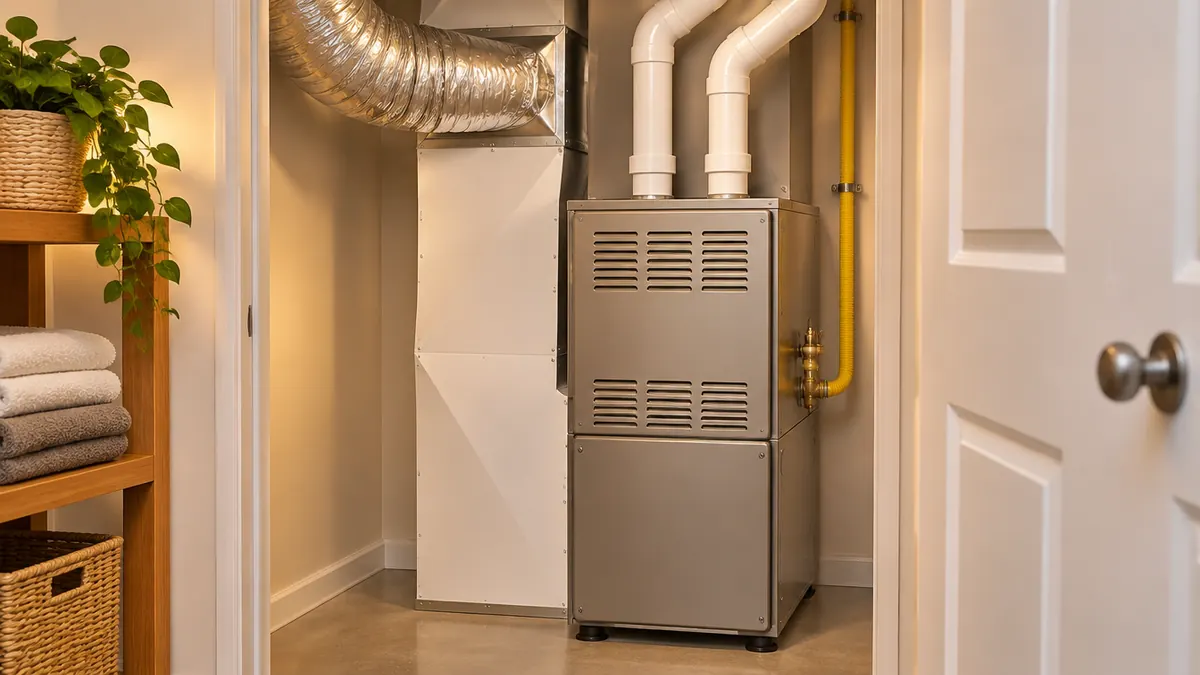
A furnace works by pulling cool air in from your rooms, heating it, and sending it back out through your ducts. In a gas furnace, gas is mixed with air and burned in a combustion chamber, the heat passes into a metal heat exchanger, and a blower pushes house air across the outside of that heat exchanger.
The key idea is separation. The flame and its exhaust stay inside the burners, the heat exchanger and the vent pipe. Your house air only touches the outside of the hot metal, so it picks up heat without mixing with the combustion gases, and the exhaust is vented outdoors. Keeping it out of the house matters: EPA lists leaking furnaces and chimneys among the sources of carbon monoxide in homes.
Furnaces can also run on oil, propane or electricity. An oil furnace turns its fuel into a fine mist and burns it. An electric furnace blows air over electrically heated coils and has no flame at all. See gas furnace vs. electric furnace.
A furnace is the familiar setup in California. In the Energy Information Administration’s 2020 survey of home energy use, a furnace was the main heating equipment in about 62% of California homes, while about 3% relied mainly on a central heat pump.
What happens when your thermostat calls for heat?
When your thermostat calls for heat, the furnace runs through a fixed sequence, and each step has to succeed before the next one starts. Here’s how a typical modern gas furnace does it:
- The thermostat signals the furnace. The indoor temperature drops below your setting, and the thermostat tells the furnace to start.
- The inducer fan starts. This small fan clears leftover gases out of the heat exchanger and sends exhaust out through the vent pipe before the burners light.
- The pressure switch proves the draft. It senses the pressure the inducer creates. Only then does it complete the circuit that lets the furnace light.
- The igniter lights the gas. Modern furnaces use hot surface or spark ignition instead of a pilot light that burns all the time.
- The gas valve opens and the burners light. The valve lets fuel flow to the burners for the heating cycle.
- The flame sensor confirms the flame. If it doesn’t detect one, the gas shuts off.
- The heat exchanger warms up, then the blower starts. One major manufacturer says some furnaces wait about 30 to 60 seconds after the burners light before starting the blower, so the heat exchanger can warm up first.
- Warm air goes out and cool air comes back. The blower sends heated air through the supply ducts, and cooler room air returns to the furnace through the return ducts to be heated again.
- The thermostat ends the cycle. When your home reaches the set temperature, the gas valve closes and the burners go out.
Older furnaces differ. A furnace with a standing pilot keeps a small flame burning at all times instead of using an igniter.
What are the parts of a furnace?
The main parts of a gas furnace are the thermostat, control board, inducer fan, pressure switch, igniter, gas valve, burners, flame sensor, heat exchanger, limit switch, blower, air filter and vent pipe, plus a condensate drain on high-efficiency models. This table shows what each does and what you might notice when it has a problem.
| Part | What it does | When it has a problem |
|---|---|---|
| Thermostat | Monitors indoor temperature and tells the furnace when to run | Furnace won’t start, or runs at the wrong times |
| Control board | The furnace’s computer; coordinates the electrical parts | Furnace stays off; a blinking diagnostic light |
| Inducer fan | Clears and vents exhaust gases before the burners light | Furnace won’t light |
| Pressure switch | Senses the inducer’s pressure before allowing ignition | Inducer runs, burners never light |
| Igniter or pilot | Lights the gas | No flame; blower may run cold |
| Gas valve | Regulates the gas supply to the burners | No flame, no heat |
| Burners | Mix gas with air and burn it | A dirty burner causes improper burner operation |
| Flame sensor | Confirms a flame is present; shuts off the gas if not | Burners light, then shut off quickly |
| Heat exchanger | Transfers heat to your air and keeps exhaust out of it | A crack can let combustion gases escape |
| Limit switch | Shuts off the burners if the furnace overheats | Cold air from the vents; short cycling |
| Blower motor | Pushes warm air through the ducts and pulls return air back | No airflow from the vents |
| Air filter | Traps dust, pollen and debris before they reach the blower | Overheating and shutdowns when clogged |
| Vent pipe (flue) | Carries exhaust outdoors | Furnace won’t light if the draft can’t be proven |
| Condensate drain | Carries water away from a high-efficiency furnace | Furnace won’t light when the line clogs |
For more terms, see the HVAC glossary.
What is a flame sensor?
A flame sensor is a safety device that detects whether a flame is present in the furnace’s combustion chamber. If it can’t detect one, it shuts off the gas supply, so gas doesn’t keep flowing without a flame to burn it.
It checks for flame every time the furnace lights. When it gets coated with soot or grime, it can miss a flame that’s really there. The furnace then shuts the burners down soon after they light and starts over, a stop-and-start pattern called short cycling. That can leave you with a furnace that runs but blows cold air; see a furnace blowing cold air.
Some online guides show homeowners how to clean a flame sensor. One major manufacturer recommends professional service instead, because the sensor is part of the ignition system. A technician can clean it, check it for a cracked porcelain base, or replace it.
What is an inducer motor?
An inducer motor, also called a draft inducer or inducer fan, is the small fan that manages a furnace’s exhaust. It runs first in every heating cycle, clearing leftover gases out of the heat exchanger and venting them outside through the flue pipe before the main burners light.
The inducer works hand in hand with the pressure switch. The switch has a diaphragm that senses the pressure the inducer creates, and that completes the circuit that lets the furnace light. Its purpose, as one trade guide puts it, is to keep harmful combustion gases from entering the living space.
If you hear the inducer start but the burners never light, the problem may be the pressure switch, its hose, the venting, or the ignition. The same trade guide lists a clogged hose port, corrosion, debris or a bad spring among the things that can keep a pressure switch from working. All of these are technician repairs. Don’t disable or override the pressure switch to get heat; it’s there to protect you. Odd sounds at startup are worth mentioning to a technician too; see furnace and AC noises.
What does a furnace heat exchanger do?
The heat exchanger absorbs the heat from combustion and transfers it to the air the blower moves through your home, while keeping the combustion gases separate from that air.
That second job is why heat exchanger damage matters. If the metal cracks, combustion gases can reach your indoor air. EPA describes carbon monoxide as an odorless, colorless and toxic gas, so you need working CO alarms, not your nose, to warn you. If a CO alarm sounds, get everyone outside and call 911. Read signs of a cracked heat exchanger and carbon monoxide safety.
What does furnace efficiency (AFUE) mean?
AFUE, or Annual Fuel Utilization Efficiency, measures how much of a furnace’s fuel energy becomes usable heat over a typical heating season. An 80% AFUE furnace converts about 80% of the fuel’s energy into heat, with the rest lost mainly through the exhaust.
One major manufacturer notes that an 80% AFUE rating meets the current federal minimum and generally describes 90% AFUE or higher as high efficiency. The two kinds are built differently:
- Standard furnaces (80% AFUE) vent through metal flue pipe.
- High-efficiency furnaces (90% AFUE and up) capture more heat and vent through PVC plastic pipe. They also have a condensate drain line that has to stay clear; ENERGY STAR includes the furnace condensate drain in its maintenance checklist.
Furnaces also differ in how they deliver heat. A single-stage furnace runs at full output every time it starts, while a modulating furnace adjusts its output to match conditions. If you’re weighing a replacement, see SEER2, HSPF2 and AFUE explained and heat pump vs. furnace.
How do you keep a furnace working safely?
Keep a furnace safe by keeping air flowing through it, keeping its vent clear, and having it checked every year.
- Filter. ENERGY STAR recommends inspecting, cleaning or changing filters once a month. A clogged filter can overheat the furnace and trip the limit switch. See how often to change your air filter.
- Annual service. EPA recommends having a trained professional inspect, clean and tune up your central heating system, including furnaces, flues and chimneys, every year. ENERGY STAR’s checklist for gas furnaces covers gas connections, gas pressure, burner combustion and the heat exchanger. See what an HVAC tune-up includes.
- CO alarms. Keep working carbon monoxide alarms in your home and test them. If one sounds, get everyone outside and call 911.
- Gas smell. If you smell gas, leave the house first, then call 911 and PG&E from outside. PG&E’s Report an Emergency page lists its current numbers.
- Leave the inside to a technician. The gas valve, burners, igniter, flame sensor and wiring sit behind panels that homeowners shouldn’t open. Your jobs are the thermostat, the filter, the breaker and keeping vents clear.
Why do Sacramento-area homeowners call JM Comfort?
JM Comfort is a locally owned heating and air conditioning contractor based in North Highlands, serving North Highlands, Sacramento and nearby communities. It’s a licensed C-20 HVAC contractor (CSLB #1016274), licensed since 2016 and bonded, with workers’ comp insurance on file; you can check the license on the CSLB website. The same team handles furnace repair, furnace tune-ups and new furnace installation for homes, and can explain what each part of your system is doing.
Call (916) 247-6358 or book furnace repair online to request an estimate, and we’ll call you back.
Frequently asked questions
What does a furnace limit switch do?
It protects the furnace from overheating. If heat builds up inside, usually because a dirty filter or closed vents are restricting airflow, the limit switch shuts off the burners while the blower keeps running to cool the unit. That’s one reason a furnace can blow cold air; see a furnace blowing cold air.
Does a gas furnace need electricity?
Yes. The control board, the igniter, the inducer fan and the blower all run on electricity, so a gas furnace won’t heat during a power outage or with a tripped breaker. See HVAC not working after a power outage.
What is a pilot light?
A pilot light is a small flame that burns all the time on older gas furnaces and lights the main burners when the thermostat calls for heat. Most modern furnaces use a hot surface igniter or spark ignition instead, which only works when the furnace runs.
What does the furnace filter do?
It traps dust, pollen and debris before they reach the blower and the rest of the system. A clogged filter restricts airflow and can overheat the furnace, so ENERGY STAR recommends checking it monthly. See how often to change your air filter.
How is an electric furnace different?
An electric furnace has no flame, no gas valve and no combustion exhaust. Its blower pushes air over electrically heated coils instead. Our guide to gas vs. electric furnaces compares the two.
Can JM Comfort repair my furnace?
Yes. JM Comfort is a licensed C-20 HVAC contractor (CSLB #1016274) based in North Highlands. It repairs, maintains and installs furnaces for homes in North Highlands, Sacramento and nearby communities. Call (916) 247-6358 or book a visit online.
Sources
- What Is A Furnace? How Does a Furnace Work? (Carrier)
- Understanding the Different Furnace Parts and Their Functions (Carrier)
- AFUE (Annual Fuel Utilization Efficiency) (Carrier)
- Furnaces (Air-Conditioning, Heating, and Refrigeration Institute (AHRI))
- Servicing Furnace Pressure Switches (Contracting Business)
- Reasons Your Furnace is Blowing Cold Air and How to Fix Them (Carrier)
- Maintenance Checklist (ENERGY STAR)
- Carbon Monoxide's Impact on Indoor Air Quality (U.S. Environmental Protection Agency)
- Highlights for space heating in U.S. homes by state, 2020 (U.S. Energy Information Administration)
- Report an Emergency (Pacific Gas and Electric Company)
Find this helpful? Add JM Comfort as a preferred source on Google.