Why Is My Furnace Blowing Cold Air? Causes and Fixes
Cold air from the vents in winter has a handful of causes, and a couple of them are normal. Here’s how to tell which one you have, what you can safely check, and when to call.
JM Comfort can help: furnace repair for homes in Sacramento and nearby. Licensed C-20 HVAC contractor, CSLB #1016274.
Cold air from the vents on a winter morning feels like a broken furnace, but it isn’t always. Sometimes it’s a fan setting or a few seconds of normal startup. Sometimes the burners aren’t lighting or keep shutting off, and that needs a technician. This guide explains how to tell the difference, what you can safely check, and when to call for furnace repair.
Why is my furnace blowing cold air?
Your furnace blows cold air when the blower is moving air but the burners aren’t heating it. That happens when the fan is set to run all the time, when a safety switch has shut off the burners, or when the furnace can’t light or hold its flame.
A furnace does 2 jobs. The burners and heat exchanger make heat, and the blower moves house air across the heat exchanger and out through the ducts. The blower can run without the burners, so anything that stops the flame, or a setting that runs the fan nonstop, sends unheated air through the house.
The most common cause, according to one major manufacturer, is simple: the thermostat fan is set to On instead of Auto. On means the blower runs constantly, even between heating cycles, so you feel room-temperature air whenever the burners are off.
Is it normal for a furnace to blow cold air at first?
Yes, briefly. A short period of cool air when the furnace starts can be normal while ignition finishes and the furnace warms up.
Many furnaces also wait before starting the blower. One major manufacturer says some models hold the blower for about 30 to 60 seconds after the burners light, so the heat exchanger can warm up first; your owner’s manual lists the delay for your model. The same manufacturer says cold air that lasts more than a few minutes needs troubleshooting. If cool air comes and goes all day, check the fan setting before anything else.
What causes a furnace to blow cold air?
Match what you’re noticing to the likely cause in this table. The first 4 are things you can check or fix yourself. The rest need a technician or PG&E.
| Cause | What you’ll notice | DIY or pro |
|---|---|---|
| Fan set to On | Cool air between heating cycles; blower never stops | DIY: set the fan to Auto |
| Thermostat on Cool, set too low, or on the wrong schedule | Air never warms; furnace never lights | DIY: set to Heat, above room temperature |
| Normal startup delay | Cool air for about a minute, then heat | Normal: wait a few minutes |
| Clogged filter or blocked vents | Warm air turns cool partway through a cycle; weak airflow | DIY: replace the filter, open vents |
| Tripped or failing limit switch | Burners shut off while the blower keeps running | Pro if it keeps happening |
| Dirty flame sensor | Burners light, then shut off quickly | Pro |
| Igniter or pilot problem | Blower runs, burners never light | Pro |
| Gas supply or gas valve problem | No flame; other gas appliances may be out too | PG&E or pro |
| Clogged condensate drain | High-efficiency furnace won’t light | Pro to clear it |
| Dirty burners | Weak heat; furnace overdue for maintenance | Pro |
| Leaky ducts | Some rooms cool while others are fine | Pro to test and seal |
How do you fix a furnace that’s blowing cold air?
Start with settings and airflow, then power and fuel. These 6 checks are safe for any homeowner.
Safety first: If you smell gas, leave the house now, without flipping switches on the way out. Once you’re outside, call 911, then PG&E (see PG&E’s Report an Emergency page). If a carbon monoxide alarm sounds, get everyone outside to fresh air and call 911. Don’t open the burner compartment, clean the flame sensor, or touch the gas valve, igniter or wiring; those are technician jobs.
6 safe checks for a furnace blowing cold air
- Set the thermostat. Choose Heat, set the temperature above the current room temperature, and set the fan to Auto. On a programmable thermostat, make sure the schedule didn’t shift after a power outage or a time change. More help is in our guide to a thermostat that’s not working.
- Wait a few minutes. Give the furnace time to light and warm up. If the air turns warm, that was normal startup.
- Replace a dirty filter. Turn the furnace off, slide out the filter, and replace it if it’s gray or dusty. Use the same size, with the arrows pointing toward the furnace. ENERGY STAR recommends inspecting filters every month.
- Open vents and clear returns. Open every supply register and move furniture, rugs and curtains off the vents and return grilles. One major manufacturer lists too many closed vents and blocked returns among the things that can trip the limit switch.
- Check power. Make sure the furnace power switch is on and the breaker hasn’t tripped. Reset a tripped breaker once. If it trips again, leave it off and call a technician.
- Check your other gas appliances. If the stove or water heater won’t light either, the gas supply may be out, so contact PG&E. On propane, check the tank level.
Still cold after all 6? Set the thermostat to Off and call. The next suspects are the limit switch, flame sensor, ignition and gas valve, and those need professional diagnosis.
Why is my furnace fan running but there’s no heat?
If the blower runs but the air never warms, the burners either aren’t lighting or a safety control is shutting them off. The blower keeps going because it has its own job: it cools the furnace after a shutdown, or it runs nonstop when the fan is set to On.
The limit switch tripped
When airflow is restricted, heat builds up inside the furnace. The high-limit switch shuts off the burners to prevent overheating while the blower keeps running to cool the unit, so you feel cold air. A dirty filter is the usual reason. Closed vents, blocked returns and a failing blower motor can do it too. Repeated overheating can wear out the switch, and replacing it is a technician’s job.
The flame sensor can’t see the flame
A flame sensor coated in soot or grime can’t confirm the burners are lit, so the furnace shuts the burners down shortly after they light and starts over. That stop-and-start pattern is called short cycling. If your furnace keeps starting and stopping, also read why a furnace keeps shutting off.
The igniter or gas supply
Newer furnaces light the burners with electronic ignition. If the igniter fails, or gas isn’t reaching the burners, the furnace can’t make heat no matter how long the blower runs. Electronic ignition needs a professional to evaluate and repair it.
A clogged condensate drain
High-efficiency furnaces have a condensate drain line, and sometimes a pump. If the line or drain pan clogs, a safety control keeps the furnace from lighting. A technician should clear the line and pan and check the pump. ENERGY STAR includes the furnace condensate drain in its maintenance checklist.
Why is my furnace blowing cold air when the pilot is lit?
On an older furnace with a standing pilot, a lit pilot only proves gas is reaching the pilot. If the main burners still don’t light, or light and go out, the problem is further along: the thermostat isn’t calling for heat, a safety switch has shut the burners down, the burners are dirty, or the gas valve isn’t letting gas through.
Start with the thermostat and fan setting, then the filter. If those are fine, call a technician. Dirt and grime can keep fuel from reaching the burners, and heavy buildup usually means the furnace is overdue for maintenance. A gas valve or burner problem needs professional inspection.
If the pilot keeps going out instead, one major manufacturer points to a dirty pilot orifice or a faulty thermocouple, and says pilot assembly repairs should be done by a professional. If you smell gas around a pilot that’s out, leave the house first, then call 911 and PG&E from outside.
Why is my heat blowing cold air if I have a heat pump?
If your home heats with a heat pump instead of a furnace, air that feels cool can be normal: heat pump air is warm, just not as hot as furnace air.
One major manufacturer puts typical heat pump supply air at around 85 to 100°F during heating, compared with roughly 120 to 140°F from a gas furnace. Heat pumps also defrost. When ice builds up on the outdoor unit, the system runs a defrost cycle to melt it, and the same manufacturer says a typical cycle lasts about 5 to 10 minutes. Cool air during defrost is normal.
Cold air that never warms up isn’t normal. Check that the thermostat isn’t set to Cool and that the filter is clean. A stuck reversing valve or low refrigerant needs a technician. See why a heat pump isn’t heating, heat pump defrost mode and emergency heat vs. aux heat. Not sure which system you have? Here’s how a heat pump compares with a furnace.
Can leaky ducts make a furnace blow cold air?
Leaky ducts can make some rooms feel chilly, but they rarely explain truly cold air at every vent. ENERGY STAR says about 20 to 30 percent of the air moving through a typical duct system is lost to leaks, holes and poorly connected ducts.
One major manufacturer notes that duct leaks reduce the heated air reaching your rooms but generally don’t explain a furnace producing cold air at the register. If one or two rooms are always cold while the rest of the house is fine, the ducts are a good suspect. ENERGY STAR lists rooms that are hard to heat or cool, and ducts in the attic, crawlspace or garage, among the signs of duct problems. Our guide to leaky ductwork covers testing and sealing.
When should you call a pro for a furnace blowing cold air?
Call a technician when cold air continues after the 6 checks, or when you notice short cycling every few minutes, a pilot that won’t stay lit, a breaker that keeps tripping, or banging, rattling or squealing noises.
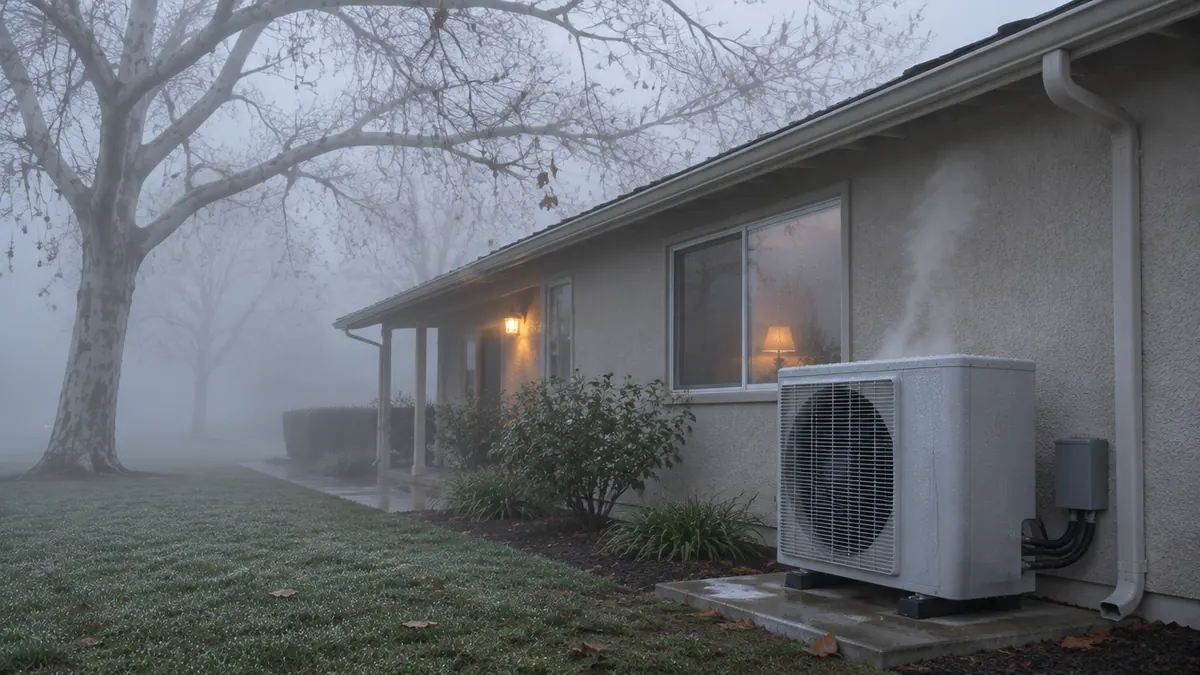
Those calls tend to come on the first cold mornings. Sacramento winters are mild, but NOAA’s 1991–2020 normals put the average January low at Sacramento Executive Airport at 39.2°F, and the National Weather Service’s climate study of Sacramento notes that dense fog comes mostly in mid-winter and can hang on for several days. A furnace that sat idle all summer gets its first real test on those cold, gray mornings.
Those point to parts you shouldn’t service yourself: the limit switch, flame sensor, igniter, gas valve, burners, blower motor or control board. When you’re ready, schedule heating repair. If your furnace is older and the repair is a big one, see repair or replace and the repair-or-replace calculator. ENERGY STAR recommends checking heating systems every fall, and a tune-up that covers burner combustion is a good time to catch a dirty burner or flame sensor before the first cold snap.
Why do Sacramento-area homeowners call JM Comfort?
JM Comfort is a locally owned heating and air conditioning contractor based in North Highlands, serving North Highlands, Sacramento and nearby communities. It’s a licensed C-20 HVAC contractor (CSLB #1016274), licensed since 2016 and bonded, with workers’ comp insurance on file; you can check the license on the CSLB website. The same team handles furnace repair, heat pump repair, tune-ups and furnace installation for homes.
Call (916) 247-6358 or book heating repair online to request an estimate, and we’ll call you back.
Frequently asked questions
Should I turn off my furnace if it’s blowing cold air?
Yes, if the fan setting and a new filter don’t fix it. Repeated overheating can wear out the limit switch, and a furnace that keeps failing to light needs a diagnosis anyway. Set the thermostat to Off and call for furnace repair.
Can a dirty filter make a furnace blow cold air?
Yes. A clogged filter traps heat inside the furnace, the limit switch shuts off the burners, and the blower keeps running to cool things down, so cold air comes out. One major manufacturer recommends replacing 1-inch filters every 1 to 3 months, more often with pets or a dusty house. See how often to change your air filter.
Why is my furnace blowing cold air after a power outage?
Check the thermostat first. A programmable thermostat’s schedule or settings can change after an outage or a time change, and the furnace may simply not be calling for heat. If the settings are right and it still blows cold, see HVAC not working after a power outage.
Why is only one room getting cold air?
When the rest of the house is warm, look at that room’s vent first, then the ducts. A closed or blocked register, or a leaky or disconnected duct, can starve one room of heated air. Our guides to leaky ductwork and uneven temperatures explain the signs.
Can I clean the flame sensor myself?
It’s better not to. The flame sensor is part of the furnace’s ignition system, inside the burner compartment, and one major manufacturer recommends professional service for that reason. A technician can clean it, check it for cracks, or replace it.
Does JM Comfort fix furnaces that blow cold air?
Yes. JM Comfort is a licensed C-20 HVAC contractor (CSLB #1016274) based in North Highlands. It repairs furnaces and heat pumps for homes in North Highlands, Sacramento and nearby communities. Call (916) 247-6358 or book a visit online.
Sources
- Reasons Your Furnace is Blowing Cold Air and How to Fix Them (Carrier)
- Why Is My Furnace Blowing Cold Air? Troubleshooting and Solutions (Bryant)
- Furnace Not Blowing Hot Air? Learn Why and How to Fix It (Trane)
- Heat Pump Not Heating? Here’s How to Troubleshoot (Carrier)
- Duct Sealing (ENERGY STAR)
- Maintenance Checklist (ENERGY STAR)
- Carbon Monoxide (U.S. Consumer Product Safety Commission)
- Report an Emergency (Pacific Gas and Electric Company)
- U.S. Climate Normals 1991–2020, monthly: Sacramento Executive Airport, CA (USW00023232) (NOAA National Centers for Environmental Information)
- Climate of Sacramento, California (NOAA Technical Memorandum NWS WR-272, revised June 2005) (NOAA National Weather Service)
Find this helpful? Add JM Comfort as a preferred source on Google.