Why Is My Upstairs So Hot? Causes and How to Cool It
A hot second floor rarely means your AC is broken. It usually means the house, the attic and the ducts are working against you. Here’s how to find the cause and what actually fixes it.
JM Comfort can help: ductwork repair and sealing for homes in Sacramento and nearby. Licensed C-20 HVAC contractor, CSLB #1016274.
Climb the stairs on a July afternoon and you can feel the temperature rise with every step. A hot second floor is one of the most common comfort complaints in two-story homes, and it rarely means your AC is broken. It usually means the house, the attic and the duct system are working against each other. This guide explains why it happens, what you can safely try today, and when ductwork repair and sealing or another fix is the real answer.
Why is my upstairs so hot?
Your upstairs is hot because it gains the most heat and gets the least cooling: warm air rises, the roof and attic pour heat into the top floor, and a single thermostat downstairs shuts the system off before the second floor catches up.
Here’s how each piece adds up:
- Warm air rises. It drifts up the stairwell and collects on the top floor.
- The roof acts like a heater. One major manufacturer notes that roofing material can reach temperatures as high as 140 degrees in summer. That heat soaks through the attic into the rooms below.
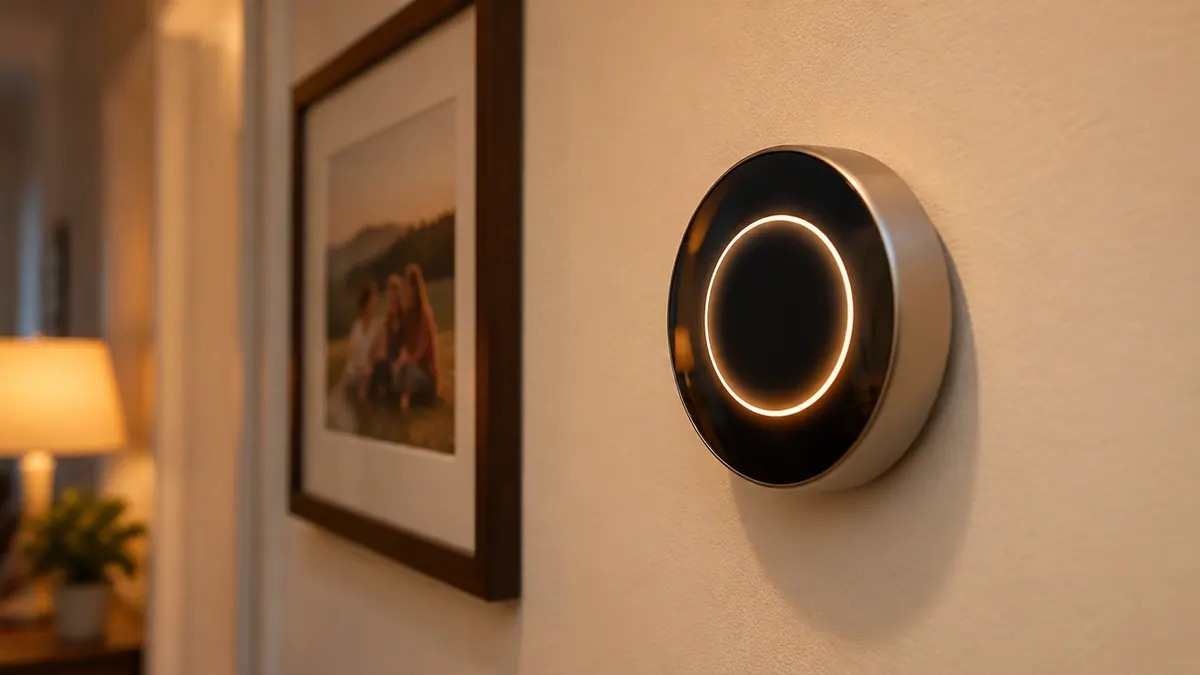
- One thermostat, two floors. A home with one thermostat has a single-zone system. When the first floor reaches the set temperature, the whole system stops, no matter how warm the bedrooms are.
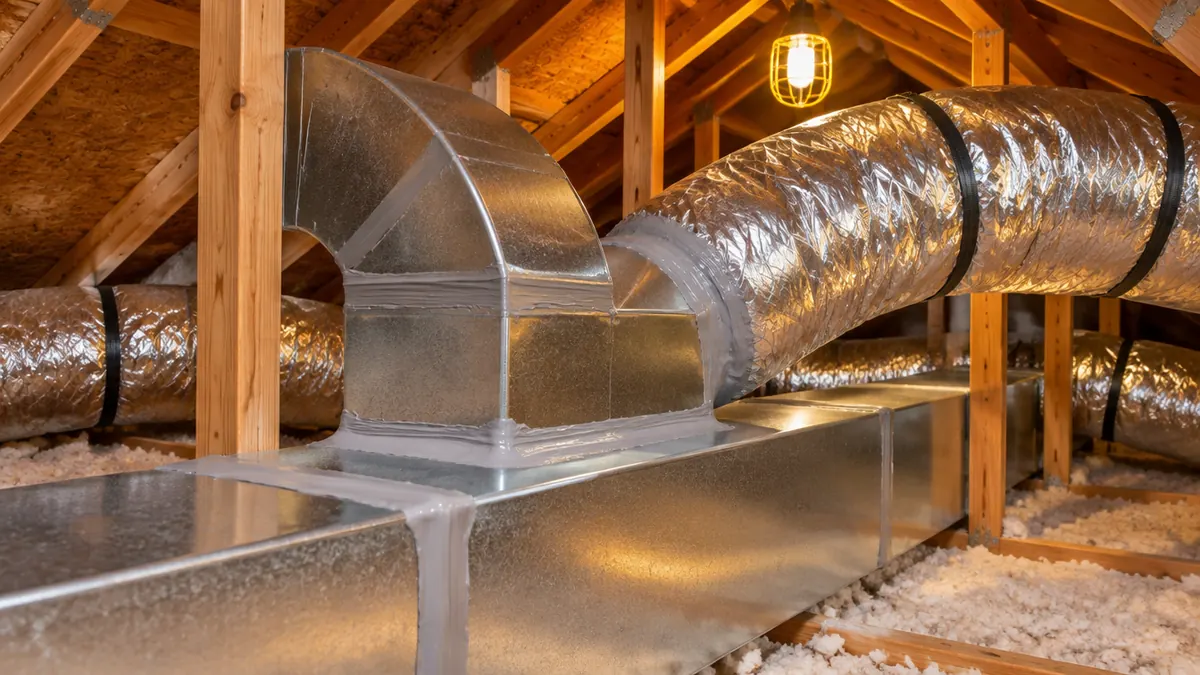
- Ducts in the attic. Upstairs supply ducts often run through the hottest space in the house. ENERGY STAR lists ducts in an attic, crawlspace or garage among the signs your duct system may need attention.
- Weak return airflow. Air has to get back to the indoor unit. If the upstairs has few or small return grilles, warm air gets trapped up there.
Sacramento summers raise the stakes. NOAA’s 1991–2020 normals for Sacramento Executive Airport put the average June-to-August high at 90.8°F, with about 76 days a year at 90°F or more and about 14 at 100°F or more. That’s a lot of long, sunny afternoons for an attic to soak up heat, and a second floor with any weak spot falls behind fast. The same attic problem can make the back bedrooms of a single-story house run hot, because its ducts often run through the attic too.
What causes uneven temperatures in a house?
Uneven temperatures come from three places: the building (sun, insulation, air leaks), the duct system (leaks, long runs, missing returns) and the equipment (one thermostat, a dirty filter, or a system that can’t keep up). Use this table to narrow it down.
| Cause | What you’ll notice | DIY or pro |
|---|---|---|
| Dirty air filter | Weak airflow everywhere; gray, dusty filter | DIY: replace it |
| Blocked or closed registers | Furniture, rugs or curtains over vents; registers shut | DIY: open and clear them |
| Afternoon sun | West- and south-facing rooms heat up after lunch | DIY: blinds or drapes |
| Thin attic insulation | Insulation level with or below the attic floor joists | DIY check; add insulation yourself or hire it out |
| Air leaks | Drafts, or daylight showing through gaps around the attic hatch, doors and windows | DIY for small gaps; pro for the attic |
| Leaky or disconnected attic ducts | Weak airflow at upstairs vents; stuffy rooms | Pro |
| Missing or undersized upstairs returns | Rooms get hotter when doors are closed | Pro |
| Single-zone system | Downstairs comfortable, upstairs hot every afternoon | Pro: zoning or duct changes |
| System that can’t keep up | Runs nonstop and never catches up on either floor | Pro |
Why is one room hotter than the others?
One hot room usually has a local problem: it gets more sun, sits at the end of a long duct run, has a duct that’s leaking or crushed, or loses airflow when its door is closed.
Check the simple things first. Is the register open and clear? Does the room face west? Is it over the garage or tucked under a low section of roof? Then try a quick airflow test: hold a tissue at the supply register in the hot room and at one in a comfortable room. If the hot room’s airflow is clearly weaker, the duct that feeds it may be leaking, kinked, disconnected or too small for the room.
Bonus rooms over a garage are a classic case. They sit between a hot attic and an unconditioned garage, and their ducts often run the farthest from the indoor unit. ENERGY STAR names ducts in the garage among the warning signs of duct trouble.
If the whole house has hot and cold spots, not just one room, look at the equipment too. ENERGY STAR lists rooms that are too hot or too cold among the signs it may be time to consider replacing your system, especially a heat pump or air conditioner that’s more than 10 years old.
How do you cool a hot upstairs?
Start with the simple fixes: a clean filter, open upstairs vents, blinds closed against afternoon sun and ceiling fans running. Then look at the attic. These steps are safe for any homeowner.
7 safe steps to cool a hot second floor
- Change the air filter. One major manufacturer points out that even a dirty filter can contribute to uneven cooling. ENERGY STAR says to check your filter every month, especially in summer and winter. Our guide to how often to change your air filter has the details.
- Open every upstairs register fully. Move furniture, rugs and curtains away from supply vents and return grilles.
- Keep upstairs doors open. If a bedroom has no return grille of its own, an open door gives air a path back to the system. Rooms that heat up when the door is shut point to a return problem.
- Try the fan on On for a day. Two major manufacturers suggest running the blower continuously to mix air between floors. The trade-off: between cooling cycles, the fan blows air that isn’t being cooled. If you don’t feel a difference, set it back to Auto.
- Block the afternoon sun. Close blinds or drapes on west- and south-facing upstairs windows during the hottest hours.
- Run upstairs ceiling fans. They keep air moving in the rooms you’re using.
- Check the attic insulation from the hatch. Shine a flashlight across the attic floor. ENERGY STAR’s rule of thumb: if the insulation is level with or below the floor joists, you probably need more. Don’t step between the joists; the ceiling below won’t hold you. On a summer afternoon, a Sacramento attic is no place to linger, so do this check in the cool of the morning.
Still hot upstairs after a week of these changes? The problem is likely in the ducts, the returns or the system design, and that’s where a technician comes in.
Does closing vents downstairs help cool the upstairs?
Not reliably, and the experts don’t agree: one major manufacturer suggests partly closing a few downstairs vents, while another warns against closing them even part of the way to push air upstairs.
The warning makes sense once you know how the system is set up. Your blower is built to move a set amount of air, and the airflow to each room is balanced when the system is installed. Closing registers doesn’t make that air disappear. It throws off that balance and makes the system work harder.
The controlled way to shift air upstairs is at the ducts, not the registers. Many duct systems have balancing dampers, small levers on the metal duct runs near the indoor unit. A technician can measure airflow and set those dampers so more air goes upstairs in summer. Until then, keep every register open and clear.
Can leaky ductwork make the upstairs hot?
Yes. ENERGY STAR estimates that about 20 to 30 percent of the air moving through a typical duct system is lost to leaks, holes and poorly connected ducts, and attic ducts can lose cooling before the air ever reaches your rooms.
ENERGY STAR’s signs of duct trouble include rooms that are hard to heat and cool, stuffy rooms that never feel comfortable, and ducts that run through an attic, crawlspace or garage. It also says sealing and insulating ducts can improve the efficiency of a heating and cooling system by as much as 20 percent.
You can seal the ducts you can reach: ENERGY STAR suggests mastic or metal tape, not standard duct tape, which doesn’t last. Attic duct runs are harder. They’re hot, cramped and often buried under insulation, and many homeowners hire a contractor for them. Our guide to leaky ductwork covers the signs and what sealing involves. If your ducts also drip or sweat, see why air ducts sweat.
California’s duct rules: Under the 2025 California Energy Code, replacing an air handler, the outdoor unit of a split AC or heat pump, a whole packaged unit, or a cooling or heating coil means the connected ducts must be sealed by the installer and verified by an ECC-Rater, the third-party tester that used to be called a HERS Rater. The target is duct leakage of 10 percent of system airflow or less, or 7 percent or less to the outside; if neither can be met, every accessible leak must be sealed and checked with a visual inspection and a smoke test. New ducts in an attic or other unconditioned space must be insulated to at least R-8 in climate zone 12, which the California Energy Commission assigns to North Highlands and much of Sacramento. Ask any contractor whether the permit and the duct test are in the quote, and see HVAC permits and Title 24 in Sacramento.
Do you need a zoning system or a bigger AC?
Zoning can help; a bigger AC usually doesn’t. A zoning system divides your home into two or more areas, each with its own thermostat, so the upstairs can keep cooling after the downstairs is satisfied.
Zoning works best when the ducts can already deliver enough air upstairs. If they can’t, the fix starts with the ducts: sealing leaks, repairing crushed or disconnected runs, or adding an upstairs return. For a single hot bonus room or an addition, some homeowners look at a ductless system instead. The guide to mini-split vs. central air compares the two.
A bigger air conditioner is rarely the answer on its own. If the ducts can’t carry cool air to the second floor, extra capacity mostly over-cools the first floor while the bedrooms stay warm. The California Energy Commission notes that new HVAC systems require load calculations, so ask any contractor how a new unit was sized before you agree to a larger one, and read what size AC you need before you shop.
If your system runs all afternoon and the house won’t drop below a certain temperature, read why an AC runs constantly. If the air from the vents feels warm rather than just weak, start with why your AC is blowing warm air.
When should you call a pro about a hot upstairs?
Call when the simple fixes don’t close the gap, when upstairs vents push noticeably weaker air, or when the whole house struggles on hot afternoons.
- Upstairs registers blow much weaker air than the ones downstairs.
- Rooms get hotter when their doors are closed.
- You can see crushed, sagging, torn or disconnected ducts in the attic.
- The system runs nonstop on hot days and the upstairs never reaches the set temperature.
- Your system is more than 10 years old and comfort gets worse every summer.
A technician can check airflow at each register, inspect the duct runs and connections, look for missing or undersized returns, and confirm the system has enough capacity for the house. When you’re ready, schedule a ductwork inspection or repair. If the equipment itself is the issue, the repair-or-replace calculator can help you weigh your options.
Why do Sacramento-area homeowners call JM Comfort about uneven temperatures?
JM Comfort is a locally owned heating and air conditioning contractor based in North Highlands, serving North Highlands, Sacramento and nearby communities. It’s a licensed C-20 HVAC contractor (CSLB #1016274), licensed since 2016 and bonded, with workers’ comp insurance on file. The same team handles ductwork repair, replacement and sealing, AC and furnace repair, and new installations for homes, so the ducts and the equipment can be looked at together.
Call (916) 247-6358 or book a ductwork visit online and we’ll call you back.
Frequently asked questions
Is it normal for the upstairs to be warmer than the downstairs?
Some difference is common in a two-story home, because warm air rises and the top floor sits under a hot roof. A big gap that never closes, especially with weak airflow at the upstairs vents, usually points to the ducts, the returns, the insulation or a single thermostat. The safe fixes in this guide help in both cases.
Should I set the thermostat lower to cool the upstairs?
It can help a little, but it also makes the downstairs colder and keeps the system running longer. A thermostat on the first floor only knows how the first floor feels. Duct repairs, better upstairs returns or zoning go after the cause instead. Our guide to the best thermostat settings covers the rest.
Will an attic fan cool my upstairs?
It may help. Two major manufacturers suggest an attic exhaust fan to pull trapped heat out of the attic, which is one of the main heat sources for a second floor. An attic fan won’t fix leaky ducts, missing returns or thin insulation, so have the attic looked at as a whole.
Do I need a second AC unit for my upstairs?
Not always. Many hot second floors improve with duct sealing, better returns, attic insulation and air sealing. A separate upstairs system or a zoning system makes sense when one system and one thermostat can’t serve both floors, which a technician can confirm by measuring airflow and checking the system’s capacity.
Does replacing my AC in California mean my ducts get tested?
Usually, yes. Under the 2025 California Energy Code, replacing the outdoor unit, the air handler or a coil triggers duct sealing and verification by an ECC-Rater, with a few exceptions such as ducts already sealed and certified. Read HVAC permits and Title 24 in Sacramento for the details.
Can JM Comfort fix uneven temperatures in my house?
JM Comfort handles ductwork repair, replacement and sealing and repairs heating and cooling systems for homes in North Highlands, Sacramento and nearby communities, so the ducts and the equipment can be checked together. It’s a licensed C-20 HVAC contractor (CSLB #1016274). Call (916) 247-6358 or book a ductwork visit online.
Sources
- Duct Sealing (ENERGY STAR)
- Heat & Cool Efficiently (ENERGY STAR)
- What to Look For: DIY Checks and Inspections (ENERGY STAR)
- When is it time to replace? (ENERGY STAR)
- 2025 Single-Family Heating, Ventilation, and Air Conditioning (HVAC) (California Energy Commission)
- 2025 Single-Family Residential Compliance Manual, Chapter 9: Additions, Alterations, and Repairs (California Energy Commission)
- Building Climate Zones by Zip Codes (California Energy Commission)
- U.S. Climate Normals 1991–2020, annual and seasonal normals for Sacramento Executive Airport, CA (USW00023232) (NOAA National Centers for Environmental Information)
- Why is my house hot upstairs and cold downstairs (Lennox)
- Top Solutions for House Hot Upstairs Cold Downstairs (American Standard Heating & Air Conditioning)
Find this helpful? Add JM Comfort as a preferred source on Google.