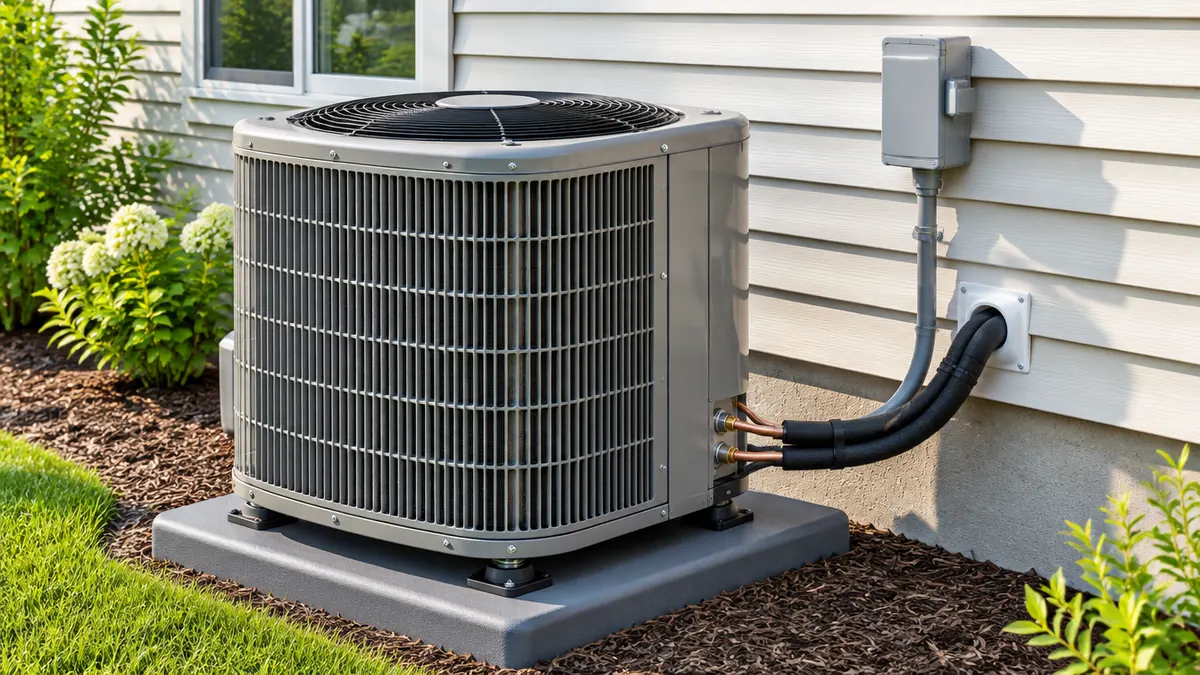
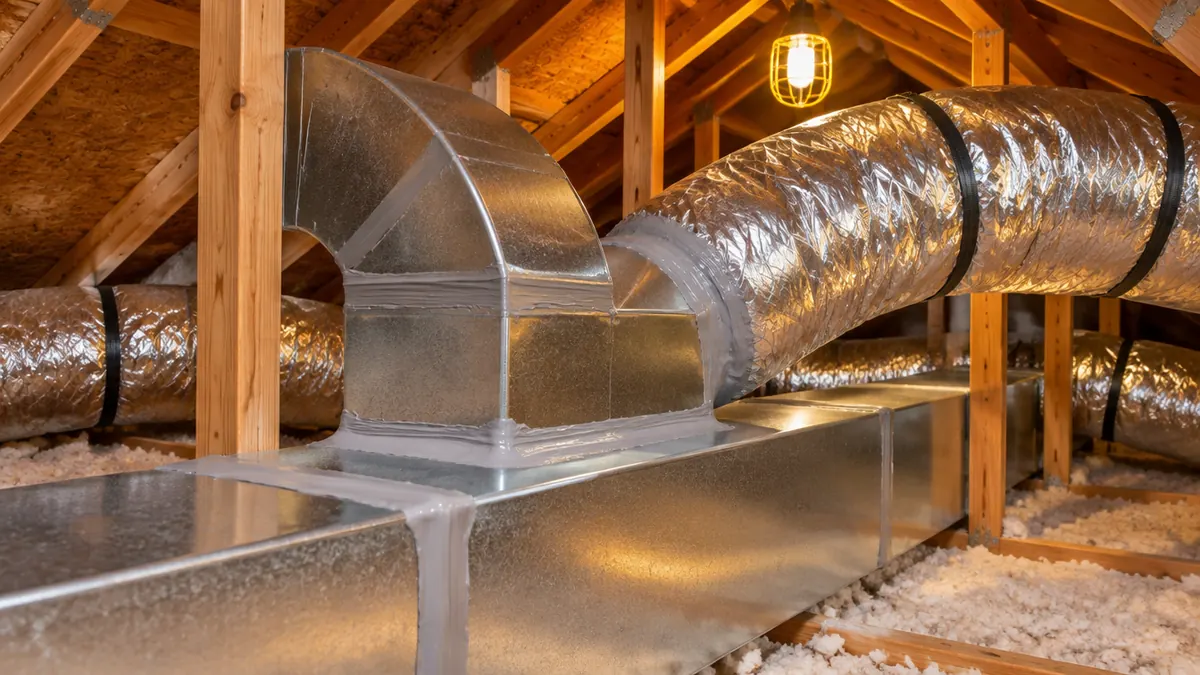
Central Air vs. Mini-Split: Which Is Better for Your Home?
Both can keep a Sacramento-area home cool through a long, hot summer. They just do it in very different ways, and the right choice depends more on your house than on the equipment.
JM Comfort can help: AC installation for homes in Sacramento and nearby. Licensed C-20 HVAC contractor, CSLB #1016274.
If you’re adding a bonus room, finishing a garage, or living in an older home without ducts, you’ll run into the same question sooner or later: a ductless mini-split or central air? Both can keep you comfortable through a Sacramento summer. They do it in very different ways, and the right choice depends more on your house than on the equipment. Here’s an honest side-by-side, plus the questions to ask before you buy. If you already have ducts and want whole-house cooling, start with the AC installation page.
What is a mini-split?
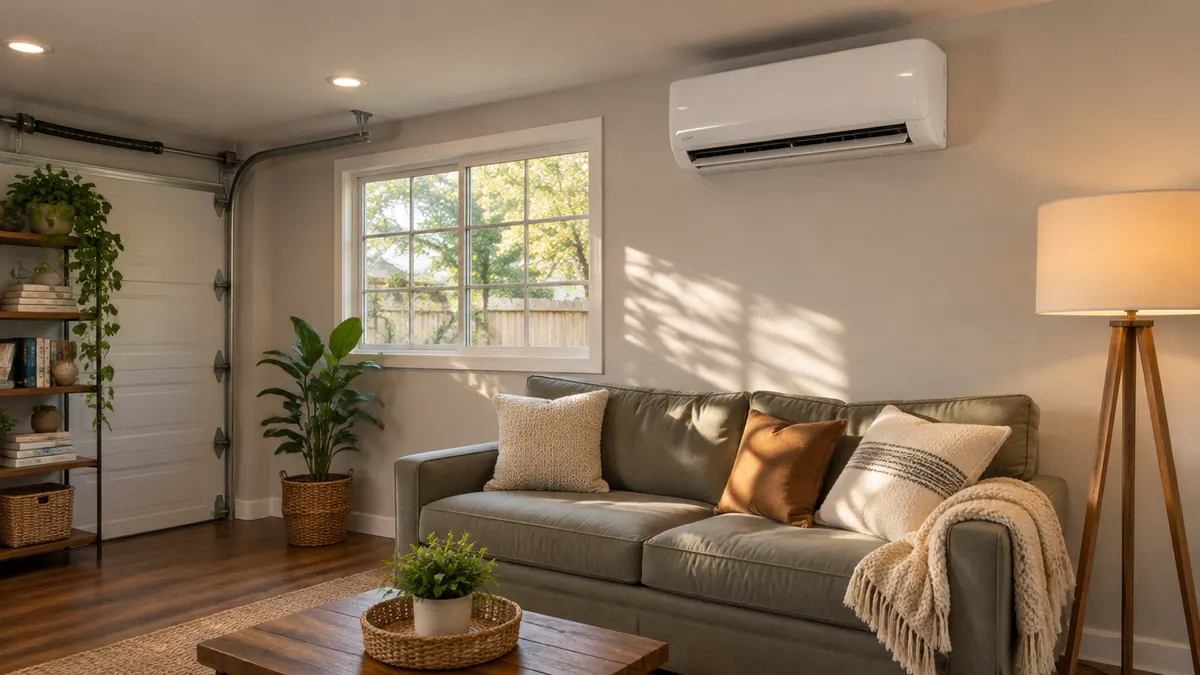
A mini-split is a ductless heating and cooling system: an outdoor unit connected by refrigerant lines to one or more indoor units mounted on a wall or ceiling, each serving its own room or zone.
Refrigerant carries heat between the outdoor unit and the indoor units, often called heads, and each head blows conditioned air straight into the room. There are no ducts for air to leak out of along the way. One outdoor unit can serve a single head (a single-zone system) or several (a multi-zone system), and each head can be set to its own temperature. Installation is usually less invasive than adding ducts: Mass Save notes that only small holes are needed for the indoor units and refrigerant lines.
There are also ducted mini-splits, which use an air handler that is usually hidden in a ceiling, attic or closet and send air through short ducts to several rooms. They’re worth asking about if you don’t want wall-mounted units in view.
Mini-split vs. central air: what’s the difference?
The big difference is ductwork: central air cools the whole house from one indoor unit through a system of ducts, while a mini-split delivers air directly into each room it serves, with no ducts and room-by-room control.
| Feature | Ductless mini-split | Central air |
|---|---|---|
| How air reaches rooms | An indoor unit in each room or zone | Supply ducts and vents from one indoor unit |
| Ductwork needed | No | Yes |
| Temperature control | Each indoor unit set separately | Usually one thermostat, unless the system is zoned |
| Heating | Heat pump models heat and cool; some models only cool | An AC only cools; heat comes from a furnace, or use a central heat pump |
| Duct losses | None | ENERGY STAR: about 20–30% of the air in a typical duct system is lost |
| What you see indoors | Wall or ceiling units in each room | Vents and return grilles |
| Best fit | Additions, converted garages, older homes without ducts | Homes with existing ductwork; whole-house cooling |
| Upkeep | Clean each indoor unit’s filter when it’s visibly dirty | Filter changes; ducts kept sealed and insulated |
Neither one is automatically better. A mini-split skips duct losses and gives every room its own setting. Central air treats the whole house from one system and hides everything but the vents. What tips the decision is usually the ductwork you have, or don’t have.
Central systems are still the norm in California. In the federal government’s 2020 Residential Energy Consumption Survey, 54% of California homes used central air conditioning (a count that includes central heat pumps), while 23% used individual units, a group that includes ductless mini-splits along with window, wall and portable units. For heat, 62% of California homes used a furnace as their main heating equipment.
Do mini-splits heat and cool?
Many do: a mini-split heat pump heats in winter and cools in summer, but cooling-only mini-split air conditioners are sold too, so check the model before you buy.
In heating mode, a heat pump moves heat from the outdoor air into your home through the refrigerant lines. In summer, the same system runs in reverse and cools.
Sacramento winters are mild, but they do get cold at night. NOAA’s 1991–2020 normals for Sacramento Executive Airport average about 15 nights a year at 32°F or below. ENERGY STAR says its certification requires third-party verified low-temperature performance, with air-source heat pumps tested down to 5°F, so a certified unit is tested well below anything a typical Sacramento winter night brings. If you plan to heat a room with one, ask how its heating output holds up on the coldest mornings and what backup heat the room will have. Our guide to whether heat pumps work in Sacramento covers what to expect.
Is a mini-split a heat pump?
Often, yes: a mini-split heat pump is an air-source heat pump without ducts, while a mini-split air conditioner is the cooling-only version.
That changes what you’re comparing. A ductless heat pump goes head to head with a central heat pump, or with a central air conditioner paired with a furnace. If you’re still sorting out the central options, read heat pump vs. air conditioner and heat pump vs. furnace. On any spec sheet, check whether it lists heating performance as well as cooling, and compare efficiency ratings the same way you would for a central system. Our guide to SEER2 ratings explains the numbers.
Do mini-splits use a lot of electricity?
Not compared with the electric heat they often replace: ENERGY STAR says certified mini-splits use up to 60 percent less energy than standard home electric radiators, and with no ducts, they avoid the duct losses that cost central systems efficiency.
Heating and cooling are the biggest energy use in most homes. ENERGY STAR says nearly half the energy used in a home goes to heating and cooling, so the system you pick shows up on every SMUD bill. In Sacramento, the cooling load is concentrated in a long, hot stretch: the same NOAA normals average about 76 days a year at 90°F or higher.
How much electricity a mini-split uses depends on a few things:
- Efficiency rating. Higher-rated units use less power for the same cooling.
- Sizing. ENERGY STAR says installing properly sized equipment is essential to getting the best performance and comfort.
- How many heads run, and how hard. Turn heads down or off in rooms nobody is using.
- The space. Poor insulation and air leaks make any system work harder.
Against central air, the comparison depends on your ducts. ENERGY STAR estimates that a typical duct system loses about 20 to 30 percent of the air moving through it to leaks, holes and poorly connected ducts. Ducts that are sealed and insulated lose less. Sealing and insulating ducts can improve a system’s efficiency by as much as 20 percent, according to ENERGY STAR. Our guide to leaky ductwork explains how to spot the problem.
Is a mini-split good for a garage?
Often, yes: ENERGY STAR lists additions and outbuildings such as a shed, barn or garage among the places where extending ductwork is difficult, which is exactly where a ductless system fits.
Before you buy, think through these points:
- How you’ll use it. A workshop you cool now and then is a different job from a garage converted into a bedroom or den.
- Insulation first. An uninsulated garage door and bare walls let summer heat pour in. Insulating and sealing the space first makes any system’s job easier.
- Sizing. Ask the contractor to size the unit for the space as it is, not as a typical room.
- Placement. Plan where the outdoor unit, the refrigerant lines and the indoor head will go, along with the drain line for the water the unit removes when it cools.
- The permit. The California Energy Commission says installing a space conditioning appliance, other than a plug-in room appliance, requires a building permit. A mini-split isn’t a plug-in unit, so ask who pulls the permit. See HVAC permits and Title 24 in Sacramento.
Which is better for your home: a mini-split or central air?
Choose central air when you already have good ductwork and want even, whole-house cooling; choose a mini-split when you’re adding comfort to rooms without ducts, an addition, a garage or a hot spot the main system can’t reach.
Central air usually makes more sense when
- Your home already has ductwork in good shape, or ducts that can be sealed and repaired.
- You want one system for the whole house, especially a larger home.
- You’d rather see vents than wall-mounted units.
- You’re replacing an existing central system. If the house already has ducts, one major manufacturer notes that replacing central AC can cost less than installing several ductless zones.
A mini-split usually makes more sense when
- The home or the space has no ductwork.
- You’re cooling an addition, a converted garage or a sunroom.
- One room stays hot or cold and the ducts can’t reasonably reach it.
- You want different temperatures in different rooms.
Sometimes the answer is both
Mass Save points out that even with existing ductwork, ductless mini-splits can be a good option for targeting specific rooms. Before you add equipment for a hot room, make sure the ducts aren’t the real problem. Our guide to a hot upstairs walks through the usual causes.
What drives the cost
Installation costs vary widely with the equipment, the number of zones or indoor units, the condition of any existing ductwork, electrical needs and local labor rates. For central systems, see what a new HVAC system costs and what a new system should include.
What should you ask before installing either system?
Ask how the system was sized, where every part will go, what condition your ducts are in, and whether the job qualifies for a rebate.
If wildfire smoke is part of your decision, read wildfire smoke and your HVAC before you choose.
Why do Sacramento-area homeowners call JM Comfort?
JM Comfort is a locally owned heating and air conditioning contractor based in North Highlands, serving North Highlands, Sacramento and nearby communities. It’s a licensed C-20 HVAC contractor (CSLB #1016274), licensed since 2016 and bonded, with workers’ comp insurance on file; you can check the license on the CSLB website. JM Comfort handles AC installation, heat pump repair and installation, and ductwork repair, replacement and sealing for homes, so if your house has ducts, you can find out whether central air or a heat pump is the simpler fix.
Call (916) 247-6358 or request an AC installation estimate online and we’ll call you back.
Frequently asked questions
How many indoor units does a mini-split need?
Usually one for each room or zone you want to control separately. One outdoor unit can serve a single indoor unit or several, and each indoor unit can be set to its own temperature. A contractor should size each indoor unit for the space it serves.
Can a mini-split cool a whole house?
It can, with several indoor units or a ducted mini-split, which uses an air handler that is usually hidden in a ceiling, attic or closet. For homes with existing ducts in good shape, central air is often the simpler way to get even, whole-house cooling.
Is there a SMUD rebate for a ductless mini-split?
Only for a whole-home system. As of November 2026, SMUD says mini-splits must serve the entire home and meet its minimum HVAC system requirements, including a two-stage or variable-stage system rated at least 15.2 SEER2 and a SMUD Contractor Network installer. A single-room unit doesn’t qualify. See SMUD HVAC rebates and tax credits.
Why is a mini-split dripping water?
The indoor unit pulls moisture out of the air when it cools, and that water has to drain away through a drain line. If water drips from the indoor unit, the drain path may be blocked or kinked. Turn the unit off and call for service, and see why an AC leaks water.
Does JM Comfort install central air?
Yes. JM Comfort, a licensed C-20 HVAC contractor (CSLB #1016274) based in North Highlands, installs and repairs central air conditioners and heat pumps for homes in North Highlands, Sacramento and nearby communities. Call (916) 247-6358 or book online.
Sources
- Ductless Heating & Cooling (ENERGY STAR)
- Duct Sealing (ENERGY STAR)
- Heat & Cool Efficiently (ENERGY STAR)
- Ductless Mini Split vs Central Air Conditioning: Which Is Right for Your Home? (Bryant)
- Mini-Splits vs. Central AC: Which Cooling System Is Right for Your Home? (Mass Save)
- Highlights for air conditioning in U.S. homes by state, 2020 (Residential Energy Consumption Survey) (U.S. Energy Information Administration)
- Highlights for space heating in U.S. homes by state, 2020 (Residential Energy Consumption Survey) (U.S. Energy Information Administration)
- U.S. Climate Normals 1991-2020, annual/seasonal: Sacramento Executive Airport, CA (USW00023232) (NOAA National Centers for Environmental Information)
- Heating and cooling rebates (SMUD)
- 2025 Single-Family Heating, Ventilation, and Air Conditioning (HVAC) (California Energy Commission)
Find this helpful? Add JM Comfort as a preferred source on Google.