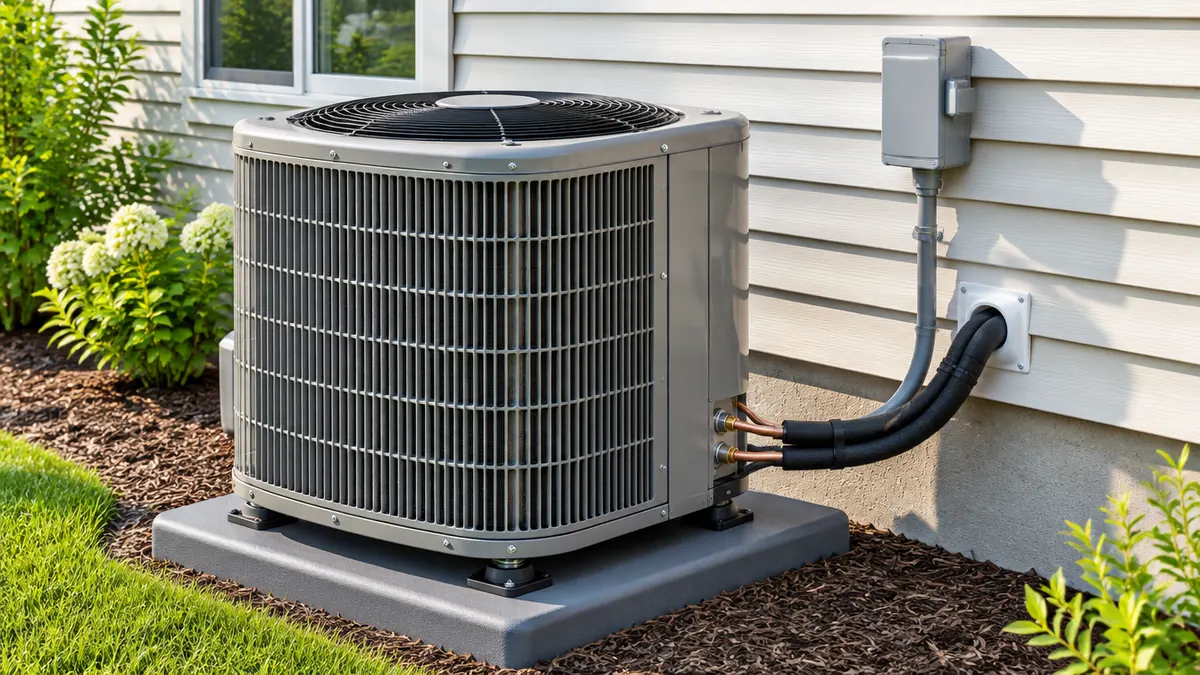
Heat Pump vs. Gas Furnace: Which Is Better for a Sacramento Home?
A heat pump moves heat with electricity, a gas furnace burns PG&E natural gas, and a dual fuel system does both. Here’s how they compare in a Sacramento winter, what drives the running costs, and how to pick the right one for your house.
JM Comfort can help: heat pump installation for homes in Sacramento and nearby. Licensed C-20 HVAC contractor, CSLB #1016274.
Heat pump or gas furnace is the biggest heating decision most Sacramento-area homeowners face when a system wears out. The right answer depends on your ducts, your SMUD and PG&E bills, and how you like your house to feel. This guide compares the two, explains dual fuel and covers SMUD rebates as of November 2026. JM Comfort handles heat pump installation and repair as well as furnaces, so you can compare every option with one company.
Heat pump vs furnace: what’s the difference?
A furnace makes heat by burning natural gas or propane (or by running electric heating elements), while a heat pump moves heat that already exists in the outdoor air into your house, then runs in reverse to cool it in summer.
That one difference drives everything else. ENERGY STAR explains that because heat pumps move heat instead of converting it from fuel, an air-source heat pump can deliver up to 3 times more heat energy to a home than the electricity it consumes. A gas furnace only heats, so it’s paired with a separate central air conditioner. A heat pump does both jobs with one outdoor unit.
| Feature | Heat pump | Gas furnace + AC | Dual fuel |
|---|---|---|---|
| How it heats | Moves heat from outdoor air | Burns natural gas | Heat pump in mild weather, furnace in the cold |
| Fuel | Electricity | Natural gas for heat, electricity for the AC | Electricity and natural gas |
| Cooling | Yes, same system | Separate AC needed | Yes, the heat pump cools |
| Air at the vents | Warm and steady, longer cycles | Hotter, in shorter bursts | Depends on the outdoor temperature |
| Efficiency ratings | SEER2 (cooling), HSPF2 (heating) | AFUE for the furnace, SEER2 for the AC | All of them |
| SMUD rebate (as of Nov. 2026) | Listed for two-stage and variable-stage models | None listed | Ask SMUD whether it qualifies |
| Combustion exhaust | None | Vented through a flue | Furnace side vents through a flue |
Safety first: If you ever smell gas, leave the house right away. Once you’re outside, call 911 and then PG&E; its Report an Emergency page has the number. Don’t flip switches or use anything that could spark on your way out. Any home with a gas furnace needs CO alarms: the CPSC recommends them on every level of the home and outside sleeping areas. If you suspect carbon monoxide poisoning, get outside to fresh air immediately, then call 911.
Are heat pumps electric or gas?
Heat pumps run on electricity; a standard air-source heat pump has no gas burner at all. If a quote mentions a heat pump and gas together, it’s a dual fuel system, which one major manufacturer describes as an electric heat pump combined with a gas furnace.
In the Sacramento area, that usually means SMUD electricity for the heat pump and PG&E natural gas for the furnace. Gas is still the norm statewide: in the federal Residential Energy Consumption Survey for 2020, natural gas was the main heating fuel in 64% of California homes and electricity in 20%.
All-electric systems still need a plan for the coldest hours. One major manufacturer notes that in extreme cold, heat pumps often need a supplemental heat source, usually electric heat strips in the indoor unit; in a dual fuel system, it’s the furnace. See emergency heat vs. aux heat, or, if you’re weighing gas against an all-electric furnace, gas furnace vs. electric furnace.
Heat pump vs gas furnace: which keeps you warmer?
A gas furnace puts out hotter air and keeps its full output no matter how cold it gets outside; a heat pump gives steadier, gentler heat and does its best work in mild weather.
One major manufacturer says furnaces tend to blast hot air in shorter bursts, while heat pumps run longer cycles to hold a steady temperature. Another suggests a furnace may be the best choice where winters are bitterly cold and consistently below freezing. That isn’t a Sacramento winter, but the difference in feel is real. For how a heat pump handles a cold snap, read do heat pumps work in cold weather.
Do heat pumps save money?
A heat pump usually costs less to run than electric resistance heat, propane or oil; against PG&E natural gas, the answer depends on your SMUD and PG&E rates, your house and how you use the system, so nobody can promise savings without your numbers.
ENERGY STAR recommends switching from electric resistance, propane and oil to heat pumps to lower energy bills. Natural gas is the close call. One major manufacturer says there is no single system that will have the lowest operating cost in every home, and another says the difference largely depends on the climate and level of usage.
Sacramento’s climate cuts both ways. NOAA’s 1991–2020 normals for Sacramento Executive Airport show about 2,436 heating degree days a year against about 1,291 cooling degree days, so heating is a real part of the energy picture. But the winters are mild, where heat pumps do their best work, and summers bring about 14 days a year at 100°F or hotter, when you need a strong air conditioner anyway. A heat pump is that air conditioner, so one heat pump can replace both an aging AC and an aging furnace.
To compare honestly, bring your winter PG&E bills and a year of SMUD bills to any estimate, and ask how running costs for your house were estimated. Be wary of a flat savings percentage that isn’t based on your own usage.
What drives the upfront price
- Ductwork. Leaky ducts waste heat whichever system you choose. See signs of leaky ductwork.
- Electrical capacity. Moving from gas heat to a heat pump can mean panel or circuit work. As of November 2026, SMUD lists Go Electric rebates of up to $5,500 for panels and circuits, but only with a gas-to-electric conversion.
- Efficiency tier. Higher SEER2 and HSPF2 ratings cost more upfront, and SMUD’s heat pump rebates start at two-stage systems (15.2 SEER2 minimum). See our SEER2 guide.
For typical price ranges, see what a new HVAC system costs.
Rebates and tax credits (as of November 2026)
As of November 2026, SMUD’s heating and cooling rebates page lists $3,000 for a variable-stage heat pump system and $2,000 for a two-stage heat pump when you convert from gas to electric, and $1,000 for an electric-to-electric upgrade to a two-stage or variable-stage heat pump. It lists no gas furnace rebate, and single-stage systems aren’t eligible. Rebates are subject to availability of funding.
SMUD also says the equipment must be installed by a participating contractor in the SMUD Contractor Network, who submits the rebate; the system must pass Title 24 (SMUD’s page says via the HERS CF3R form); and a connected, Wi-Fi-enabled thermostat is required. Ask any contractor whether they’re in the network before you count a rebate in your budget. Our Title 24 permit guide explains the verification step.
The federal credit is gone. The IRS Energy Efficient Home Improvement Credit page says the credit can be claimed for improvements made through December 31, 2025, so a heat pump or furnace installed in 2026 doesn’t qualify. Our Sacramento HVAC rebates guide tracks the details.
What is a dual fuel heat pump?
A dual fuel system pairs an electric heat pump with a gas furnace and switches between them automatically: the heat pump handles mild and cool weather, and the furnace takes over when it gets cold.
The switch happens at the balance point. One major manufacturer says dual fuel systems typically switch to the gas furnace when outdoor temperatures drop to between 35°F and 40°F, and that your HVAC technician can adjust that point based on your local climate and energy rates. It names upfront cost and installation complexity as the main disadvantage, since you’re installing and maintaining two heating systems.
Dual fuel makes the most sense when your PG&E gas furnace has plenty of life left but your AC is failing; ENERGY STAR suggests considering a heat pump in exactly that situation. In Sacramento, where January lows average 39.2°F, a dual fuel system set in that range would likely run on the heat pump most of the winter and hand off to gas on the coldest mornings. SMUD frames its gas-to-electric rebates as a switch from gas heating to a heat pump, so ask SMUD or a network contractor whether a dual fuel setup qualifies.
Heat pump vs gas furnace in Sacramento: which is better?
For many Sacramento-area homes, a heat pump, or a heat pump paired with a gas furnace you already have, is a strong fit, because Sacramento winters are chilly but rarely freezing for long.
NOAA’s 1991–2020 normals for Sacramento Executive Airport put the average January high at 56.0°F and the average January low at 39.2°F; December’s average low, 38.5°F, is the coldest of the year. Sacramento averages about 15 nights a year at or below 32°F, and on average no days that stay below freezing all day. One major manufacturer calls heat pumps great for mild climates where winter temperatures average around 30°F to 40°F, and Sacramento’s winter is milder than that. Another manufacturer’s guide notes that in warmer regions of the country, a heat pump can often provide all the heating and cooling a home needs.
That doesn’t make a gas furnace the wrong choice. If you have a good furnace, gas bills you’re comfortable with, or you simply like hotter air, keeping gas or going dual fuel is reasonable. Whether a heat pump fits your particular house is the subject of our guide to whether heat pumps work in Sacramento.
| Your situation | Usually the better fit |
|---|---|
| All-electric home, no gas service | Heat pump with electric backup heat |
| Old electric furnace or baseboard heat | Heat pump |
| PG&E gas, furnace and AC both near the end | Heat pump or dual fuel; price both and ask about SMUD’s gas-to-electric rebate |
| Newer gas furnace, failing AC | Dual fuel (a heat pump replaces the AC) |
| You want the hottest air on the coldest mornings | Gas furnace or dual fuel |
What can you check before you choose?
A few minutes of homework tells you which options are really on the table: your fuel, your equipment’s age and your bills.
- Find out what you have now. Some homes already have a heat pump and don’t know it. See how to tell a heat pump from an AC.
- Check for gas service. No PG&E gas meter narrows your choice to a heat pump, an electric furnace or propane.
- Note each unit’s age. The data plates show a model and serial number a technician can date. See how long HVAC systems last.
- Pull your bills. Winter PG&E and SMUD bills show what you spend on heat today.
When should you get a pro to compare your options?
Bring in a pro before you buy, because the right answer depends on things you can’t check from the hallway: your home’s heating and cooling load, duct condition, gas piping and venting, and electrical capacity.
ENERGY STAR says your contractor should verify the proper system size using a load calculation tool called Manual J. Ask for options side by side: a heat pump alone, a furnace with a new AC, and dual fuel, each with its SEER2, HSPF2 or AFUE rating and an explanation of how running costs were estimated. In California, a replacement also has to meet the Title 24 energy code, so ask who pulls the permit, and if you want a SMUD rebate, ask whether the contractor is in the SMUD Contractor Network.
If your current system just broke, run the repair-or-replace calculator first, then request a heat pump estimate or a furnace installation estimate so you see both prices before you commit.
What should you look for in an HVAC company?
Look for a licensed contractor who installs both heat pumps and furnaces, explains the trade-offs in plain language, and puts every option in writing before you decide.
For questions to ask and red flags, see how to choose an HVAC company.
Why do Sacramento-area homeowners call JM Comfort?
JM Comfort is a locally owned heating and air conditioning contractor based in North Highlands, serving North Highlands, Sacramento and nearby communities. It’s a licensed C-20 HVAC contractor (CSLB #1016274), licensed since 2016 and bonded, with workers’ comp insurance on file; you can check the license on the CSLB website. JM Comfort installs and repairs heat pumps, furnaces and central air conditioners for homes, and handles ductwork repair and sealing, so you can see a heat pump, a gas furnace and a dual fuel option from the same team.
Call (916) 247-6358 or request a heat pump estimate online and we’ll call you back.
Frequently asked questions
How long does a heat pump last compared with a furnace?
One major manufacturer lists a typical lifespan of 10 to 15 years for heat pumps and 15 to 20 years for gas furnaces. A heat pump works year-round, heating in winter and cooling through a long Sacramento summer, while a furnace rests for months. Maintenance makes a big difference for both; see how long HVAC systems last.
Can I add a heat pump to my existing gas furnace?
Often, yes. That setup is a dual fuel system: the heat pump replaces your central AC, cools in summer and heats on most winter days, and the furnace covers the coldest hours. ENERGY STAR suggests considering a heat pump if you have a fairly new furnace and an older central AC. A technician needs to confirm your furnace and thermostat can work with it.
Does a heat pump need backup heat in Sacramento?
Most systems have one: electric heat strips in the indoor unit, or the gas furnace in a dual fuel system. ENERGY STAR notes that even cold climate heat pumps heat most efficiently with a backup source when temperatures get very low. With about 15 nights a year at or below freezing here, the backup should carry little of the load. See emergency heat vs. aux heat.
Is there still a federal tax credit for a heat pump or furnace?
Not for new installs, as of November 2026. The IRS says the Energy Efficient Home Improvement Credit can be claimed for improvements made through December 31, 2025. SMUD’s heat pump rebates are separate and still listed, subject to funding; see our Sacramento HVAC rebates guide.
Is a heat pump safer than a gas furnace?
A heat pump burns no fuel, so it creates no combustion exhaust. A gas furnace is safe when it’s installed, vented and maintained properly, but any home with a gas appliance needs working CO alarms. If you suspect carbon monoxide poisoning, get outside to fresh air right away and call 911. Read more in carbon monoxide safety.
Does JM Comfort install both heat pumps and furnaces?
Yes. JM Comfort installs and repairs heat pumps, gas furnaces and central air conditioners, and handles ductwork, for homes in North Highlands, Sacramento and nearby communities. Call (916) 247-6358 or request an estimate online.
Sources
- Air-Source Heat Pumps (ENERGY STAR)
- Heat Pump vs Furnace - Pros & Cons of Each Heating Type (Carrier)
- Heat Pump vs. Furnace: Which Heating System Is Right For You? (Trane)
- What is a Dual Fuel Heating System? Benefits & Guide (Carrier)
- Heating and cooling rebates (SMUD)
- Energy Efficient Home Improvement Credit (Internal Revenue Service)
- U.S. Climate Normals 1991–2020, Monthly: Sacramento Executive Airport, CA (USW00023232) (NOAA National Centers for Environmental Information)
- U.S. Climate Normals 1991–2020, Annual/Seasonal: Sacramento Executive Airport, CA (USW00023232) (NOAA National Centers for Environmental Information)
- Highlights for space heating fuel in U.S. homes by state, 2020 (U.S. Energy Information Administration (Residential Energy Consumption Survey))
- Carbon Monoxide (U.S. Consumer Product Safety Commission)
Find this helpful? Add JM Comfort as a preferred source on Google.