Why Is My AC Leaking Water? Causes, Fixes and What to Check
Every air conditioner makes water. It just isn’t supposed to end up on your floor. Here’s where a leak comes from, what you can check without tools, and when to call.
JM Comfort can help: AC repair for homes in Sacramento and nearby. Licensed C-20 HVAC contractor, CSLB #1016274.
Water around your indoor unit is easy to ignore until it stains a ceiling or soaks a closet floor. The good news: AC leaks have a short list of causes, and many of them trace back to one part, the condensate drain. This guide covers what’s normal, what each kind of leak points to, what you can safely check, and when to call for AC repair. It also covers furnaces, wet air filters and ductless mini-splits.
Does an air conditioner leak water?
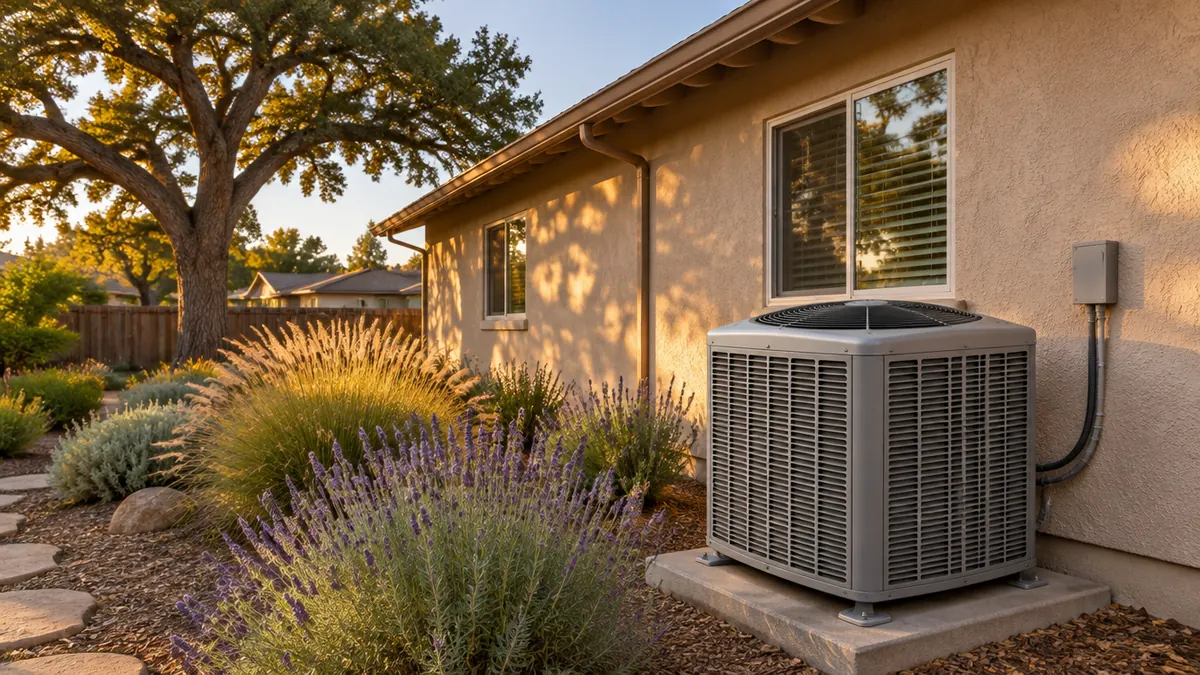
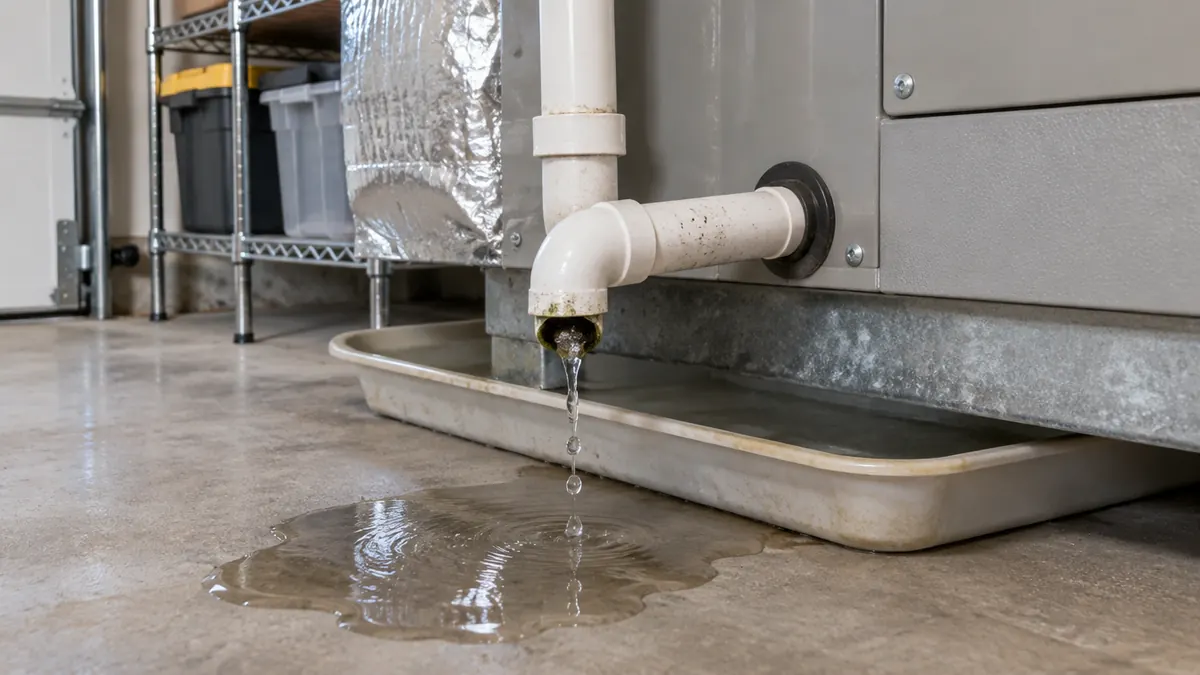
An air conditioner makes water every time it runs, but it should never leak it inside your home. As warm, humid air passes over the cold indoor coil, moisture condenses on the coil like water on a cold glass. That condensation drips into a drain pan and flows out through a drain line, usually a PVC pipe that ends outside or at a floor drain.
So water at the end of the drain line is a good sign. Water pooling around the indoor unit is not. One major manufacturer says a puddle near the indoor unit signals a problem, and that you should turn the system off and call for repair instead of letting it run.
That drain still matters in a dry climate. NOAA’s Climate of Sacramento report notes the extremely low relative humidity that comes with summer heat in the valley, so your AC may pull less water from the air here than it would in a humid state. It still makes condensate every time it runs, and the drain still has to carry it away. That counts double when the indoor unit sits in an attic or a garage, where a slow overflow can go unnoticed until it stains a ceiling or soaks a wall. EPA recommends keeping indoor humidity below 60%, ideally between 30% and 50%, to control mold; the guide to ideal indoor humidity explains how your AC fits in.
Why is my HVAC leaking water?
HVAC systems leak when condensation can’t get out: the drain line is clogged or disconnected, the drain pan is cracked or overflowing, the condensate pump has failed, or a frozen coil melts faster than the pan can handle. Where the water shows up is your best clue.
| What you see | Likely cause | DIY or pro |
|---|---|---|
| Pan full of water, system stopped cooling | Clogged drain line tripped the float switch | Look only; pro to clear the clog |
| Water around the indoor unit, musty smell | Drain line clogged with mold, mildew or debris | Pro |
| Ice on copper lines, puddle as it melts | Frozen evaporator coil | DIY: turn off and thaw; pro if it returns |
| Steady drip under the unit, rust in the pan | Cracked or corroded drain pan | Pro: pan replacement |
| Small reservoir overflowing near the unit | Condensate pump failed, clogged or lost power | DIY: check it’s plugged in; pro otherwise |
| Leak started right after installation or service | Unit not level, or a drain line without enough slope | Pro |
| Damp filter, sweating ducts or vents | Excess condensation from high humidity or duct problems | Pro |
The clogged drain line
The condensate line is a slow-moving pipe in a warm, damp spot, so it collects mold, mildew, dust and debris. One manufacturer notes a clogged line can also cause a musty smell. Once it’s blocked, a clogged drain line can cause water to back up and overflow into your home. Some systems have a safety float switch that interrupts the cooling call to help prevent an overflow. If your AC quit and the pan is full, that switch did its job.
Pans, pumps and installation
Drain pans can corrode or crack, a problem that’s more common in older systems, or fill with dust and overflow. Some systems use a small condensate pump to move the water out; if that pump fails, clogs or loses power, the water backs up and overflows. And if the system wasn’t installed correctly, the unit may not be level, or the drain line may not slope downward enough to drain freely.
What should you do when your AC is leaking water?
Turn cooling off, contain the water, and dry everything quickly. Then do a few quick visual checks to figure out whether this is a filter-and-ice problem or a drain problem.
Safety first: Water and electricity don’t mix. If water has reached the unit’s wiring, an outlet or an extension cord, switch the system off at the thermostat and stay out of the standing water. Don’t open the unit’s sealed panels. If you smell gas near a furnace or a carbon monoxide alarm sounds, leave the home now. Once you’re outside, call 911, then PG&E (see PG&E’s Report an Emergency page). Don’t flip switches on the way out.
6 steps when you find water
- Turn cooling off. Switch the thermostat from Cool to Off so the system stops making more water.
- Contain and dry it. Put a bucket under any drip and soak up standing water with towels or a wet/dry vacuum. EPA advises drying water-damaged areas and items within 24 to 48 hours to prevent mold growth.
- Look for ice. Check the copper lines and the indoor unit. Ice means a frozen coil: leave cooling off until it melts completely. Our guide to an AC freezing up covers the causes.
- Check the filter. A clogged filter restricts airflow and can freeze the coil, and the meltwater overwhelms the pan. Replace it if it’s dirty or wet.
- Look at the drain pan, float switch and drain line. With a flashlight, look for standing water in the pan, rust or cracks, a drain line that has slipped loose, or a condensate pump that’s unplugged. Don’t disable or override the float switch.
- Call for the drain work. Clearing a clogged line, replacing a pan and checking for a refrigerant leak are best left to a technician, especially if you’re not sure which pipe is the condensate drain.
Why is my air filter wet?
A wet air filter means moisture is building up inside your system where it shouldn’t. One major manufacturer lists a damp filter as a sign of excess condensation, along with water on AC vents and ducts that look like they’re sweating.
The usual sources:
- A backed-up drain pan or line. Clogged condensate lines and drain pan problems lead to standing water and overflow.
- A frozen coil thawing. When the ice melts, the extra water can overwhelm the drain pan.
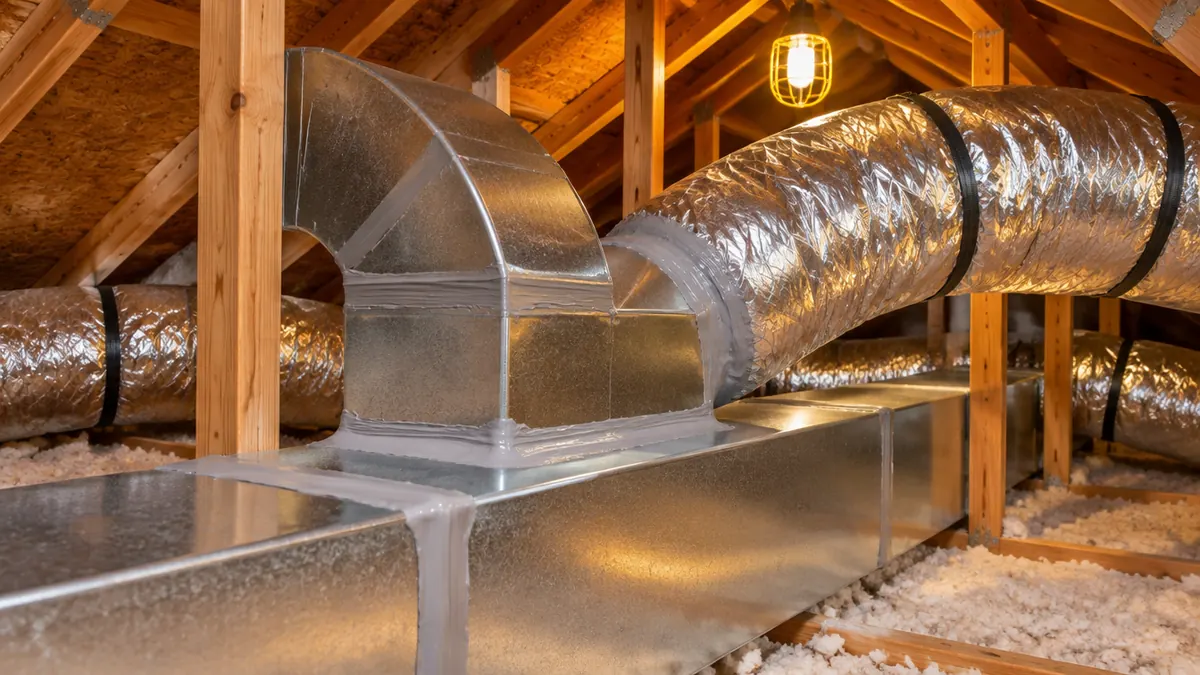
- Leaky or poorly insulated ducts. Warm, humid air meets cold metal and condenses.
- High indoor humidity. Persistent condensation on windows, walls or vents is a sign the house is too humid. In a dry Sacramento summer that’s an unusual finding, so check the drain and the ducts before you blame the weather.
Replace a soaked filter right away and dry the slot. Then work through the checks above. If the filter keeps getting wet, the drain, the coil or the ducts need a technician. For condensation on ductwork in attics and crawlspaces, see why air ducts sweat and our guide to leaky ductwork.
Why is my furnace leaking water?
A furnace leaks water either because it’s a high-efficiency model whose condensate drain, pump or line has a problem, or because the water is really coming from the air conditioner coil that sits on top of it.
High-efficiency furnaces make water
Condensing, high-efficiency furnaces naturally produce condensation as they pull extra heat out of the combustion gases. That water is supposed to leave through a drain line. Water pooling around the base of the furnace or dripping from the system is not normal. Common causes include a clogged condensate drain, a failed condensate pump and, on a freezing winter night, a condensate line that has iced over. NOAA’s Climate of Sacramento report describes a mild climate year-round, so in a Sacramento home, check for a clog or a failed pump first.
Standard furnaces usually don’t
One manufacturer says a furnace itself would only leak water if it’s a high-efficiency unit; otherwise, the water is an air-conditioning condensate issue. In many homes the AC’s indoor coil and its drain pan sit right on top of the furnace, so a standard furnace with water around it in summer usually has an AC drain problem. The steps above apply.
Humidifiers and the serious one
A furnace-mounted humidifier, its tubing or its valve can leak too. If the water is coming from the humidifier, shut off its water supply if you can do it safely. Rarely, a cracked or corroded heat exchanger can leak, and it can also let carbon monoxide into the airflow. Don’t try to inspect it yourself: turn the furnace off and call for furnace repair. Learn more in signs of a cracked heat exchanger and carbon monoxide safety.
Why is my mini-split leaking water?
A ductless mini-split leaks for the same core reasons as central air: a dirty filter that freezes the coil, a clogged drain line, a rusted or cracked drain pan, low refrigerant, or an indoor unit that was mounted without the right tilt and slope.
A few things are specific to mini-splits:
- Filters live in each indoor head. They’re reusable and need regular cleaning. A clogged one restricts airflow and can freeze the coil, which drips when it thaws.
- Heat mode shouldn’t leak. Condensation forms during cooling, so water dripping while the system heats points to a problem.
- Installation matters. A poor mount, a drain line without enough slope, or a head that tilts forward can make the pan overflow.
If the coil is iced, turn the unit off, let it thaw and keep towels or a bucket underneath. For anything beyond a filter cleaning, call an HVAC technician. If the system is new, call the company that installed it first, since some DIY repairs can void a manufacturer’s warranty. Comparing systems? See mini-split vs. central air.
How do you keep your AC from leaking?
Keep air flowing over the coil and keep the drain clear. Four habits cover most of it:
- Change or clean filters on schedule. Manufacturers generally call for a new filter every 1 to 3 months. Here’s how often to change your air filter.
- Keep the drain flowing. EPA recommends keeping AC drip pans clean and drain lines unobstructed and flowing properly. Have the pan and line checked at every cooling tune-up.
- Watch for condensation. One manufacturer suggests a whole-house dehumidifier for homes in humid areas that see condensation on vents or windows often. In Sacramento’s dry summers, condensation that keeps coming back is unusual, so have the ducts and airflow checked first.
- Fix duct leaks and missing insulation. Sealing and insulating ductwork cuts the condensation that soaks filters and drips from vents.
When should you call a technician about a water leak?
Call when the leak comes back after you’ve dried it and changed the filter, when the drain pan is full or damaged, or when water is damaging ceilings, floors or drywall.
- The pan is full and the float switch has shut the system off
- You can’t tell where the water is coming from
- Ice keeps forming on the coil or lines, which can mean a refrigerant leak
- The leak started right after installation or service
- Water is coming from a high-efficiency furnace or a humidifier you can’t shut off
Don’t wait on a slow leak: water that sits can lead to mold, and EPA’s advice is to dry wet areas within 24 to 48 hours. If you’re wondering about costs, the AC repair cost guide explains what drives a repair bill. When you’re ready, schedule AC repair and ask the technician to show you where the water was coming from.
Who can fix a leaking AC in the Sacramento area?
JM Comfort is a locally owned heating and air conditioning contractor based in North Highlands, serving North Highlands, Sacramento and nearby communities. It’s a licensed C-20 HVAC contractor (CSLB #1016274), licensed since 2016 and bonded, with workers’ comp insurance on file; you can check the license on the CSLB website. The same team repairs central air conditioners and gas furnaces in homes, and handles AC tune-ups, ductwork repair and sealing, and indoor air quality work such as filtration and ventilation.
Call (916) 247-6358 or book AC repair online and we’ll call you back.
Frequently asked questions
Is it safe to run my AC while it’s leaking?
It’s better not to. Running a leaking system can cause more damage, both to the equipment and to your floors and ceilings. Turn cooling off at the thermostat until you know where the water is coming from.
Why did my AC stop cooling and the drain pan is full?
Some systems have a float switch that shuts off cooling when water backs up in the pan, so the system stops before it overflows. A full pan usually means a clogged drain line. Don’t disable or override the switch; once a technician clears the clog, the system can run normally again.
Why does my AC smell musty and leak water?
A condensate line clogged with mold, mildew and debris can cause both. The standing water backs up into the pan and the growth gives off a musty smell. That clog needs clearing, and the pan and line should be checked during a tune-up.
Is water dripping outside from my AC normal?
Water coming out the end of the condensate drain line is normal; that’s moisture leaving the system the way it should. Ice on the copper refrigerant lines is a different story: it points to a frozen coil. Turn cooling off and read why an AC freezes up.
Can a leaking AC cause mold?
It can. EPA advises drying water-damaged areas within 24 to 48 hours to prevent mold growth, and keeping AC drip pans clean and drain lines flowing. Porous materials such as ceiling tiles and carpet may have to be thrown away if they become moldy.
Does JM Comfort fix AC water leaks?
Yes. Clearing a clogged condensate line, replacing a damaged drain pan and finding out why a coil froze are all part of AC repair, which JM Comfort handles for homes in North Highlands, Sacramento and nearby communities. Call (916) 247-6358 or book online.
Sources
- AC Leaking Water? Find Out Why and What to Do (Trane)
- Why Is My AC Leaking Water? (Carrier)
- Why Is My AC Leaking Water? Causes & Fixes (Bryant)
- AC Not Turning On? Causes, Fixes & Troubleshooting Guide (Bryant)
- Why Is My Furnace Leaking Water? Causes & Fixes (Bryant)
- Mini-Split Leaking Water: Causes and Solutions (Trane)
- HVAC Condensation: Causes and Solutions (Trane)
- A Brief Guide to Mold, Moisture and Your Home (U.S. Environmental Protection Agency)
- Climate of Sacramento, California (NOAA Technical Memorandum NWS WR-272, revised June 2005) (National Weather Service, NOAA)
- Report an Emergency (PG&E)
Find this helpful? Add JM Comfort as a preferred source on Google.