AC Short Cycling: Why Your AC Keeps Turning On and Off
A healthy air conditioner runs in steady stretches. One that kicks on, runs a few minutes and quits, over and over, is telling you something. Here’s how to read it.
JM Comfort can help: AC repair for homes in Sacramento and nearby. Licensed C-20 HVAC contractor, CSLB #1016274.
You hear the outdoor unit start, the vents push cool air for a few minutes, and then everything clicks off. A few minutes later it starts again. That on-off rhythm is called short cycling, and it’s one of the ways an air conditioner tells you something is off. This guide explains what counts as short cycling, the causes worth checking first, why it shortens your system’s life, and when to call for AC repair.
What is AC short cycling?
AC short cycling is when your air conditioner turns on and off frequently without completing a full cooling cycle. The system shuts down early, then starts again soon after, often before the house reaches the temperature on the thermostat.
A healthy cycle looks different. One major manufacturer puts a normal cycle at about 10 to 20 minutes with breaks in between; another describes a steady 15 to 20 minutes, long enough to cool the air and pull moisture out of it. Both are rough guides, and a third points out that no single runtime defines normal for every home. What matters is the pattern: steady runs that end when the house is comfortable are normal. Runs of only a few minutes, several times an hour, are not.
Don’t confuse short cycling with its opposite. A system that runs for hours and never shuts off has a different set of causes, covered in why an AC runs constantly.
Why does my AC keep turning on and off?
Your AC keeps turning on and off because something is cutting its cycle short: restricted airflow, a thermostat giving bad readings, low refrigerant, a failing electrical part, or a system that’s too big for the house.
| Cause | Clues | Who fixes it |
|---|---|---|
| Clogged air filter | Weak airflow, gray filter, possible ice on the lines | You: replace the filter |
| Thermostat location | Thermostat in direct sun, near an oven or a supply vent | You, or a pro to relocate it |
| Weak batteries or bad wiring | Dim or blank display, erratic behavior | You: batteries; pro: wiring |
| Blocked vents or returns | Furniture or rugs over registers, closed vents | You: open and clear them |
| Frozen evaporator coil | Ice on the copper lines or indoor unit | You: thaw it; pro if it returns |
| Low refrigerant (a leak) | Short runs plus weak cooling, ice, hissing | Pro |
| Failing capacitor or relay | Outdoor unit cuts in and out while the thermostat is still calling for cooling | Pro |
| Oversized system | Cools fast, shuts off, rooms uneven | Pro: sizing review at replacement |
Airflow
A clogged filter is the classic cause. One major manufacturer says a filter that restricts airflow can make the system overheat and shut down as a safety precaution. Closed or blocked vents do the same thing on a smaller scale. Restricted airflow can also freeze the indoor coil, which brings its own on-off behavior; see why an AC freezes up.
The thermostat
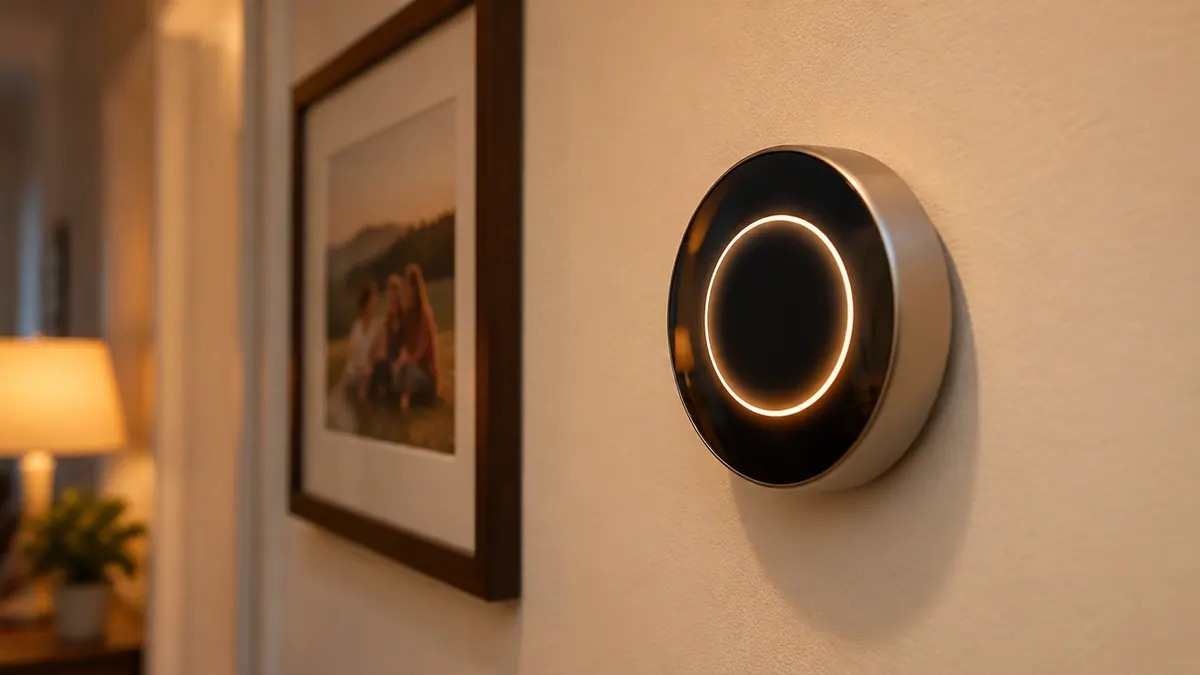
Your thermostat only knows the temperature of the air around it. Mount it in afternoon sun, beside a supply vent, or next to an oven or a drafty exterior door, and it reads the room wrong and shuts the system off too soon. Weak batteries and loose or damaged wiring can send erratic signals too. Our guide to a thermostat that’s not working covers the fixes.
Refrigerant and electrical parts
Low refrigerant is not a normal condition for a sealed system; it usually means a leak. One manufacturer explains that low refrigerant leads to erratic system pressure, and the unit shuts off early to protect itself. On the electrical side, a faulty capacitor or relay can cut power to the compressor on and off. Both are jobs for a technician.
Is short cycling bad for your AC?
Yes. Short cycling wears out parts faster, raises your energy use, and leaves your house less comfortable.
- Wear on the expensive parts. Every start puts strain on the compressor and fan motors. Two manufacturers call the compressor one of the most expensive parts of the system to repair or replace. If yours is already in trouble, read what to do when an AC compressor isn’t working.
- Higher bills. Starting the motor takes significantly more energy than keeping it running, so a system that starts over and over uses more power to do the same job.
- Less moisture removal. An AC removes humidity as it runs, so a short cycle removes less. In humid parts of the country, that shows up as a house that feels cool but clammy. Sacramento is different: NOAA’s Climate of Sacramento report notes the extremely low relative humidity that comes with summer heat in the valley, with July afternoons averaging about 29% at 4 p.m. (1971–2000 averages). Here, a clammy house is an unusual clue, so you may have to time the cycles to catch short cycling. EPA recommends keeping indoor humidity below 60%, ideally between 30% and 50%; see ideal indoor humidity.
- Rooms that never settle. The house may never reach the temperature you set, and an oversized system in particular can leave temperatures uneven from room to room.
Why does my AC turn on and off every few minutes?
If your AC turns on and off every few minutes, start with the causes you can check yourself: a dirty filter, a thermostat that’s misreading the room, or blocked airflow. Rule those out before you suspect refrigerant, electrical parts or sizing.
First, confirm what you’re hearing. On a warm afternoon, note when the outdoor unit starts and stops for about an hour. One major manufacturer flags a system that repeatedly shuts off after only a few minutes, or cycles about every 10 minutes, as possibly short cycling. Another says to watch for cycles that last only a few minutes, especially when they happen several times within an hour.
Also notice which part stops. If the outdoor unit cuts out while the indoor fan keeps running, tell the technician; it helps narrow the search.
How do you fix AC short cycling?
Fix short cycling by working from the easy causes to the hard ones: filter, thermostat, vents, then ice. If those don’t stop it, the remaining causes need a technician.
Safety first: Stick to the thermostat, the filter, the vents and a visual look for ice. Don’t open the outdoor unit’s electrical panel or touch capacitors, contactors or wiring. Refrigerant work is a job for a certified technician. If the system’s breaker has tripped, reset it once; if it trips again, leave it off and call.
- Replace a dirty filter. Turn the system off and check it. Manufacturers generally call for a new filter every 1 to 3 months, and ENERGY STAR notes that a dirty filter can damage your equipment.
- Check the thermostat. Set it to Cool with the fan on Auto, replace weak batteries, and look at where it’s mounted. If it sits in direct sun or right beside a supply vent, that alone can explain short runs. A blank display usually means it has lost power.
- Open every vent and return. Clear furniture, rugs and curtains away from registers and return grilles.
- Look for ice. Check the copper lines and the indoor unit. If you find ice, switch cooling off and let it melt completely before restarting.
- Time it again. Give the system a day. If it still cycles about every 10 minutes or less, it’s time for a professional inspection.
Can an oversized AC cause short cycling?
Yes. An air conditioner that’s too big for the house cools the air so fast that it shuts off before it has removed much humidity, then starts again as soon as the temperature creeps back up.
That’s why sizing matters when you replace a system. ACCA, the Air Conditioning Contractors of America, publishes Manual S, a guide for selecting and sizing home heating and cooling equipment. Its size limits account for regional outdoor conditions to prevent short cycling or safety switch trips. In California, the Energy Commission also says new HVAC systems require load calculations. Installation quality matters as much as the box itself: ENERGY STAR warns that improper installation can reduce a system’s efficiency by up to 30%.
When you get quotes for a new system, ask each contractor how they sized it: whether they ran a load calculation for your house, and how they chose the equipment from it, rather than matching the old unit’s size. Our guide to what size AC you need and the AC size calculator can help you check the numbers before you sign.
No repair makes an oversized system smaller, so if yours is otherwise healthy, you may decide to live with it until it’s time to replace it. If it’s also old and needs a big repair, the repair-or-replace calculator can help you weigh it.
When should you call a pro about short cycling?
Call a technician if short cycling continues after you’ve replaced the filter and checked the thermostat, or right away if ice keeps returning, the breaker trips a second time, or the house keeps getting warmer.
A good visit should test the system’s controls, too. ENERGY STAR’s maintenance checklist includes checking that the startup cycle works and that the system shuts off properly, and tightening electrical connections, since faulty connections can cause unsafe operation and shorten the life of major components. Ask the technician to explain which cause they found and what the repair involves before work starts. For more on that, see how to choose an HVAC company. Then schedule AC repair and let a technician find out why the cycle keeps getting cut short.
Who checks short cycling in the Sacramento area?
JM Comfort is a locally owned heating and air conditioning contractor based in North Highlands, serving North Highlands, Sacramento and nearby communities. It’s a licensed C-20 HVAC contractor (CSLB #1016274), licensed since 2016 and bonded, with workers’ comp insurance on file; you can check the license on the CSLB website. The same team repairs air conditioners and heat pumps in homes, and when a system is too far gone, handles AC and heat pump installation too.
Call (916) 247-6358 or book AC repair online and we’ll call you back.
Frequently asked questions
How long should an AC run before shutting off?
There’s no single number for every home, but manufacturers describe a normal cooling cycle as roughly 10 to 20 minutes, with breaks in between. One says a system that keeps cycling every 10 minutes or less should be professionally inspected.
Can a dirty air filter cause short cycling?
Yes. A clogged filter starves the system of airflow, and one manufacturer says that can make it overheat and shut down as a safety precaution. It can also freeze the indoor coil. Replace the filter first; see how often to change your air filter.
Can a thermostat cause my AC to short cycle?
It can. A thermostat in direct sun, next to a supply vent or near an oven reads the wrong temperature and shuts the system off too early. Weak batteries and loose wiring can send erratic signals too. Our thermostat troubleshooting guide walks through the fixes.
Is it OK to keep running an AC that short cycles?
While you run the basic checks, yes. But don’t let it drag on: every extra start adds wear to the compressor and fan motors. If you see ice on the lines, turn cooling off right away and let it thaw.
Does JM Comfort diagnose short cycling?
Yes. JM Comfort handles AC and heat pump repair for homes in North Highlands, Sacramento and nearby communities, and a technician will explain what’s cutting the cycle short, and your options, before any work starts. Call (916) 247-6358 or book online.
Sources
- What Is AC Short Cycling? Causes & Troubleshooting (Carrier)
- AC Short Cycling: Causes, Fixes & How to Prevent It (Bryant)
- Air Conditioner Short Cycling: What You Need to Know (Lennox)
- Common Thermostat Issues and How to Troubleshoot (Carrier)
- Manual S® Residential Equipment Selection (ACCA)
- Maintenance Checklist (ENERGY STAR)
- Heat & Cool Efficiently (ENERGY STAR)
- A Brief Guide to Mold, Moisture and Your Home (U.S. Environmental Protection Agency)
- Climate of Sacramento, California (NOAA Technical Memorandum NWS WR-272, revised June 2005) (National Weather Service, NOAA)
- 2025 Single-Family Heating, Ventilation, and Air Conditioning (HVAC) (California Energy Commission)
Find this helpful? Add JM Comfort as a preferred source on Google.