Do HVAC UV Lights Work? And What About Air Purifiers?
Air cleaners are sold with big promises. Here’s what EPA’s research actually says about furnace filters, portable purifiers, UV lights and ionizers, and how to match one to the problem you’re trying to solve.
JM Comfort can help: indoor air quality services for homes in Sacramento and nearby. Licensed C-20 HVAC contractor, CSLB #1016274.
Walk into any home store and you’ll find purifiers, UV lamps and ionizers promising cleaner, healthier air. Some deliver. Some don’t, and a few can make your air worse. This is the honest version, based on EPA’s consumer guidance, its technical review of home air cleaners, and the California Air Resources Board (CARB) rules for air cleaners sold in this state. It also covers where JM Comfort’s indoor air quality service, filtration and ventilation, fits in.
Are air purifiers worth it?
For airborne particles such as dust, pollen and smoke, a properly sized air purifier is usually worth it. For odors, chemical fumes or a moisture problem, it’s the wrong tool.
The evidence is solid on particles. EPA’s technical summary of residential air cleaners found that filtration in homes, mostly by portable air cleaners with a clean air delivery rate (CADR) sized to the room, typically cuts indoor particle levels by about 50%. Allergen levels in settled dust were less affected.
The evidence on health is real but smaller. Most studies EPA reviewed linked air cleaners to at least one improved health measure, including some allergy and asthma symptoms, but the improvements were typically modest. A purifier can help. It won’t transform a home with an underlying problem.
That’s why EPA puts filtration third. The most effective ways to improve indoor air are to reduce or remove the sources of pollutants and to ventilate with clean outdoor air. In EPA’s words, “Filtration does not replace the need to control pollutants and ventilate.”
Air filter vs. air purifier: what’s the difference?
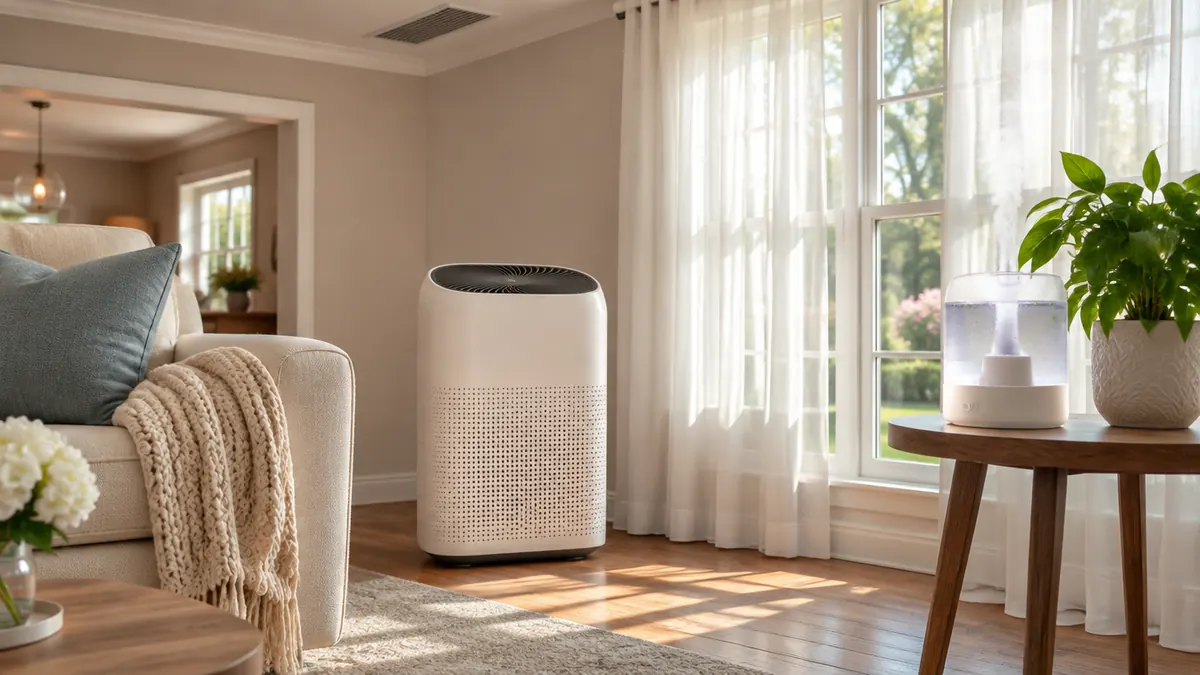
An HVAC air filter cleans air for the whole house, but only while your system is running. A portable air purifier cleans the air in one room whenever it’s switched on.
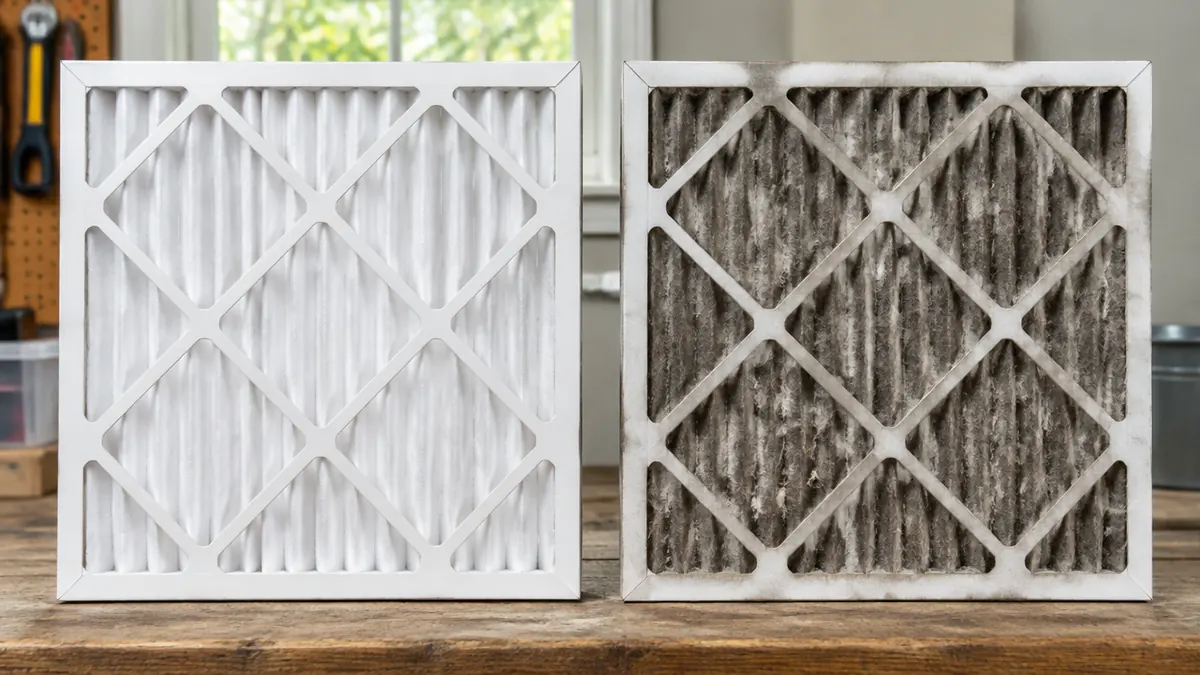
EPA describes portable air cleaners as designed for a single room or area and central furnace or HVAC filters as designed to filter air throughout a home. For the furnace filter, EPA recommends at least MERV 13, or the highest-rated filter your system fan and filter slot can accommodate, and suggests asking an HVAC technician where that limit is. For a portable unit, check the CADR: the higher the CADR, the more particles it can filter and the larger the area it can serve. Most packaging lists the largest room size the unit is meant for.
| Option | What it does | What EPA’s guidance says | Honest verdict |
|---|---|---|---|
| Furnace/HVAC filter | Traps particles house-wide while the system runs | Use at least MERV 13 or the highest your system can take | Start here |
| Portable filter-based purifier | Filters the air in one room | Higher CADR serves a larger area | Worth it for bedrooms, allergy season and smoke |
| In-duct electronic air cleaner | Charges particles and collects them in the ductwork | Can produce ozone; doesn’t remove gases or odors | Only a certified, low-ozone model |
| HVAC UV light | Shines UV-C on the coil or into the airstream | Limited effect on airborne germs and mold in typical home units | Coil add-on at most; not an air cleaner |
| Ionizer | Charges particles so they stick to plates or room surfaces | Less effective than high-efficiency filters; may produce ozone | Rarely the best choice |
| Ozone generator | Makes ozone on purpose | Avoid | Don’t buy one |
Whichever filter you use, change it on time. EPA notes manufacturers typically recommend replacement every 60 to 90 days, and sooner if filters come out heavily soiled. For the details, read how to pick a MERV rating and how often to change your air filter.
Do whole house air purifiers work?
They can, when “whole house” means a high-efficiency filter or a certified air cleaner in your ductwork, but only while air is moving through it.
EPA points out that furnace and HVAC filters clean the air only when the system is operating. To get more filtration, the system has to run longer, which can raise electricity costs and affect humidity control. The guide to ideal indoor humidity explains how the fan setting affects moisture.
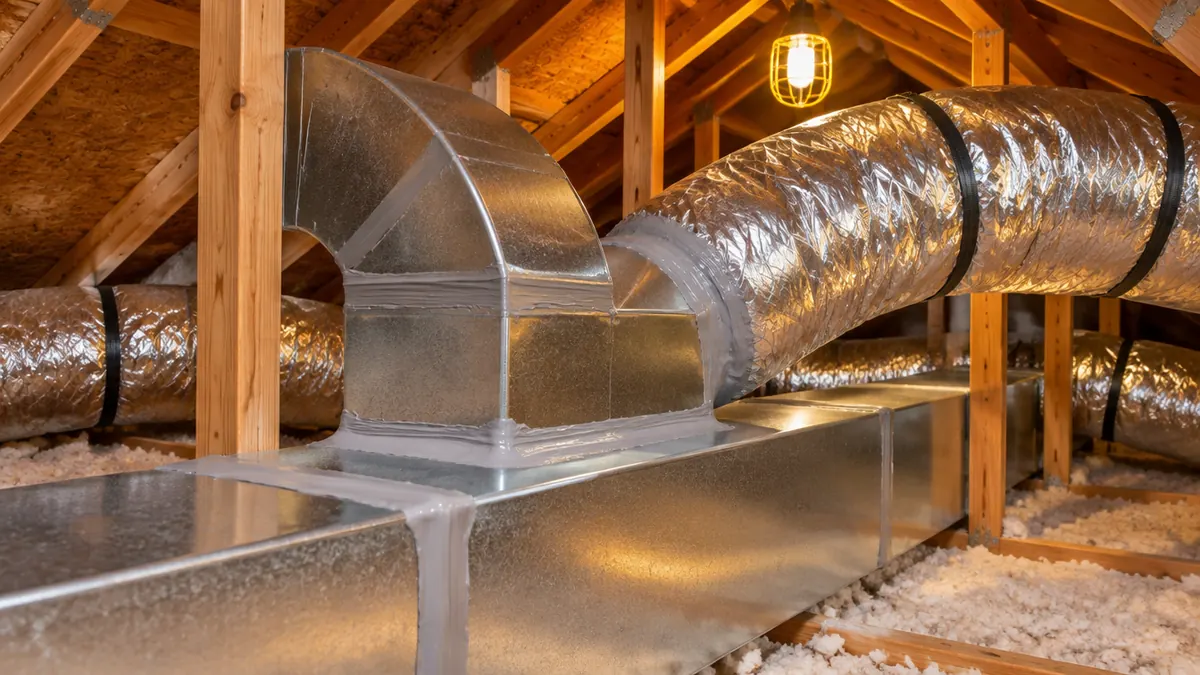
Electronic in-duct cleaners, such as electrostatic precipitators, are a different story from filters. EPA’s technical summary notes they remove small particles but don’t remove gases or odors, and that because they use high voltage, they may produce ozone. In California, that’s regulated. CARB says all portable indoor air cleaning devices sold in the state have had to be CARB-certified since 2010, and electronic in-duct air cleaning devices have been covered since October 2020. Certified electronic units must meet an ozone emission limit of 0.050 parts per million.
Read the fine print, though. CARB says its certification doesn’t reflect an air cleaner’s effectiveness, and that it doesn’t evaluate how well air cleaners remove pollutants. Certification tells you a device passed the ozone test, not that it cleans your air.
Do HVAC UV lights work?
Mostly not for cleaning the air you breathe. EPA says typical UV lights used in homes have limited effectiveness in killing bacteria and molds, though a properly designed one can help keep the cooling coil and drain pan from growing mold and bacteria.
Here’s the reasoning, all from EPA:
- The dose is too low for the airstream. Most mold and bacterial spores need much higher UV exposure than a typical home unit provides. Air rushes past the lamp in seconds, too briefly for the light to do much.
- Coils are a better target. A coil sits under the lamp all day. One study EPA cites found a 99% reduction in microbes growing on exposed HVAC surfaces, but only a 25% to 30% drop in airborne bacteria.
- Dead spores still cause allergies. EPA notes dead mold spores can still produce allergic reactions, so UV lights may not reduce allergy and asthma symptoms.
- UV doesn’t capture anything. EPA says UV doesn’t appear effective as a sole control device and should be used in addition to filtration, not as a replacement for it.
- Some lamps make ozone. Uncoated UV-C lamps can generate ozone, which is why some manufacturers coat their lamps. EPA also notes there’s no standard test method to rate and compare UV cleaners in home HVAC systems.
The honest verdict on UV lights: If you want cleaner air to breathe, put your money into a better furnace filter or a portable purifier instead. If your coil or drain pan keeps growing mold, a UV lamp aimed at the coil may help, but the real fix is the moisture problem behind it.
Are ionizers safe?
Not all of them. Ionizers and electrostatic precipitators use high voltage and may produce ozone, a lung irritant, and EPA’s technical summary notes that some models can raise indoor ozone above public health standards.
They’re also not the strongest cleaners. EPA reports that ionizers were found to be less effective at removing particles than high-efficiency particle filters, and that ionizers and electrostatic precipitators don’t remove gases or odors. Ionizers work by charging particles so they stick to collector plates or to other surfaces in the room.
If you still want an electronic air cleaner, check that it’s on CARB’s list. CARB’s “electronic” category, which includes ionizers and electrostatic precipitators, covers devices that may be capable of generating ozone but tested at no more than 0.050 parts per million. Its “mechanical” category covers devices that use only physical filtration and don’t generate ozone or ions.
What about ozone generators?
Don’t use them. EPA says ozone at levels that don’t exceed public health standards has little potential to remove indoor air contaminants, and that it would take concentrations well above those standards to be effective.
Ozone itself is the problem. EPA warns that inhaled ozone can damage the lungs; that relatively low amounts can cause chest pain, coughing, shortness of breath and throat irritation; and that it may worsen asthma. At levels within public health standards, it doesn’t effectively remove viruses, bacteria or mold, and it can react with other chemicals indoors to form harmful or irritating by-products. CARB recommends that these ozone generators not be used.
One trap to watch for: some ozone generators carry an EPA establishment number on the box. EPA says that number doesn’t mean it has found the product safe or effective.
What works best for wildfire smoke?
Filters do, not UV lights or ionizers: CARB’s smoke advice is a certified portable air cleaner run continuously on its highest setting, plus a central filter with a MERV rating as high as your system can handle.
EPA’s wildfire guidance adds two points. Make sure the portable air cleaner doesn’t produce ozone, and if your HVAC system has a fresh-air intake, set it to recirculate or close the outdoor intake damper. CARB also says not to run swamp coolers or whole-house fans while it’s smoky. In practice, that points to a filter-based portable unit in the bedroom and a MERV 13 filter in the furnace, if your system can take one. For room sizing, clean rooms and air quality alerts, see wildfire smoke and your HVAC.
Which air quality upgrade should you start with?
Start with the steps EPA ranks highest, then add filtration where it does the most good.
If dust is your main complaint, also read whether air duct cleaning is worth it before you pay for it, and check your ducts for leaks with the guide to leaky ductwork. Unfamiliar term? Look it up in the HVAC glossary.
Why do Sacramento-area homeowners call JM Comfort?
JM Comfort is a locally owned heating and air conditioning contractor based in North Highlands, serving North Highlands, Sacramento and nearby communities. It’s a licensed C-20 HVAC contractor (CSLB #1016274), licensed since 2016 and bonded, with workers’ comp insurance on file; you can check the license on the CSLB website. The indoor air quality service covers filtration and ventilation, the steps EPA ranks first, and the same team handles AC and furnace repair, tune-ups and ductwork repair and sealing for homes.
Call (916) 247-6358 or book an indoor air quality visit online and we’ll call you back.
Frequently asked questions
Do air purifiers help with allergies?
They can help some. EPA’s review linked air cleaners to reductions in some allergy and asthma symptoms, but the improvements were usually modest, and allergen levels in settled dust were less affected than airborne particles. Pair a purifier with source control: wash bedding, vacuum and keep humidity in check.
Do air purifiers remove odors and chemicals?
Most don’t. EPA notes the CADR rating covers particles only, and that ionizers and electrostatic precipitators don’t remove gases or odors. Activated carbon filters can work for gases when they contain a large amount of carbon. EPA says research hasn’t shown that UV, plasma or photocatalytic oxidation removes gases effectively in home units.
Can a UV light kill mold in my AC?
Not reliably. EPA says most mold spores need much higher UV exposure than a typical home unit provides, and dead spores can still trigger allergies. Mold in an AC is a moisture problem first. See indoor humidity and HVAC mold for what to fix.
Is a higher MERV filter always better?
Only up to what your system can handle. EPA says higher MERV filters trap particles better, and recommends at least MERV 13 or the highest your system fan and filter slot can accommodate. A technician can tell you where that limit is. Our guide to picking a MERV rating has more.
How often should I change an air purifier or furnace filter?
Follow the manufacturer. EPA notes that manufacturers typically recommend replacing filters every 60 to 90 days, and that you should change them more often if they come out heavily soiled. See how often to change your air filter.
What does JM Comfort’s indoor air quality service cover?
Filtration and ventilation, for homes in North Highlands, Sacramento and nearby communities. A technician can look at your filter slot, airflow and any fresh-air intake so your central system filters as much air as it safely can. Call (916) 247-6358 or book online.
Sources
- Guide to Air Cleaners in the Home (U.S. Environmental Protection Agency)
- Residential Air Cleaners: A Technical Summary, 3rd Edition (PDF) (U.S. Environmental Protection Agency)
- Does ultraviolet (UV) radiation from UV lamps kill mold? (U.S. Environmental Protection Agency)
- Ozone Generators that are Sold as Air Cleaners (U.S. Environmental Protection Agency)
- What is a MERV rating? (U.S. Environmental Protection Agency)
- List of CARB-Certified Air Cleaning Devices (California Air Resources Board)
- Potentially Hazardous Ozone Generators Sold as Air Purifiers (California Air Resources Board)
- Smoke Ready California (California Air Resources Board)
- Wildfires and Indoor Air Quality (IAQ) (U.S. Environmental Protection Agency)
Find this helpful? Add JM Comfort as a preferred source on Google.