DIY HVAC Maintenance Checklist: Safe Spring and Fall Tasks
Most of what keeps a heating and cooling system healthy takes a few minutes and no special tools. Here are the safe homeowner tasks, how often to do them in a Sacramento-area home, and where your part ends and the technician’s begins.
JM Comfort can help: HVAC tune-ups for homes in Sacramento and nearby. Licensed C-20 HVAC contractor, CSLB #1016274.
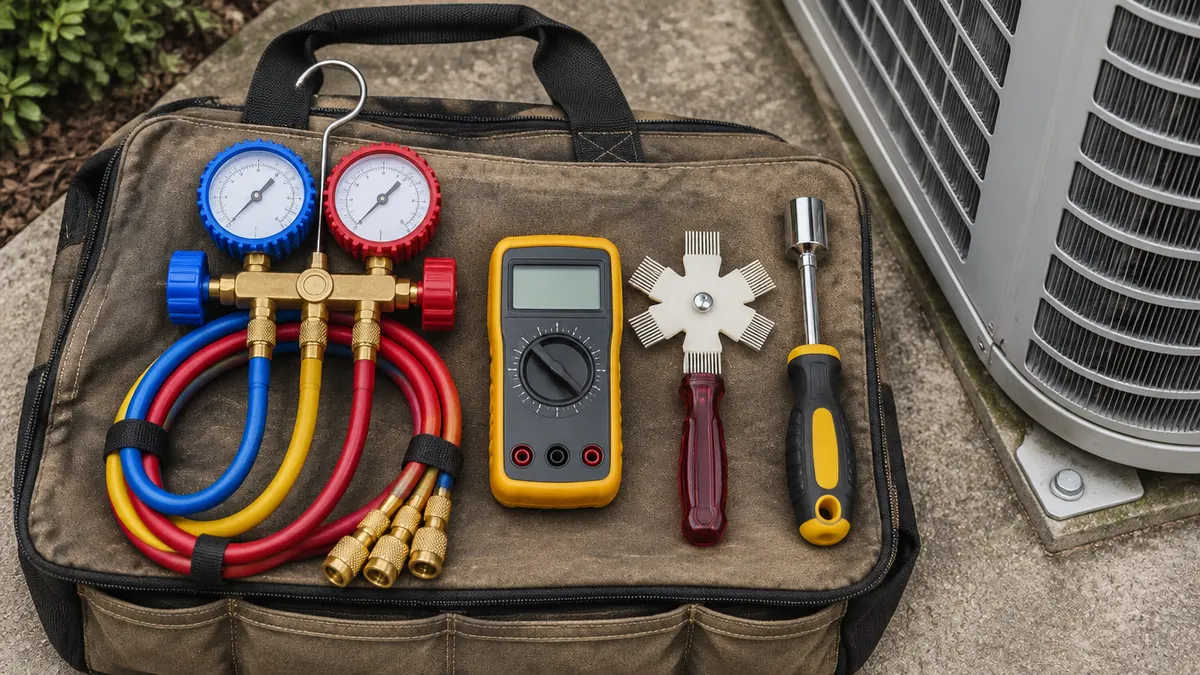
You don’t need gauges or a meter to take good care of your heating and cooling system. A handful of safe homeowner tasks, done monthly and at the start of each season, keep air moving and help a technician catch the rest at a yearly tune-up. This checklist covers what to do, when to do it in a Sacramento-area home, and where to stop. For everything past that line, book an HVAC tune-up.
Safety first: Turn the power off before you clean the outdoor unit, and don’t open its electrical panel or touch wiring or refrigerant lines. If you smell gas, get everyone out of the house now. Once you’re outside and away from the house, call 911, then PG&E (see PG&E’s Report an Emergency page); don’t flip switches on your way out. If a carbon monoxide alarm sounds, get outside to fresh air immediately, then call 911.
How do you do HVAC maintenance yourself?
You do HVAC maintenance yourself by sticking to the safe jobs: check the air filter, keep the outdoor unit clean and clear, watch the condensate drain, look after the thermostat and test your carbon monoxide detectors.
Those tasks matter more than they look. ENERGY STAR says a dirty filter can increase energy costs and damage your equipment, leading to early failure. One major manufacturer says a buildup of dirt and grime on the outdoor coil can cause reduced airflow and even a system shutdown. Both are problems you can head off in a few minutes.
What you can’t do is replace the yearly tune-up. ENERGY STAR still recommends having a contractor do annual pre-season check-ups, because coils, refrigerant, electrical connections and gas burners need tools and training. Your job is to keep the system breathing between those visits.
What’s on an HVAC maintenance checklist for homeowners?
A homeowner checklist has one monthly task, the filter, plus a short list of seasonal ones. Here it is at a glance.
| Task | How often | Best time |
|---|---|---|
| Check the air filter; replace it if dirty | Every month; replace at least every 3 months | Year-round, and more often during wildfire smoke |
| Clear debris and rinse the outdoor coil | At least once a year | Spring, before cooling season |
| Cut plants back 2 feet from the outdoor unit | Each season | Spring and fall |
| Look at the condensate drain and drain pan | Regularly while the AC runs | Cooling season |
| Replace thermostat batteries; check settings | Each season, or when the screen dims | Spring and fall |
| Check carbon monoxide detector batteries | Twice a year | When the clocks change |
| Book a professional tune-up | Once a year per system | Cooling in spring, heating in fall |
The full step-by-step version, with tools, is in the how-to on this page. The seasonal checklists below put the tasks in order.
How often should you check and change the air filter?
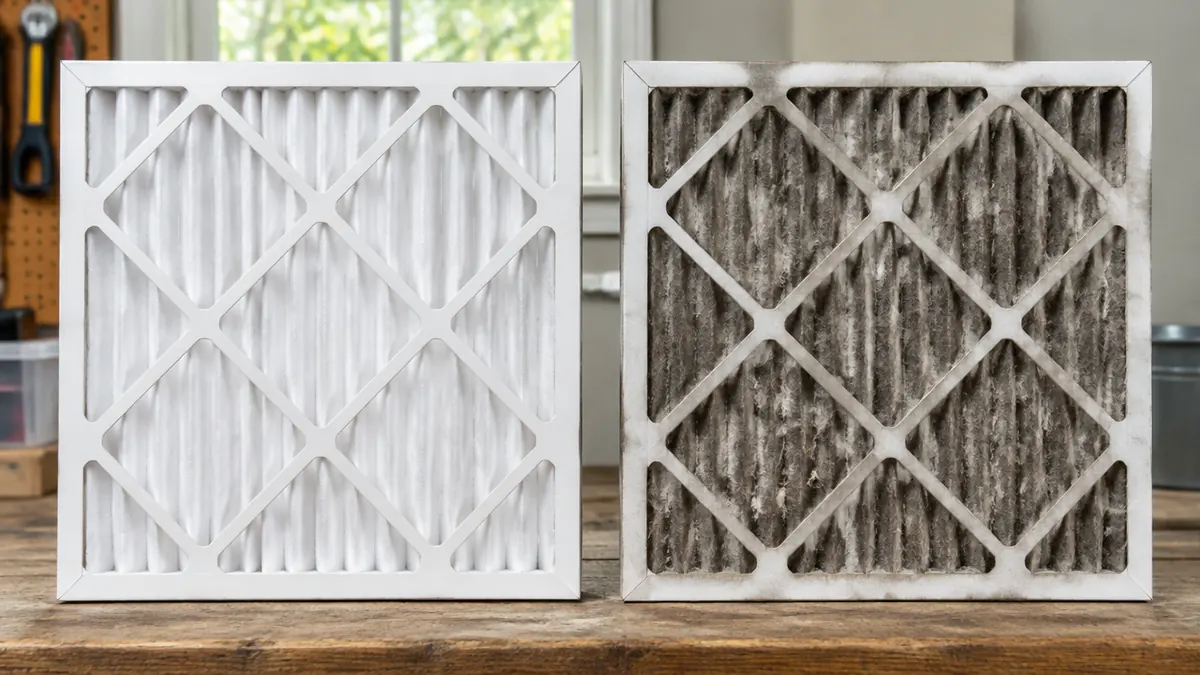
Check the air filter every month and change it when it’s dirty; ENERGY STAR says to change it at least every 3 months.
A Sacramento summer is hard on filters. NOAA’s 1991–2020 climate normals for Sacramento Executive Airport count about 76 days a year at 90°F or hotter, and on those days the system moves a lot of air through that filter, so don’t skip the monthly look. Wildfire smoke adds to the load. When smoke is in the air, the EPA suggests a high-efficiency filter, such as MERV 13, if your system can take it, and says to plan on replacing the filter more often than the manufacturer recommends. Keep a spare or two on hand. See wildfire smoke and your HVAC for the system settings that help.
When you replace it, match the size printed on the old filter’s frame and point the airflow arrow toward the indoor unit. A clogged filter cuts airflow, and one major manufacturer says changing it regularly, generally every 1 to 3 months, is a habit worth building. For filter types and ratings, see how often to change your air filter and which MERV rating to use.
How do you clean an AC condenser?
Clean an AC condenser by turning the power off, clearing away debris, and rinsing the coil gently with a garden hose from the top down, never with a pressure washer.
- Turn it off. Set the thermostat to Off, then switch off the AC or heat pump breaker in your main electrical panel. One major manufacturer says to always turn off the power before coil maintenance.
- Clear the debris. Pick up leaves, sticks and grass clippings around the unit and on top of it. Use a soft-bristle brush to sweep loose dirt off the fins.
- Rinse gently. With a garden hose, rinse the coil from the top down, working around all four sides. Don’t skip the back of the unit, where dirt often builds up against the house.
- Protect the fins. Skip the pressure washer and aggressive brushing: the aluminum fins bend easily, and bent fins restrict airflow. Avoid harsh chemicals such as bleach or ammonia.
- Give it room. Trim shrubs and grass so plants stay at least 2 feet from the sides of the unit.
- Turn it back on. Switch the breaker on, set the thermostat to Cool, and confirm the outdoor fan spins.
Aim for at least once a year; the same manufacturer suggests cleaning more often in dusty or polluted areas. Leave the unit’s electrical panel, the fan motor and the refrigerant lines alone. The indoor coil is a different story too: one major manufacturer recommends professional cleaning for indoor evaporator coils, and it’s part of a thorough tune-up.
How do you clean an AC drain line?
For a homeowner, cleaning the AC drain line mostly means watching it and keeping its outdoor end clear; clearing a clog inside the line is a job for a technician, and it’s part of a thorough tune-up.
The condensate drain line carries the water your AC pulls out of the air from the indoor coil to a drain outside. Even in a dry Sacramento summer, an AC that runs for hours makes water. As part of controlling moisture and mold, the EPA advises keeping air conditioning drip pans clean and drain lines unobstructed and flowing properly. Here’s your part:
- Find both ends. The line starts at the drain pan under the indoor unit and ends outdoors, often near the foundation.
- Watch for drips. One major manufacturer says that if the AC is running but no water is dripping from the drain pipe, you likely have a clogged line.
- Keep the exit clear. Pull mulch, soil and plants away from the outdoor end so water can get out.
- Know the warning signs. Puddles near the indoor unit, musty smells from the unit or vents, or a system that shuts off or won’t turn on can all point to a clog.
- Leave the float switch alone. Many systems have a float switch that shuts the system down when the pan fills. Don’t disable or override the switch; it’s preventing water damage.
When you see those signs, the same manufacturer recommends calling a technician, and its technicians typically inspect and clear the line during annual maintenance. If water is already on the floor, see why an AC leaks water. The EPA says to dry water-damaged areas and items within 24 to 48 hours to prevent mold growth.
What HVAC maintenance should you do in spring?
In spring, get the cooling side ready before the 90-degree days arrive: fresh filter, clean outdoor unit, clear drain, a quick cooling test, and a tune-up on the calendar.
If the test run turns up warm air, start with why your AC is blowing warm air, and see the best thermostat settings for summer.
What HVAC maintenance should you do in fall?
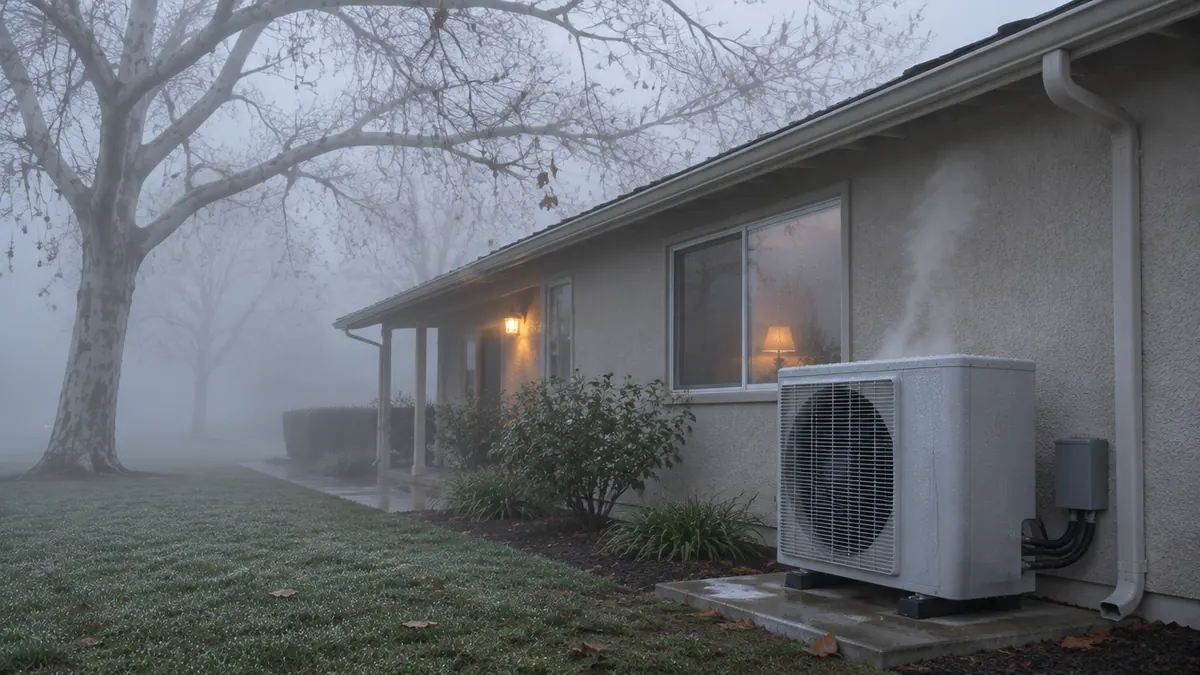
In fall, switch your attention to heat and safety before the foggy, frosty months: fresh filter, a heating test before the first cold night, carbon monoxide detector checks, and a heating tune-up.
Sacramento winters are mild, but NOAA’s normals still count about 15 nights a year at 32°F or below, nearly all of them between December and February, so test the heat before the first cold snap rather than during it. The CDC recommends battery-operated or battery back-up carbon monoxide detectors near every sleeping area, and the California Air Resources Board says state law requires CO detectors in homes with a fuel-burning appliance, such as a gas furnace, or an attached garage. If the heat smells odd when it first comes on, see why a furnace smells to know which smells mean trouble. Wondering about a cover for the AC? Read whether to cover your AC in winter.
What HVAC maintenance should you leave to a technician?
Leave anything involving refrigerant, electrical connections, gas, burners, the heat exchanger or the inside of the equipment cabinet to a technician.
ENERGY STAR’s checklist shows why: a contractor tightens electrical connections and measures motor voltage and current, lubricates moving parts, cleans the evaporator and condenser coils, checks refrigerant levels, adjusts blower components, and on gas heat checks gas connections, gas pressure, burner combustion and the heat exchanger. Loose connections can be unsafe, and gas leaks or a cracked heat exchanger can be a fire hazard and health risk. Refrigerant work is a job for a certified technician.
Call sooner than the next tune-up if a breaker trips a second time after one reset, ice keeps coming back on the refrigerant lines, water collects around the indoor unit, or the system makes new grinding or banging noises. See what HVAC noises mean and why an AC freezes up.
Why do Sacramento-area homeowners call JM Comfort?
Homeowners call JM Comfort when the checklist reaches the technician’s side of the line. JM Comfort is a locally owned heating and air conditioning contractor based in North Highlands and a licensed C-20 HVAC contractor (CSLB #1016274) since 2016, bonded, with workers’ comp insurance on file. JM Comfort does tune-ups and maintenance on air conditioners, furnaces and heat pumps, plus AC and heating repair, ductwork and indoor air quality work, for homes in North Highlands, Sacramento and nearby communities.
When your checklist is done and it’s time for the technician’s part, call (916) 247-6358 or book a tune-up online. Learn more about HVAC tune-ups and maintenance.
Frequently asked questions
Can I use a pressure washer on my AC unit?
No. One major manufacturer says to rinse the outdoor coil gently with a garden hose rather than a pressure washer. The coil’s thin aluminum fins bend easily, and bent fins restrict airflow.
Should I clean the indoor evaporator coil myself?
No. The indoor coil sits inside the air handler or furnace cabinet, and one major manufacturer recommends professional cleaning for it. Coil cleaning is part of a thorough HVAC tune-up.
Can I check or add refrigerant as part of DIY maintenance?
No. Refrigerant work is a job for a certified technician with the right gauges. ENERGY STAR lists checking and adjusting refrigerant as a contractor task, because too much or too little lowers efficiency and equipment life.
Does DIY maintenance replace a professional tune-up?
No. Your tasks keep the system breathing between visits, but ENERGY STAR still recommends a contractor’s pre-season check-up every year: cooling in spring, heating in fall. The technician handles coils, refrigerant, electrical connections and gas burners.
How often should I replace a carbon monoxide detector?
The CDC says to replace it following the manufacturer’s instructions or every 5 years, and to keep battery-operated or battery back-up detectors near every sleeping area. California law requires CO detectors in homes with a fuel-burning appliance or an attached garage. If one sounds, get outside to fresh air immediately, then call 911.
Does JM Comfort do spring and fall tune-ups?
Yes. JM Comfort, a licensed C-20 HVAC contractor based in North Highlands, does AC, furnace and heat pump tune-ups for homes in North Highlands, Sacramento and nearby communities. Call (916) 247-6358 or book online.
Sources
- Maintenance Checklist (ENERGY STAR)
- Heat & Cool Efficiently (ENERGY STAR)
- How to Clean AC Coils | Improve Efficiency & Comfort (Bryant)
- AC Not Blowing Cold Air? Learn What to Do (Trane)
- How to Clean AC Drain Line | AC Maintenance Guide (Carrier)
- A Brief Guide to Mold, Moisture and Your Home (US EPA)
- Wildfires and Indoor Air Quality (IAQ) (US EPA)
- Carbon Monoxide (CO) Poisoning Basics (CDC)
- Combustion Pollutants & Indoor Air Quality (California Air Resources Board)
- 1991-2020 Annual/Seasonal Climate Normals: Sacramento Executive Airport, CA (USW00023232) (NOAA National Centers for Environmental Information)
Find this helpful? Add JM Comfort as a preferred source on Google.