Should You Cover Your AC in Winter? How to Winterize Your HVAC
A tarp over the outdoor unit feels like protection, but it can trap moisture and invite rodents, and on a heat pump it blocks the heat your home needs. Here’s what to do instead for your AC, heat pump and furnace before winter.
JM Comfort can help: HVAC tune-ups and maintenance for homes in Sacramento and nearby. Licensed C-20 HVAC contractor, CSLB #1016274.
Every fall, someone in the neighborhood throws a tarp over the outdoor unit and ties it down. It looks like protection. Often it does more harm than good, and on a heat pump it can leave you without heat. The right winter prep depends on which equipment you have: an air conditioner that sits idle until spring, a heat pump that works all winter, or a furnace indoors that’s about to do the heavy lifting. This guide covers all three, and when it’s time for a professional, JM Comfort handles HVAC tune-ups and maintenance for each of them.
Should I cover my AC unit in winter?
Usually not: air conditioners are designed to live and operate outdoors, and one major manufacturer’s short answer to covering an AC in winter is simply “no.”
Covering an AC completely, especially with plastic or vinyl, can do more harm than good. The same manufacturer lists the problems:
- Rust and corrosion. Moisture trapped under a cover can damage the unit’s components and finish.
- Mold and mildew. A cover cuts off the airflow that would otherwise dry the unit out.
- Rodents. A covered unit is an inviting shelter for small animals trying to escape the cold.
- Frozen coils. Moisture building up under a cover can freeze on the coils.
There’s one reasonable exception. If your AC sits under a tree that drops branches, acorns or a heavy load of leaves, you can secure a piece of plywood or a lightweight, breathable cover over the top only. Leave the sides open so air can move, clean out any debris before the cover goes on, and remove it before you run the air conditioner in spring.
| Equipment | Cover it? | What to do instead |
|---|---|---|
| Air conditioner (AC-only system) | No full cover; top-only cover or board is optional | Clear debris, keep the sides open, remove any top cover before spring |
| Heat pump | Never | Keep it clear of leaves, debris and ice, with 2 feet of space on every side |
| Gas or electric furnace (indoors) | Not applicable | Fresh filter, test run, CO detectors, fall check-up |
Should I cover my heat pump in winter?
No. A heat pump heats your home all winter by pulling heat from the outdoor air, so it needs open airflow, and manufacturers and energy-efficiency guides agree that it shouldn’t be covered.
A heat pump owner guide published on a Department of Energy website puts it directly: avoid covering your heat pump in winter so it gets the airflow it needs to extract heat. One major manufacturer says heat pumps that run year-round should never be covered. A cover on a running heat pump doesn’t protect it; it blocks the airflow the heat pump depends on. And when a heat pump can’t keep up, backup strip heat is the expensive way to make up the difference. Read aux heat vs. emergency heat for why that matters on your bill.
What a heat pump does need is room to breathe and protection from water dripping onto it:
- Keep it clear. Check the unit during winter for leaves, debris and, on the coldest mornings, ice buildup, because heavy buildup blocks airflow and cuts efficiency. Keep shrubs and plants at least 2 feet away on all sides.
- Watch for roof runoff. Make sure the unit doesn’t sit under a leaking gutter. Water dripping onto it can freeze on a frosty night and restrict airflow. If the unit sits under an eave that sheds a lot of rain, ask about it at your next tune-up.
- Mind the drip. Defrost water drips from the outdoor unit. Make sure it can’t pool and refreeze on a walkway or step.
- Check its height. One major manufacturer says heat pumps should be elevated 4 to 8 inches above the ground so water can drain away. If yours sits low where water collects, ask about it at your next tune-up.
Is it normal for a heat pump to frost over or drip in winter?
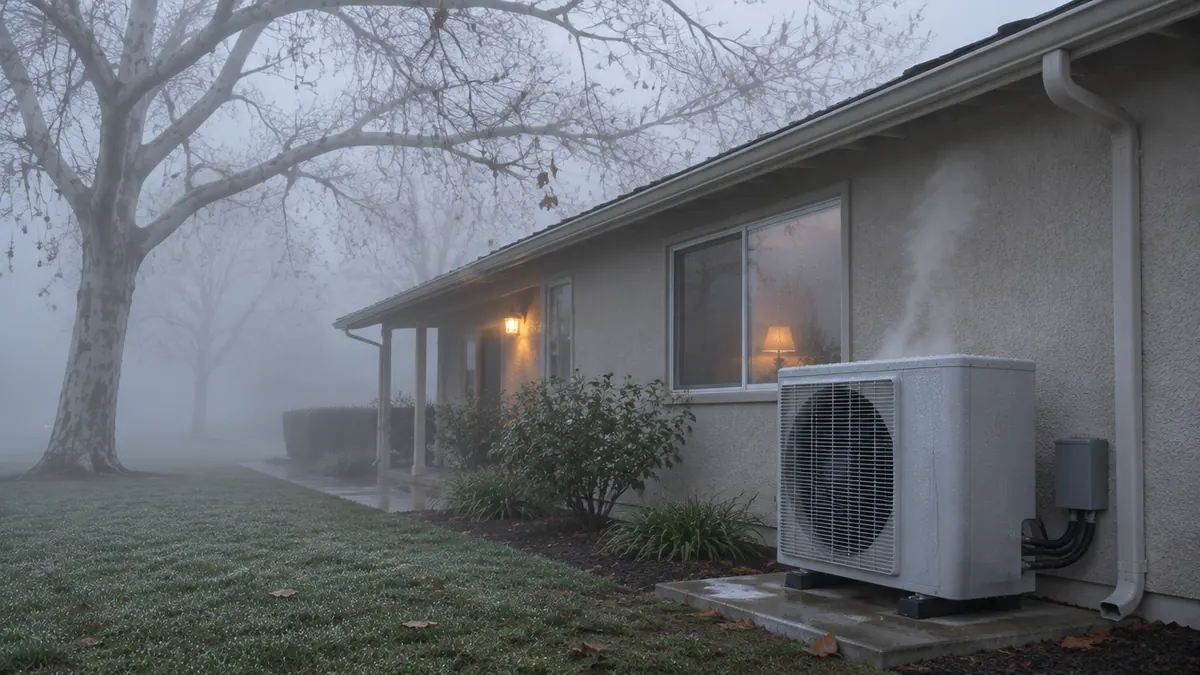
Yes, light frost is normal: when the outdoor coil drops below 32°F, moisture freezes on it, and the heat pump runs a defrost cycle to melt it off.
During defrost, the heat pump briefly switches to cooling mode and sends warm refrigerant through the outdoor coil. The outdoor fan may stop or slow down, backup heat may come on indoors to keep you comfortable, and water drips off the unit. The DOE-hosted owner guide says defrost typically takes 5 to 15 minutes, and one major manufacturer says the defrost cycle handles minor icing on its own. Learn more in heat pump defrost mode.
What isn’t normal is a unit that stays coated in ice or seems stuck in defrost. That calls for a technician. So does auxiliary heat that shows on your thermostat all the time, because that strip heat is costly and frequent use can point to a problem. If your heat pump runs but the house stays cold, see why your heat pump isn’t heating.
Don’t chip the ice. Don’t chip, pry or pour hot water on a frosted or iced outdoor unit. The coil’s thin metal fins bend easily. Light frost clears on its own during defrost; brush away loose leaves by hand, and call for service if heavy ice stays on.
How do you winterize an AC unit?
Winterizing an air conditioner mostly means cleaning up around it and leaving it alone: modern air conditioners typically don’t need special winterization.
- Clear it off. Rake leaves, sticks and grass clippings away from the unit and off the top grille. Trim back shrubs and vines that crowd the sides.
- Look up. If branches hang over the unit or a gutter drips onto it, deal with that now, before the winter rains.
- Decide on the top. If falling debris is a real risk, add plywood or a breathable cover on the top only. Otherwise, leave it uncovered.
- Change the filter. In an AC-only home, the indoor furnace shares the same filter, so a fresh one now helps the heat too. Read how often to change your air filter.
- Make a spring note. Remove any cover and clear the unit again before you switch to cooling.
That’s it. If your AC needed repairs at the end of summer, fall is a good time to have them handled before the spring rush. For a full year-round list, see the DIY HVAC maintenance checklist.
How do you prepare a furnace for winter?
Prepare a furnace for winter by changing the filter, testing the heat before the first cold night, checking your carbon monoxide detectors, and having a professional inspect it in the fall.
Safety first: If you smell gas (a rotten-egg odor), leave the home now and, from a safe distance, call 911 and then PG&E. If a carbon monoxide alarm sounds, get outside to fresh air, then call 911. Don’t light any appliance or flip switches on the way out. See what to do if you smell gas and what to do when a CO alarm goes off.
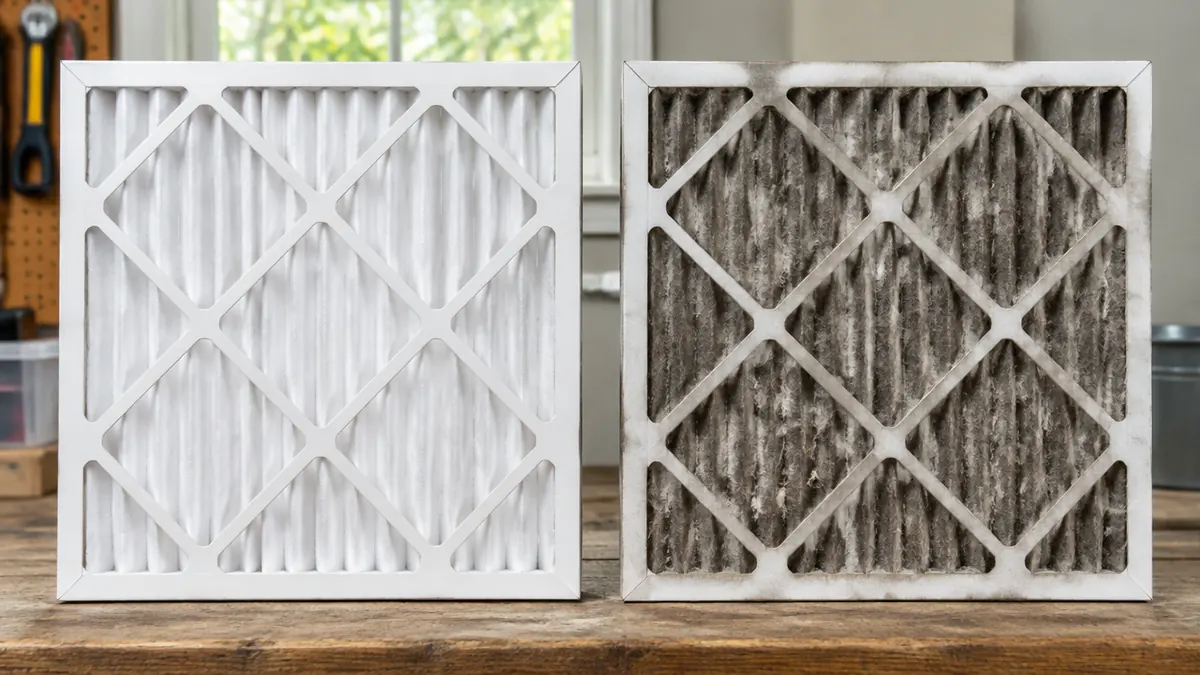
Change the filter
ENERGY STAR recommends inspecting your filter every month and changing it when it’s dirty, and one major manufacturer calls for a new filter every 30 to 90 days year-round. Winter is when the system runs most, so start the season with a clean one.
Test it before you need it
Pick a mild fall day, set the thermostat to Heat, and raise the temperature a few degrees above the room. Warm air should reach the vents. If the furnace has a viewing window, you can glance at the flame without removing any panels: a steady blue flame is what you want, and a yellow or orange flickering flame means call a technician. If you notice an odor on the first run, see why your furnace smells. If nothing happens, start with why your furnace isn’t working.
Check your carbon monoxide detectors
The CDC recommends battery-operated or battery-backup CO detectors near every sleeping area, checking the batteries when you change your clocks each spring and fall, and replacing detectors following the manufacturer’s instructions or every 5 years. The Consumer Product Safety Commission adds alarms on every level of the home and says interconnected alarms are best. More in our carbon monoxide safety guide.
Book the fall check-up
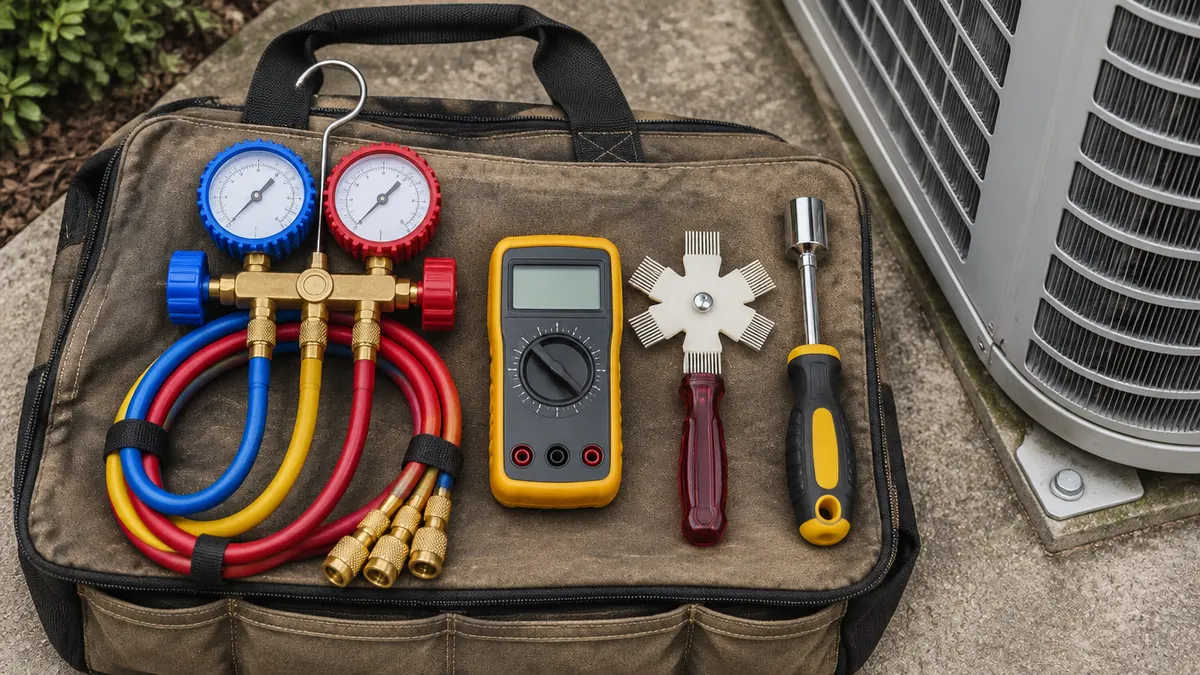
The CDC recommends having your heating system and other gas-burning appliances serviced by a qualified technician every year, and PG&E, the natural gas utility for Sacramento County, recommends having your furnace serviced once a year. ENERGY STAR says to check the heating system in the fall, because contractors get busy once winter comes. A heating check-up looks at things you shouldn’t touch, like gas connections, gas pressure, burner combustion and the heat exchanger. Here’s what an HVAC tune-up includes.
What do Sacramento winters mean for your outdoor unit?
Sacramento winters are mild and wet, not snowy, so the real winter jobs are managing rain runoff and leaves, not shielding the unit from snow and ice.
NOAA’s 1991–2020 climate normals for Sacramento Executive Airport put the average winter (December through February) low at 39.7°F and count about 15 nights a year at 32°F or below, with no days, on average, that stay below freezing all day. Winter is the wet season: about 10.6 of the area’s 18.1 inches of yearly precipitation falls from December through February. NOAA’s climate summary for Sacramento adds that snow is so rare, and falls in such small amounts, that it can be disregarded as a climate feature, and that dense fog occurs mostly in mid-winter, usually in the early morning hours.
Here’s what that means for your equipment:
- Rain is fine; runoff isn’t. Outdoor units are built to live outside, rain included. A gutter or roof valley pouring onto the unit is different: on one of those frosty nights, the water can freeze on it and block airflow. Fix the gutter instead of covering the unit.
- Leaves are the main winter debris. Rake around the unit after storms and once the trees have dropped their leaves, and keep the top grille clear.
- Foggy mornings mean defrost. On cold, damp mornings a heat pump may run defrost cycles, with steam, dripping water and a whoosh. That’s normal; HVAC noises explains the sounds.
- After a power outage: if the system won’t restart, see HVAC not working after a power outage.
Breakers deserve care after a storm. For a furnace or air handler, reset a tripped breaker once; if it trips again, leave it off and call. For a heat pump, don’t reset and restart it: call a technician instead.
Thinking about a heat pump for this climate? Read do heat pumps work in Sacramento.
When should you call a pro for winter HVAC problems?
Call a technician when you see heavy ice that won’t clear, a heat pump stuck in defrost, auxiliary heat running constantly, a yellow or orange furnace flame, a breaker that trips again, or warm air that never arrives.
Those problems involve refrigerant, gas, combustion or electrical parts, and none of them are homeowner repairs. If the furnace blows cold air, see furnace blowing cold air first for the safe checks. Otherwise, schedule a heating tune-up before the first cold snap so small problems get caught early.
Why do Sacramento-area homeowners call JM Comfort?
JM Comfort is a locally owned heating and air conditioning contractor based in North Highlands, serving North Highlands, Sacramento and nearby communities. It’s a licensed C-20 HVAC contractor (CSLB #1016274), licensed since 2016 and bonded, with workers’ comp insurance on file; you can check the license on the CSLB website. The team does seasonal tune-ups and maintenance for furnaces, heat pumps and air conditioners in homes, and if something turns up during a tune-up, the same team handles the repair, a new installation, ductwork or indoor air quality work.
Call (916) 247-6358 or book a tune-up online and we’ll call you back.
Frequently asked questions
Can winter rain or frost damage my outdoor AC unit?
Not in a normal Sacramento winter. An air conditioner is designed to live outdoors, and NOAA’s climate summary for Sacramento says snow is so rare it can be disregarded as a climate feature. What causes trouble is something heavy falling on the unit, like a branch, or a gutter pouring water onto it. If that’s a risk, a board or breathable cover on top only is enough.
Should I turn my heat pump off in winter?
No. In winter the heat pump is your heat. Leave it running and keep the thermostat steady. A heat pump owner guide published on a Department of Energy site says setbacks typically save energy only when you’ll be away for more than a day. See the best thermostat settings for heat pumps.
How do I know if I have a heat pump or an air conditioner?
Watch the outdoor unit on a cold day with the heat on. If it’s running, you have a heat pump. If it sits silent while warm air still comes from the vents, you have an air conditioner and the heat comes from an indoor furnace. Our guide to heat pump vs. air conditioner covers more clues.
How often should I check my carbon monoxide detectors?
The CDC says to check CO detector batteries when you change your clocks each spring and fall, and to replace detectors following the manufacturer’s instructions or every 5 years. If a CO alarm sounds, get everyone outside to fresh air and call 911.
When is the best time to schedule a furnace or heat pump tune-up?
Fall, before you need the heat. ENERGY STAR recommends checking the heating system in the fall and warns that contractors get busy once winter arrives. Here’s what a tune-up includes.
Does JM Comfort do fall tune-ups for furnaces and heat pumps?
Yes. JM Comfort does seasonal tune-ups and maintenance for furnaces, heat pumps and air conditioners for homes in North Highlands, Sacramento and nearby communities. Call (916) 247-6358 or book online.
Sources
- Should I Cover MY AC Unit in Winter? (Lennox)
- You Installed an Air Source Heat Pump. Now What? (Consortium for Energy Efficiency (hosted by the U.S. Department of Energy Better Buildings Solution Center))
- Home Heat Pump Maintenance (Trane)
- Gas Furnace Maintenance Checklist (Trane)
- Maintenance Checklist (ENERGY STAR)
- Carbon Monoxide (CO) Poisoning Basics (Centers for Disease Control and Prevention)
- Carbon Monoxide (U.S. Consumer Product Safety Commission)
- U.S. Climate Normals 1991–2020, Annual/Seasonal: Sacramento Executive Airport, CA (USW00023232, CSV) (NOAA National Centers for Environmental Information)
- Climate of Sacramento, California (NOAA Technical Memorandum NWS WR-272, revised June 2005, PDF) (NOAA National Weather Service)
- Gas Safety (Pacific Gas and Electric Company)
Find this helpful? Add JM Comfort as a preferred source on Google.