What Is an HVAC System? Parts, Airflow and Common Types
HVAC is the equipment that heats, cools and moves the air in your home. Here’s what each part does, how air travels from the return vents to the supply vents, and which systems you’re most likely to find in a California home, Sacramento included.
JM Comfort can help: heating and cooling services for homes in Sacramento and nearby. Licensed C-20 HVAC contractor, CSLB #1016274.
“HVAC” shows up on repair quotes, home inspection reports and utility mailers, but few people get a plain explanation of what’s in their own house. This guide walks through what the letters mean, what each part does, how air actually moves from room to equipment and back, and which kinds of systems are common in California homes like the ones around Sacramento. If something in yours isn’t working the way this describes, see JM Comfort’s heating and cooling services.
What does HVAC mean?
HVAC stands for heating, ventilation and air conditioning: the equipment that controls your home’s temperature, moves air through it, and exchanges stale indoor air for fresh air.
Each letter covers a different job. Heating comes from a furnace, a heat pump or, in some homes, a boiler. Air conditioning comes from a central air conditioner or a heat pump running in cooling mode, and it removes some humidity as well as heat. Ventilation is the exchange of indoor and outdoor air, and it’s the part most homes handle with the least equipment, as you’ll see below.
People often say “HVAC unit” when they mean the whole thing. Strictly speaking, the system is the complete setup working together, including the ducts and thermostat, and a unit is one piece of equipment in it, such as the furnace or the outdoor condenser. The HVAC glossary defines the other terms you’ll hear from a technician.
What is an HVAC system in a house?
In a typical house, the HVAC system is a set of connected parts: a thermostat on the wall, an outdoor unit, an indoor furnace or air handler, a coil, a blower, filters, and the ducts that carry air to every room.
Here’s what each part does and where you’ll usually find it.
| Part | Where it is | What it does |
|---|---|---|
| Thermostat | On an interior wall | The brain of the system: it senses the temperature and tells the equipment when to heat, cool or run the fan |
| Outdoor unit (AC or heat pump) | Outside on a pad | Holds the compressor and condenser coil; releases your home’s heat outdoors in summer, and a heat pump pulls heat in during winter |
| Furnace or air handler | Indoors | A furnace burns fuel to make heat; an air handler circulates heated or cooled air; both house the blower |
| Evaporator coil | Indoors, at the furnace or air handler | Cold refrigerant inside it absorbs heat and moisture from the air passing over it |
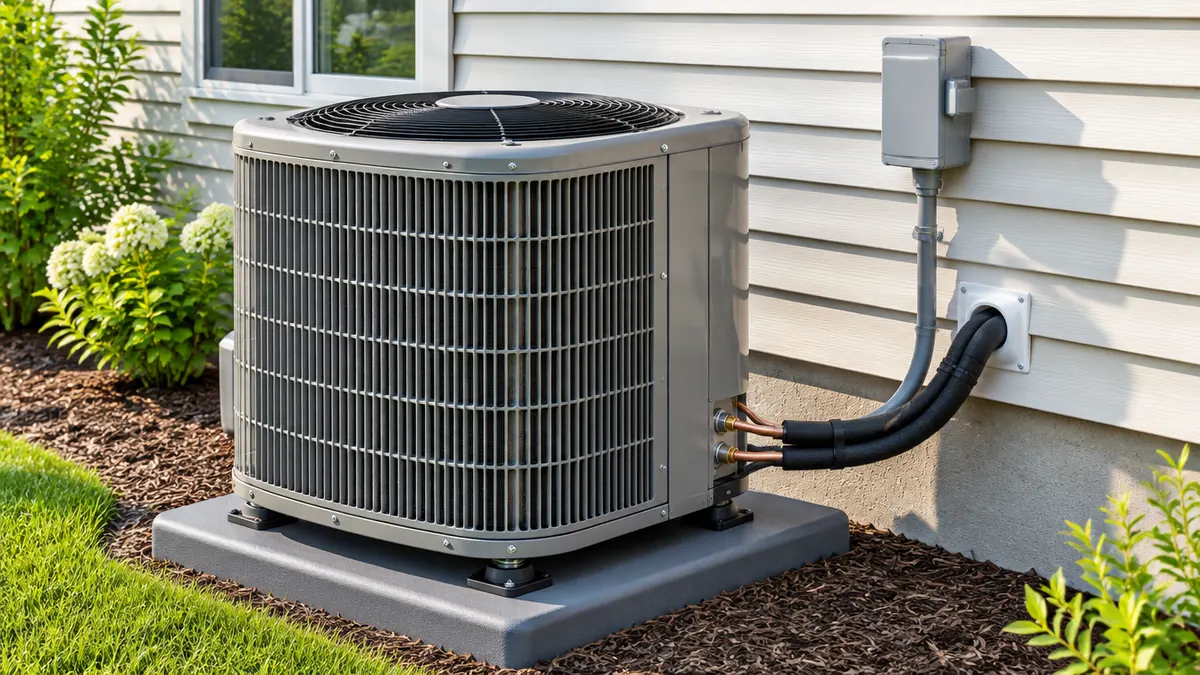
| Refrigerant lines | Copper tubing between the indoor and outdoor units | Carry refrigerant back and forth so heat can move in or out |
| Blower | Inside the furnace or air handler | Pulls air in through the returns and pushes it out through the supply ducts |
| Air filter | At a return grille or in a slot at the furnace or air handler | Catches dust before it reaches the equipment |
| Ductwork | Attics, crawlspaces, walls, ceilings and basements | Carries air from the equipment to each room and back |
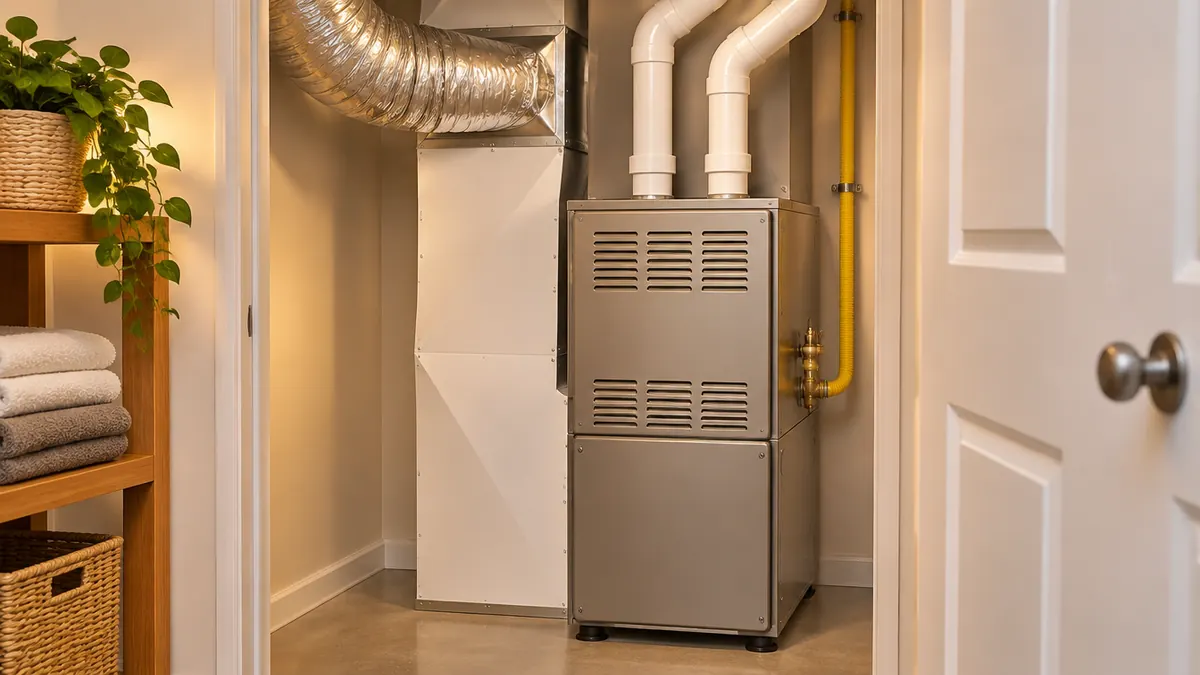
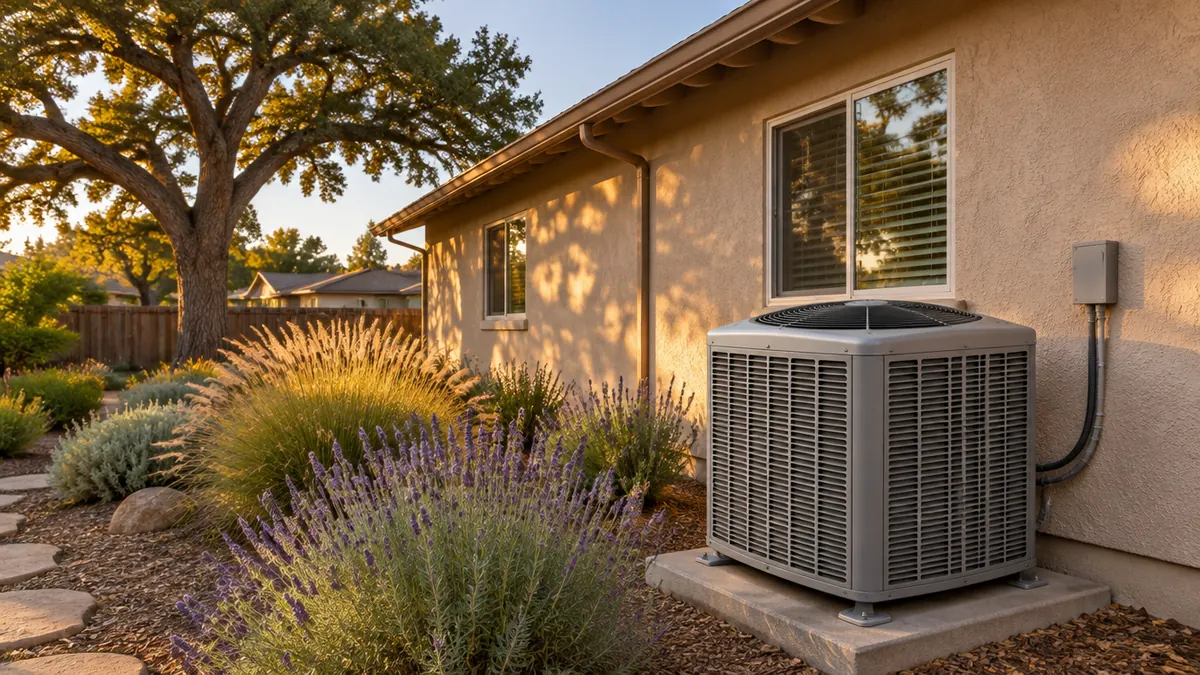
The most common arrangement in American single-family homes with central air is a split system: one cabinet outdoors and one indoors, connected by copper tubing. The outdoor half is an AC or heat pump, and the indoor half is a furnace or an air handler.
Safety first: A gas furnace burns fuel and sends its exhaust outdoors through a vent. If you ever smell gas, leave the home now, and once you’re outside call 911, then PG&E (see PG&E’s Report an Emergency page). If a carbon monoxide alarm sounds, get everyone outside and call 911. The carbon monoxide safety guide explains what to do next.
How do HVAC systems work?
An HVAC system works by pulling air from your rooms, heating or cooling it at the equipment, and blowing it back out, while the thermostat decides when each cycle starts and stops.
How cooling works
Central air conditioning cools your home by taking heat and humidity out of the air and releasing them outside. When the thermostat calls for cooling, a fan in the indoor unit pulls room air in through the return vents and across the evaporator coil. The coil is filled with cold liquid refrigerant that absorbs the heat and turns into a gas. That gas flows to the outdoor compressor, which pressurizes it and sends it to the condenser coil, where the heat goes into the outdoor air. An expansion valve then drops the refrigerant’s pressure and chills it again for the next trip. The cooled air goes back to your rooms through the supply ducts and registers.
How heating works
Heating works one of two ways. A furnace burns fuel, such as natural gas, propane or heating oil, to make heat, and a blower inside the furnace sends the warmed air through the supply ducts. A heat pump runs the refrigeration cycle in reverse: it pulls heat from the outdoor air and moves it inside. Either way, cooler room air flows back to the equipment through the return ducts to be heated again. For the details on each, see how a furnace works and heat pump vs. air conditioner. If you’re choosing a fuel, read gas furnace vs. electric furnace, and if you’re weighing a switch from gas, see whether heat pumps work in Sacramento.
The thermostat’s job
The thermostat starts a cycle when the temperature drifts from your setting and ends it once the room reaches the setting. A smart schedule saves money, and the guide to the best thermostat settings shows where to start.
What is ductwork?
Ductwork is the network of sheet metal or flexible pipes that carries heated and cooled air from your HVAC equipment to each room and brings air back to be conditioned again.
Every forced-air system has two sides. Supply ducts end at the registers that blow air into your rooms. Return ducts start at the larger grilles, often in a hallway or ceiling, that pull air back to the equipment. Both sides matter: a blocked return starves the system of air just as surely as a crushed supply duct keeps a room from getting any.
Ducts are also where a lot of comfort and money disappears. ENERGY STAR says that in a typical house, about 20 to 30% of the air moving through the duct system is lost to leaks, holes and poorly connected ducts. Leaks matter most when ducts run through an attic, crawlspace or garage, because the air you paid to heat or cool escapes outside your living space. ENERGY STAR lists these signs of duct trouble:
- High utility bills in summer and winter
- Rooms that are hard to heat and cool
- Stuffy rooms that never feel comfortable
- Tangled or kinked flexible ducts
If those sound familiar, read duct sealing and leaky ducts. For the honest answer on whether cleaning is worth paying for, see is air duct cleaning worth it. Replacing equipment in California also brings the state’s Title 24 energy code into the picture; see HVAC permits and Title 24 in Sacramento.
What does the ventilation part of HVAC do?
Ventilation exchanges stale indoor air for fresh outdoor air, and in most homes the heating and cooling equipment doesn’t do it: the EPA says most home heating and cooling systems, including forced-air systems, don’t mechanically bring fresh air into the house.
Instead, most homes get outdoor air three ways:
- Infiltration. Outdoor air leaks in through openings, joints and cracks in walls, floors and ceilings. The EPA says this happens in all homes to some extent.
- Natural ventilation. Air moves through open windows and doors.
- Mechanical ventilation. Bathroom and kitchen exhaust fans vented outdoors remove pollutants from those rooms and increase outdoor air. Some homes also have an outdoor air intake connected to the HVAC system or a dedicated whole-house ventilation system.
Your system still shapes indoor air quality through its filter and by removing some moisture when it cools. When wildfire smoke drifts into the valley, the filter and any fresh-air intake matter even more; see wildfire smoke and your HVAC. For the basics, see how often to change your air filter and the ideal indoor humidity.
What types of HVAC systems are common in California homes?
Most California homes heat with a furnace and use natural gas as their main heating fuel, and only about half use central air: the Energy Information Administration’s 2020 survey of home energy use found that about 54% of California homes use central air conditioning, a figure that counts central heat pumps, compared with about 67% nationally.
The same survey found that about 72% of California homes use some kind of air-conditioning equipment, compared with about 89% nationally, and about 23% use individual units such as window or wall units, portable units or ductless heat pumps. For heating, natural gas was the main fuel in about 64% of California homes (51% nationally), and a furnace was the main heating equipment in about 62%. A central heat pump was the main heating equipment in only about 3% of California homes, compared with about 13% nationally.
Around Sacramento, those two fuels come from two utilities. Sacramento County’s utility guide says SMUD is the electric service provider for the county and PG&E is its natural gas utility, so a typical gas-furnace home here buys electricity for the AC and blower from SMUD and gas for the furnace from PG&E.
| System type | How it’s set up | Good to know |
|---|---|---|
| Furnace plus central AC (split) | Outdoor AC; indoor gas or electric furnace with a coil | Furnace heats, AC cools, and both share the ducts |
| Heat pump plus air handler (split) | Outdoor heat pump; indoor air handler | One outdoor unit heats and cools |
| Dual fuel | Outdoor heat pump; indoor gas furnace | Sometimes called a hybrid system |
| Packaged unit | Heating and cooling in one cabinet | Usually outdoors, connected to the ducts |
| Ductless | Outdoor unit; indoor units in the rooms they serve | Heats and cools rooms or zones without ducts |
Not sure which you have? A furnace sits indoors, and a gas furnace has a gas line and a vent pipe; a heat pump looks like an AC from the outside but keeps running in winter. See heat pump vs. furnace and ductless vs. central air.
How long does an HVAC system last, and how do you keep it running?
Most modern HVAC systems last somewhere in the 15- to 25-year range, depending on the equipment and how well it’s maintained, according to one major manufacturer’s published guidance.
Maintenance is the part you control. ENERGY STAR says nearly half of the energy used in your home goes to heating and cooling, so a system that runs poorly costs real money every month. At a minimum, ENERGY STAR says to change the filter every 3 months, and it notes that sealing and insulating ducts can improve efficiency by as much as 20%. A professional HVAC tune-up covers the parts you shouldn’t touch yourself, such as electrical parts, refrigerant and burners.
When the system gets older, read how long HVAC systems last and signs you need a new HVAC system, or try the repair-or-replace calculator.
Who can help with your HVAC system in the Sacramento area?
JM Comfort can: it’s a locally owned heating and air conditioning contractor based in North Highlands, and a licensed C-20 HVAC contractor (CSLB #1016274) since 2016, bonded, with workers’ comp insurance on file. The work covers AC repair and installation, furnace and heating repair and installation, heat pump repair and installation, tune-ups and maintenance, ductwork repair, replacement and sealing, and indoor air quality (filtration and ventilation), for homes in North Highlands, Sacramento and nearby communities. See all of JM Comfort’s heating and cooling services.
Call (916) 247-6358 or book a visit online.
Frequently asked questions
What’s the difference between an HVAC system and an HVAC unit?
The system is the whole setup working together: heating, cooling, ventilation, ducts and the thermostat. A unit is one piece of equipment inside that system, such as the furnace, the air conditioner or the heat pump.
Do you need ductwork to have HVAC?
No. Ductless systems deliver heating and cooling straight to individual rooms or zones, which makes them a fit for older homes without ducts, additions and rooms that need a boost. See ductless vs. central air to compare.
What is a packaged HVAC system?
A packaged system puts the major heating and cooling components in one cabinet, usually outdoors, instead of splitting them between an outdoor unit and an indoor furnace or air handler. Ducts still carry the air to and from your rooms.
How much of my energy bill goes to heating and cooling?
ENERGY STAR says nearly half of the energy used in a typical home goes to heating and cooling. That’s why filters, duct sealing and smart thermostat settings have such a big effect on your bills.
Is a heat pump part of an HVAC system?
Yes. Despite the name, a heat pump both heats and cools. It takes the place of a separate air conditioner, and in many homes it’s paired with an indoor air handler or a furnace. Learn more in heat pump vs. air conditioner.
Can one company handle heating, cooling and ductwork?
Yes. JM Comfort handles AC, furnace and heat pump repair and installation, tune-ups, ductwork repair, replacement and sealing, and indoor air quality (filtration and ventilation) for homes in North Highlands, Sacramento and nearby communities. Call (916) 247-6358 or book online.
Sources
- What Does HVAC Stand For and How Do HVAC Systems Work? (Trane)
- Central heating and cooling - HVAC Basics (Trane)
- HVAC System vs. HVAC Unit: Types, Costs & How It Works (Carrier)
- Improving Indoor Air Quality (U.S. Environmental Protection Agency)
- Duct Sealing (ENERGY STAR)
- Heat & Cool Efficiently (ENERGY STAR)
- Highlights for space heating in U.S. homes by state, 2020 (U.S. Energy Information Administration)
- Highlights for space heating fuel in U.S. homes by state, 2020 (U.S. Energy Information Administration)
- Highlights for air conditioning in U.S. homes by state, 2020 (U.S. Energy Information Administration)
- Utility Providers (Sacramento County Office of Economic Development)
Find this helpful? Add JM Comfort as a preferred source on Google.